

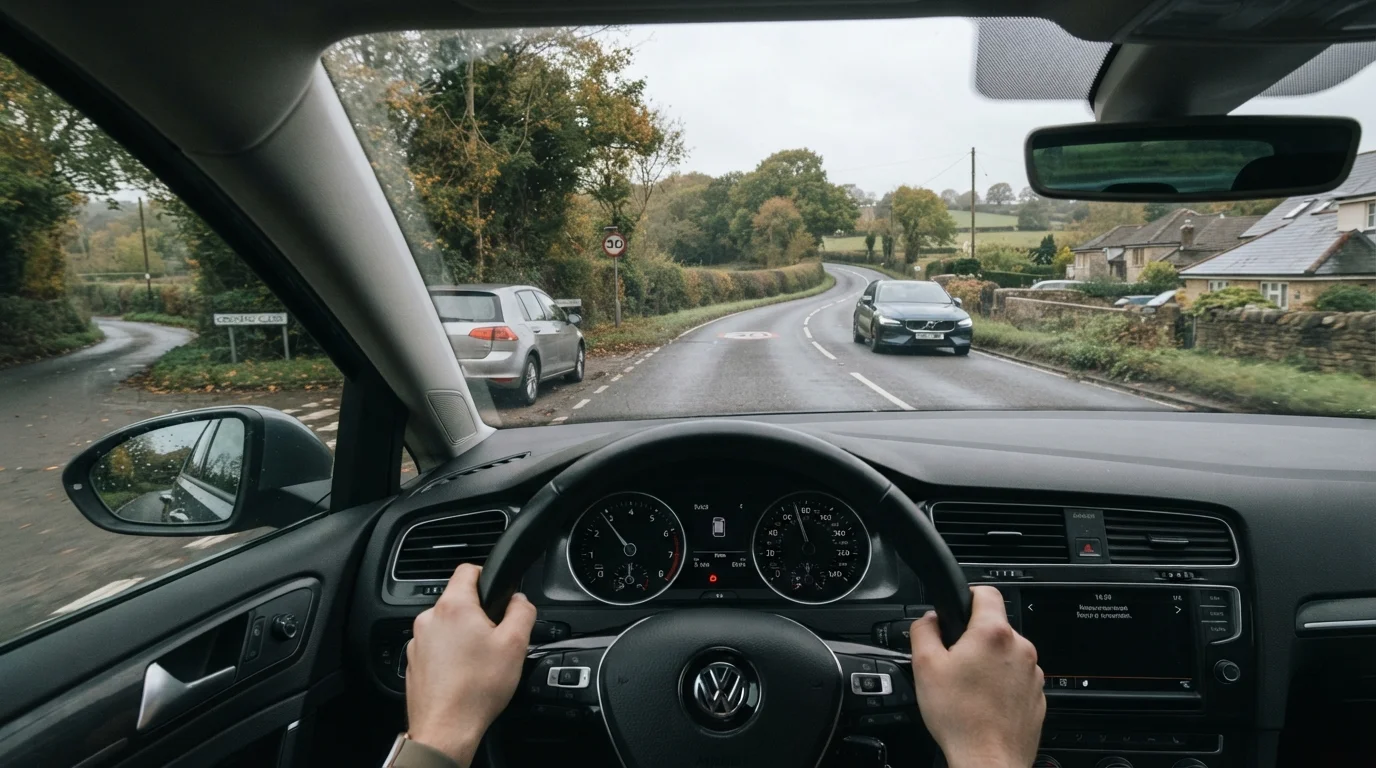
Key Takeaways
- Hazard anticipation starts with scanning far ahead - at least 12 seconds down the road.
- Identifying potential threats early gives your brain and your vehicle time to respond safely.
- Context clues like parked vehicles, intersections, and pedestrian behavior signal hidden risks.
- Maintaining adequate space around your vehicle is essential to making anticipation actionable.
- Consistent mirror-checking and reduced distraction are the foundations of proactive driving.
Why Anticipation Matters More Than Reaction
Most driving emergencies don't appear out of nowhere - they build through a sequence of warning signs that a trained eye can catch early. The difference between a near-miss and a collision often comes down to how far ahead a driver was looking and what they were paying attention to.
Reactive driving - waiting until a hazard is right in front of you - leaves almost no room for error. At 60 mph, a vehicle travels roughly 88 feet per second. If a driver needs even 1.5 seconds to perceive and react to a danger, that's over 130 feet of road already consumed before the brakes even begin to engage. Anticipatory driving compresses that gap by identifying threats while there's still time and space to act calmly.
This isn't an innate talent. It's a set of learnable habits - and building them makes every journey safer, including the routine ones. For a broader look at how skills, environment, and vehicle condition combine to shape road safety, see the complete picture of road safety.
Start Small, Build the Habit
You don't need to master all these techniques at once. Pick one - scanning farther ahead, for instance - and practice it consciously on your next few drives. Deliberate repetition is how skilled driving behaviors become automatic. Over a few weeks, layer in additional habits one at a time.
How to Read the Road Ahead: Step-by-Step
The following steps build a systematic approach to hazard anticipation. These techniques are used in professional driver training programs and can be applied on any road type - city streets, rural highways, or suburban commutes.
Extend Your Visual Horizon
Most driving instructors recommend scanning at least 12 seconds ahead - the distance your vehicle will travel in 12 seconds at your current speed. In city driving at 30 mph, that's roughly a full block. On a highway at 65 mph, it's nearly a quarter mile.
Avoid fixating on the vehicle directly in front of you. Instead, let your eyes travel to the farthest point you can clearly see and work backward, picking up details as you approach them.
Use Systematic Mirror Checks
Anticipation isn't only about what's in front - it also means knowing your surroundings on all sides. Build a regular mirror-check pattern: check your rearview mirror every 5 to 8 seconds, and glance at each side mirror frequently, especially before changing lanes, slowing down, or navigating a busy area.
This gives you a constantly updated mental picture of where other vehicles are relative to you - information that shapes your decisions if a hazard forces a sudden move.
Identify Developing Situations Early
As you scan ahead, actively look for situations developing, not just objects already blocking your path. A vehicle slowing near a driveway may be about to turn. A pedestrian moving toward the curb may be preparing to cross. A gap in parked cars ahead may be the point where a cyclist emerges.
Ask yourself: What could happen here? This mental habit - sometimes called a "what if" scan - primes your brain to respond instead of react.
Adjust Speed to Match Your Sight Distance
Your speed should always be low enough that you can stop within the distance you can clearly see ahead. This principle - sometimes called driving within your sight distance - is especially critical in low-visibility conditions, on winding roads, or in areas where obstructions limit your forward view.
If you can only see 100 feet ahead clearly, but your stopping distance at your current speed is 150 feet, you're already operating on borrowed time.
Maintain Adequate Space Cushion
Anticipating a hazard is only useful if you have space to act on it. Follow the two-second rule as a minimum following distance in normal conditions - increase it to three or four seconds in rain, heavy traffic, or when following large vehicles that block your forward view.
Keeping space to the sides and rear is equally important. If a threat appears ahead, your ability to steer around it depends partly on whether adjacent lanes are clear.
Reduce Distractions Systematically
Anticipation requires available mental capacity. Every distraction - a phone notification, a loud conversation, an in-car screen - consumes cognitive resources that belong to hazard processing. Before any journey, silence unnecessary notifications, set navigation before moving, and keep conversation volume low in complex driving situations.
Even hands-free phone calls can meaningfully reduce attention to the road - research in traffic safety consistently identifies cognitive distraction as a significant contributor to crashes, not just manual or visual distraction.
Once you've developed these habits behind the wheel, pair them with good space management practices - anticipation and spacing work together to give you genuine options when hazards appear.
Context Clues That Signal Hidden Hazards
Skilled hazard readers don't just process what they see - they interpret what those sights imply. A ball rolling into the street usually precedes a child. A truck idling at a loading dock may swing its doors open without warning. A group of pedestrians near a crosswalk suggests someone may step off the curb.
These context clues fall into a few reliable categories:
- Obstructions to your line of sight - Parked delivery vehicles, overgrown hedges, and bridge pillars all hide what's coming. Slow down before you reach them.
- Predictable pedestrian and cyclist behavior - People behave in patterns. Someone on a bicycle approaching a stop sign may roll through it. A pedestrian staring at a phone may step off a curb without looking.
- Other drivers' body language - Brake lights two cars ahead, a vehicle drifting toward the lane line, or erratic acceleration are all signals worth acting on before you can confirm the cause.
- Road environment - Intersections, school zones, highway on-ramps, and construction areas all have elevated hazard profiles. Treat entering these zones as a cue to raise alertness.
Intersections deserve special attention - they're among the most common crash locations on U.S. roads. Our guide to navigating roundabouts, four-way stops, and uncontrolled intersections explains how right-of-way rules and approach strategy differ across each type.
Weather is another major source of hidden hazard. Rain, fog, and snow each change the risk profile of the road in different ways - see how to adjust your driving for each condition for practical guidance. And if you drive after dark, be aware that darkness distorts speed perception in ways most drivers underestimate.
Common Blind Spots in Driver Awareness
Even experienced drivers have predictable gaps in awareness. Understanding where attention commonly breaks down helps you guard against those vulnerabilities. For a fuller exploration of scenarios that trip up careful drivers, see situations where even careful drivers get caught off guard.
A few common awareness traps:
- Highway hypnosis - Long, monotonous stretches of road can cause a driver's attention to drift into autopilot. Regular mirror checks and deliberate scanning help interrupt this pattern.
- Tunnel vision at speed - At higher speeds, peripheral vision narrows naturally. Consciously widening your gaze - scanning left and right, not just straight ahead - counteracts this.
- Cognitive distraction - You can have eyes on the road and still be mentally elsewhere. Stress, phone conversations (even hands-free), and rehearsing what you'll say at a meeting all occupy mental bandwidth needed for hazard processing.
Keeping your vehicle in good mechanical condition also underpins effective hazard response - a car with worn brakes or compromised tires won't perform the way you need it to when you act on an early warning. Learn more about recognizing early brake warning signs before they become safety issues.