

| Typical battery lifespan | 3-5 years (General industry guideline; varies by climate and usage) |
| Typical alternator output voltage | 13.5-14.5 V DC (Standard operating range for 12V vehicle systems) |
| Typical starter lifespan | 100,000-150,000 miles (General mechanical estimate; varies by vehicle and conditions) |
| Current draw at cranking | 200-600 amps (Varies by engine size and cold-cranking requirements) |
| Minimum RPM to fire engine | ~200 RPM (General threshold for combustion cycle initiation) |
How These Three Components Work Together
Your car's ability to start and keep running depends on a tight partnership between three electrical components: the battery, the alternator, and the starter motor. Understanding what each one does - and how they depend on each other - makes it far easier to diagnose problems before they leave you stranded.
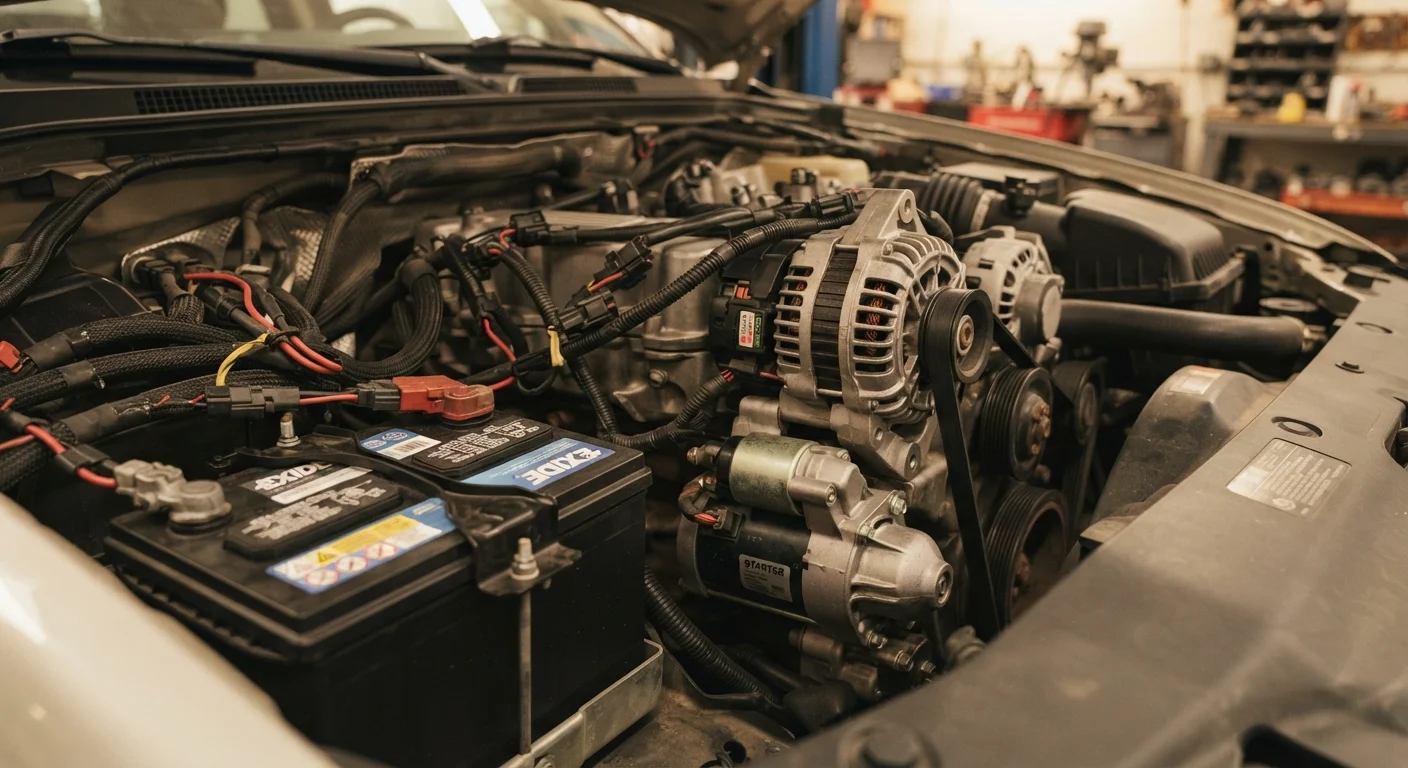
Think of it this way: the battery stores electrical energy and delivers the initial burst of power needed to start the engine. The starter uses that burst to physically crank the engine. Once the engine is running, the alternator takes over, generating electricity to power the car's systems and recharge the battery. If any one of the three fails, the chain breaks.
For a broader look at how this fits into overall vehicle upkeep, see routine maintenance every driver should understand.
| Typical battery lifespan | 3-5 years (General industry guideline; varies by climate and usage) |
| Typical alternator output voltage | 13.5-14.5 V DC (Standard operating range for 12V vehicle systems) |
| Typical starter lifespan | 100,000-150,000 miles (General mechanical estimate; varies by vehicle and conditions) |
| Current draw at cranking | 200-600 amps (Varies by engine size and cold-cranking requirements) |
| Minimum RPM to fire engine | ~200 RPM (General threshold for combustion cycle initiation) |
The Battery: Stored Energy on Demand
A car battery is a rechargeable lead-acid (or in newer vehicles, lithium-ion) unit that stores chemical energy and converts it to electrical energy. Its primary job is to supply the large jolt of current the starter needs - typically 200 to 600 cold-cranking amps - to turn the engine over. The battery also stabilizes voltage across the electrical system and powers accessories like lights and the radio when the engine is off.
Common Battery Failure Signs
- Slow or labored engine cranking when you turn the key
- Clicking sound but no engine turnover, especially in cold weather
- Dim headlights or dashboard lights at startup
- Swollen or corroded battery case visible under the hood
- Battery warning light illuminated on the dashboard
Most lead-acid batteries last three to five years, though climate, driving patterns, and how often the vehicle sits unused all affect lifespan. Short-trip driving - where the battery never fully recharges - is a common culprit. Ownership habits that accelerate wear explains how these patterns quietly shorten a vehicle's electrical life.
The Alternator: Your Engine's Generator
Once the engine is running, the alternator - driven by a belt connected to the engine - takes over as the primary power source. It converts mechanical energy into alternating current (AC), which a built-in rectifier then converts to the direct current (DC) your car's systems use. A properly functioning alternator keeps the battery charged and powers everything from the fuel injection system to heated seats.
Common Alternator Failure Signs
- Battery warning light that appears while driving (not just at startup)
- Electrical accessories behaving erratically - flickering lights, slow power windows
- Burning rubber or electrical smell from the engine bay
- Whining or grinding noise from the belt area
- Dead battery despite recent replacement - a tell-tale sign the alternator isn't recharging it
A faulty alternator is often misdiagnosed as a bad battery. If a new battery dies within days, have the charging system tested before replacing parts unnecessarily.
The Starter Motor: Cranking the Engine to Life
The starter is a small but powerful electric motor mounted near the bottom of the engine. When you turn the ignition key or press the start button, the battery sends current to the starter solenoid, which engages a small gear (called a pinion) with the engine's flywheel ring gear. That engagement spins the engine fast enough to fire the combustion cycle - typically above 200 RPM.
Common Starter Failure Signs
- Single loud click when turning the key, with no cranking
- Grinding noise during startup, suggesting the pinion gear isn't engaging cleanly
- Intermittent starting - works sometimes, not others
- Starter motor spinning but engine not cranking (freewheeling)
- Smoke or burning smell from extended cranking attempts
Starters generally last 100,000 to 150,000 miles, but heat, short circuits, and oil leaks onto the motor can shorten their service life. A qualified mechanic should inspect and replace a failing starter, as the job involves working near high-current electrical connections.
Staying on top of the full spectrum of vehicle maintenance - including the charging system - is covered in The Full Picture on Car Maintenance.