

| Oil Change Interval (Synthetic) | 7,500-10,000 miles (varies by vehicle) (Consult your owner's manual for model-specific guidance) |
| Tire Rotation Interval | Every 5,000-7,500 miles (Often combined with oil change appointments) |
| Brake Pad Replacement Range | 25,000-70,000 miles (Varies by driving habits, load, and terrain) |
| Timing Belt Replacement | Typically 60,000-100,000 miles (Check owner's manual; not all vehicles have a timing belt) |
| Engine Air Filter Interval | 15,000-30,000 miles (More frequent in dusty or rural driving environments) |
| Tire Pressure Check | Monthly or before long trips (Recommended inflation listed on driver's door jamb sticker) |
Why Routine Maintenance Is the Foundation of Safe Ownership
Most vehicle problems don't announce themselves dramatically - they build quietly through skipped services, ignored intervals, and small oversights. Understanding what routine maintenance actually covers, and why each item exists, puts you in a far stronger position as an owner.
Your vehicle's owner's manual contains a maintenance schedule designed by the engineers who built it. That schedule reflects real-world wear patterns for your specific drivetrain, and following it is the most straightforward way to protect your investment. See how to read and apply that schedule for a deeper look at interpreting those timelines.
For new owners especially, knowing which services are time-sensitive and which are mileage-based can prevent costly confusion. The First-Time Car Owner's Roadmap covers the broader picture of what to manage after taking ownership.
| Oil Change Interval (Synthetic) | 7,500-10,000 miles (varies by vehicle) (Consult your owner's manual for model-specific guidance) |
| Tire Rotation Interval | Every 5,000-7,500 miles (Often combined with oil change appointments) |
| Brake Pad Replacement Range | 25,000-70,000 miles (Varies by driving habits, load, and terrain) |
| Timing Belt Replacement | Typically 60,000-100,000 miles (Check owner's manual; not all vehicles have a timing belt) |
| Engine Air Filter Interval | 15,000-30,000 miles (More frequent in dusty or rural driving environments) |
| Tire Pressure Check | Monthly or before long trips (Recommended inflation listed on driver's door jamb sticker) |
The Core Maintenance Items - and What Each One Does
Oil and Oil Filter Changes
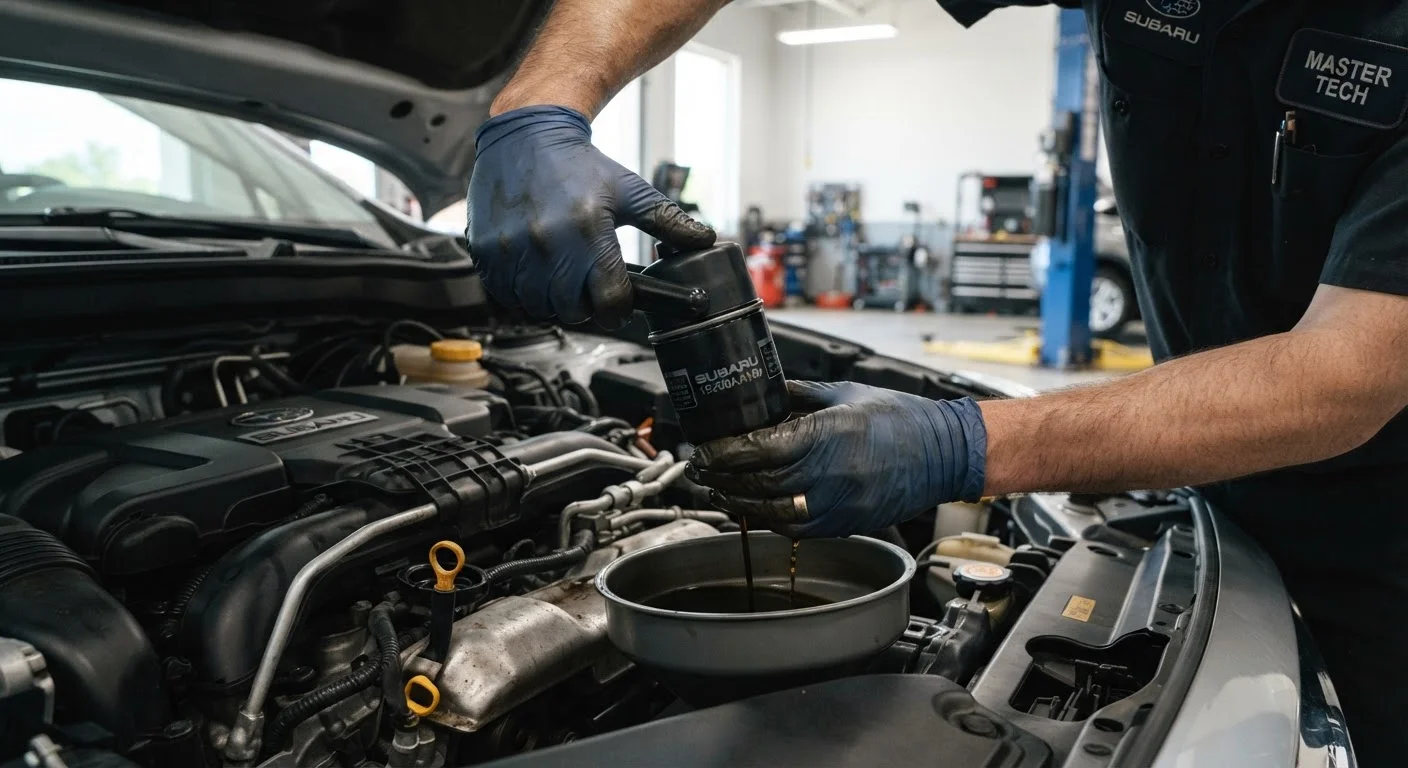
Engine oil lubricates moving metal parts, reduces friction, and carries heat away from the engine. Over time, oil degrades and accumulates contaminants. Most modern vehicles using full-synthetic oil can go 7,500-10,000 miles between changes, though your owner's manual is the authoritative source for your specific model. The filter is typically replaced at the same interval.
Tire Rotation and Pressure
Tires wear unevenly depending on their position - front tires on front-wheel-drive vehicles carry additional steering and braking loads. Rotating tires every 5,000-7,500 miles (often combined with oil changes) evens out wear and extends tire life. Proper inflation, checked monthly or before long trips, affects fuel economy, handling, and tire longevity.
Brake Inspection
Brakes are a safety-critical system. Brake pads typically need replacement every 25,000-70,000 miles, a wide range that reflects driving habits, terrain, and vehicle weight. Brake fluid should also be inspected periodically - it absorbs moisture over time, which lowers its boiling point and can reduce braking effectiveness.
Air Filter Replacement
The engine air filter prevents dust and debris from entering the engine. A clogged filter reduces airflow, which can affect performance and fuel efficiency. Replacement intervals vary - typically 15,000-30,000 miles - and are one of the simpler services that some owners handle themselves. See what's safe to do yourself vs. what needs a pro before deciding.
Fluid Checks and Flushes
Beyond engine oil, your vehicle depends on coolant (antifreeze), transmission fluid, power steering fluid, and brake fluid. Each has a recommended inspection and replacement schedule. Low or degraded fluids are among the most common contributors to preventable mechanical failures.
Belts and Hoses
The timing belt or timing chain synchronizes your engine's internal components. If a timing belt fails - and many are designed to be replaced between 60,000-100,000 miles - the resulting engine damage can be severe. Serpentine belts and coolant hoses should also be inspected regularly for cracking or wear.
Neglecting these items compounds over time. Deferred maintenance rarely stays inexpensive, and common ownership habits can quietly accelerate wear even on otherwise well-kept vehicles.
Working With a Mechanic and Staying Informed
When a shop recommends additional services during a routine visit, knowing what you're being told makes a meaningful difference. Understanding how repair estimates are structured - labor rates, parts sourcing, itemized charges - helps you ask better questions. Reading a mechanic's estimate without feeling lost walks through what those line items typically mean.
High-mileage vehicles require particular attention to the items above, and some components become higher priorities past 100,000 miles. Keeping high-mileage vehicles on the road longer outlines the targeted habits that help aging cars stay reliable.
Finally, in many U.S. states, routine inspections aren't optional - emissions and safety checks are legally required at regular intervals. Understanding your state's inspection requirements helps you stay compliant and catch maintenance gaps before a failed inspection does it for you.
For a comprehensive view of every major maintenance category from fluids to filters, see The Full Picture on Car Maintenance. And for everything related to keeping your vehicle running safely, the Car Maintenance hub is a practical starting point.