

Key Takeaways
- Every estimate should separately list parts costs, labor hours, and applicable fees or taxes.
- Labor rates vary widely by shop type - dealerships typically charge more than independent mechanics.
- OEM parts come from the original manufacturer; aftermarket parts are made by third parties and may cost less.
- You have the right to request a written estimate and ask questions before authorizing any repair.
- Comparing two or three estimates on the same job helps you spot pricing outliers.
What you will need
Why Estimates Confuse Most Drivers
Walking into a repair shop without understanding the paperwork is one of the most common ways drivers end up overpaying or agreeing to work they didn't need. Estimates use industry-specific language - flat-rate hours, OEM fitment, R&R labor - that can feel deliberately opaque if no one explains it. The reality is that most of this language follows a consistent structure once you know what to look for.
Part of owning a vehicle responsibly means understanding the financial side - and repair costs are one of the largest variable expenses drivers face. As detailed in our guide on the true cost of owning a car in America, maintenance and unexpected repairs account for a significant share of lifetime vehicle costs. Learning to read an estimate is one of the most practical skills you can develop as a driver.
Always Get the Estimate in Writing
Most states legally require repair shops to provide a written estimate before beginning work that exceeds a set dollar threshold. Never authorize repairs verbally only. A written estimate protects you if the final bill differs significantly from what was discussed, and gives you a clear record to reference during payment.
What You'll Need Before You Start
You don't need automotive expertise to evaluate an estimate - but having a few reference points helps. Pull up the estimate you've received and make sure it's a written document (not a verbal quote). If the shop gave you only a verbal figure, request a printed or emailed breakdown before signing anything.
What you will need
If you're unfamiliar with the service being recommended, a quick read of our overview of routine maintenance every driver should understand will give you useful context on what common services actually involve.
How to Read Your Estimate Step by Step
Work through the estimate methodically - don't skip straight to the total. Each section of the document tells you something different about what you're being asked to pay for and why.
Confirm the estimate is itemized
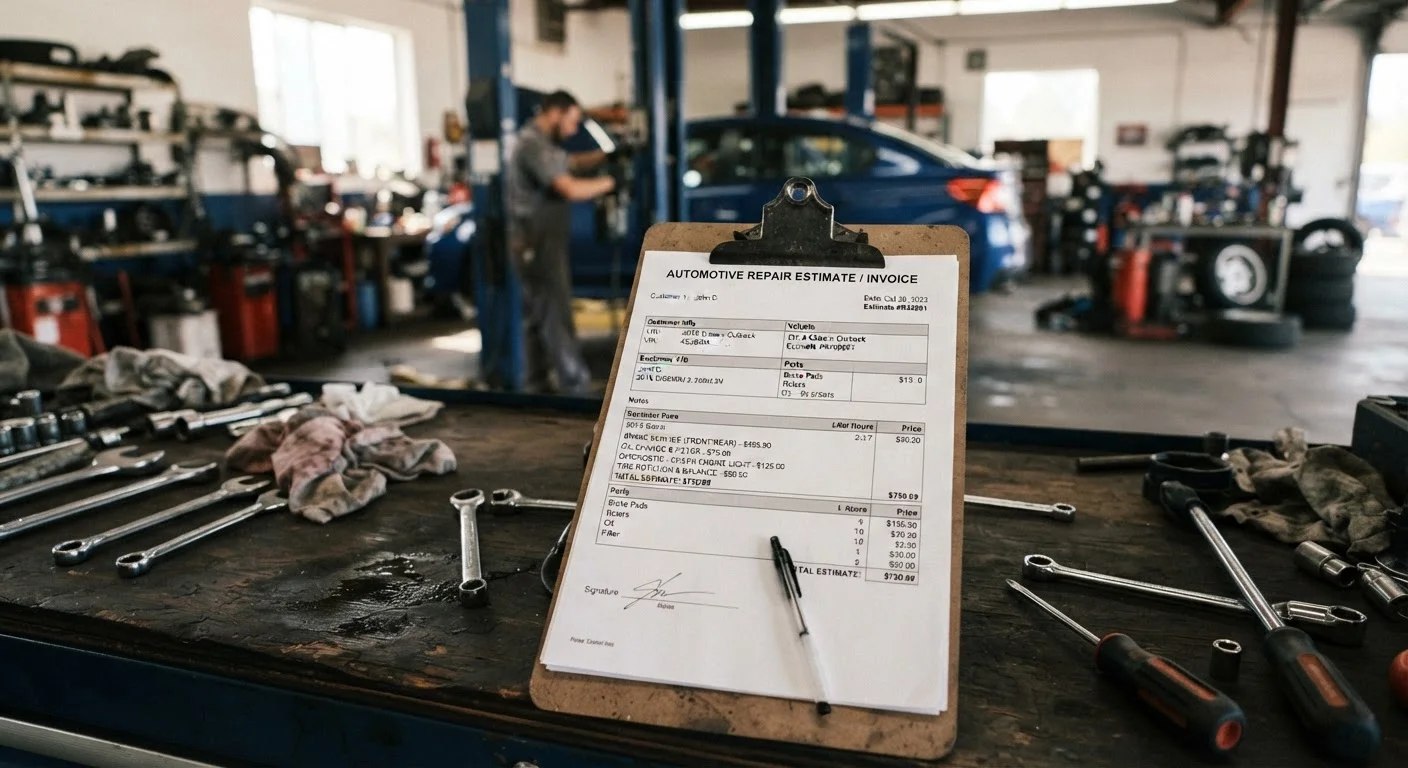
A properly structured estimate will separate charges into at least three categories: parts, labor, and fees/taxes. If the estimate shows only a single lump sum, ask the shop to break it down before proceeding. Itemization lets you evaluate each charge individually rather than accepting a black-box total.
Understand the labor rate and hours charged
Shops list a labor rate - typically expressed as dollars per hour - and multiply it by the number of hours the job is expected to take. Dealership labor rates are often higher than independent shop rates, partly due to overhead and factory-trained technician certifications. The hours charged usually come from a flat-rate guide rather than actual clock time, so a technician who finishes faster than the guide predicts still bills the guide hours.
Identify parts as OEM, aftermarket, or remanufactured
Parts on an estimate typically fall into three categories:
- OEM (Original Equipment Manufacturer): Made by or for the vehicle's manufacturer. Generally more expensive but built to factory specifications.
- Aftermarket: Made by third-party suppliers. Quality varies - some aftermarket parts match OEM standards; others may not. Legitimate shops should disclose which aftermarket parts they're using.
- Remanufactured: Used parts that have been rebuilt to meet performance specifications - often a cost-effective middle option for components like alternators or starters.
Ask which category applies to each part on your estimate and why that choice was made for your vehicle.
Check for diagnostic and shop supply fees
Many estimates include a diagnostic fee - charged when a technician uses a scan tool or performs a test drive to identify the problem. This is a legitimate charge. Shop supply fees (sometimes listed as a percentage of the total) cover consumables like rags, cleaning solvents, and disposal materials. Both should be explicitly labeled and explained on the estimate, not hidden inside the labor total.
Ask about the authorization process and additional discovery
Before signing, clarify what happens if the technician finds additional problems mid-repair. Reputable shops will contact you for secondary authorization before performing any work beyond the original estimate. Confirm this policy in writing if possible - some estimates include a clause about allowable cost overruns without further approval, which you should understand before signing.
Compare with one or two other estimates
For any repair expected to cost more than a few hundred dollars, obtaining a second estimate is a sound practice. When comparing, ensure both estimates specify the same repair scope and parts type - comparing an OEM-parts estimate to an aftermarket-parts estimate isn't an apples-to-apples comparison. Price differences between shops are normal; large unexplained gaps are worth questioning.
Use Flat-Rate Guides as a Sanity Check
Mechanics typically price labor using industry flat-rate guides - standardized manuals that specify how many hours a given repair should take. Knowing that a brake pad replacement is commonly rated at about one to 1.5 hours helps you gauge whether the labor charge seems reasonable for your area's going rate.
For some straightforward maintenance items, you may also want to explore which tasks are safe to do yourself vs. what needs a pro - knowing the boundary can help you prioritize where professional labor is genuinely necessary.
Red Flags and Follow-Up Questions
A legitimate shop welcomes informed customers. If asking basic questions is met with evasiveness or pressure, that's relevant information about the shop's culture. Common red flags to watch for include:
- No written estimate provided before work begins
- Pressure to approve the full estimate immediately without time to review
- Vague line items with no part numbers or descriptions
- Labor hours that seem disproportionate for the job described
- No mention of a warranty on parts or labor
Watch for Vague Line Items
If an estimate lists a charge like 'miscellaneous shop supplies' or 'general inspection fee' without any explanation, ask the shop to define it. Unexplained charges can add up quickly and may not represent work actually performed on your vehicle. Legitimate shops will explain every charge clearly.
Most states have consumer protection laws that govern auto repair - including requirements around written estimates and notifications when costs exceed the original quote. Familiarizing yourself with your state's auto repair consumer protection rules is worthwhile before any significant repair.
This article is for general informational purposes only. Repair costs and shop practices vary by region, vehicle, and service type. Consult a qualified, licensed mechanic for diagnosis and repair decisions specific to your vehicle.