

Why Inspection Programs Exist - and Why They Vary
Vehicle inspection programs in the United States exist for two distinct purposes: protecting air quality and ensuring mechanical safety. Because the U.S. Constitution reserves regulatory authority like this to individual states, there is no single national inspection standard. The result is a patchwork: some states mandate both emissions and safety inspections annually, others require only one type, and roughly one-third of states have no mandatory periodic inspection program at all.
The U.S. Environmental Protection Agency (EPA) does set federal emissions standards that automakers must meet at the factory, but it largely leaves ongoing vehicle compliance - testing cars already on the road - to states. States in areas that struggle to meet federal air-quality thresholds (called nonattainment areas) face stronger pressure from the EPA to run robust emissions-testing programs, which is why densely populated or industrially active regions tend to have stricter requirements.
Understanding which rules apply to you starts with knowing your state, and sometimes your county - because even within a state, inspection requirements often differ by geographic area. Check your state's department of motor vehicles (DMV) or environmental agency website for current, location-specific requirements before assuming what applies to you. For a broader look at keeping your vehicle compliant and road-ready, see the Car Maintenance hub.
What Emissions Inspections Actually Test
Modern emissions testing generally falls into two categories:
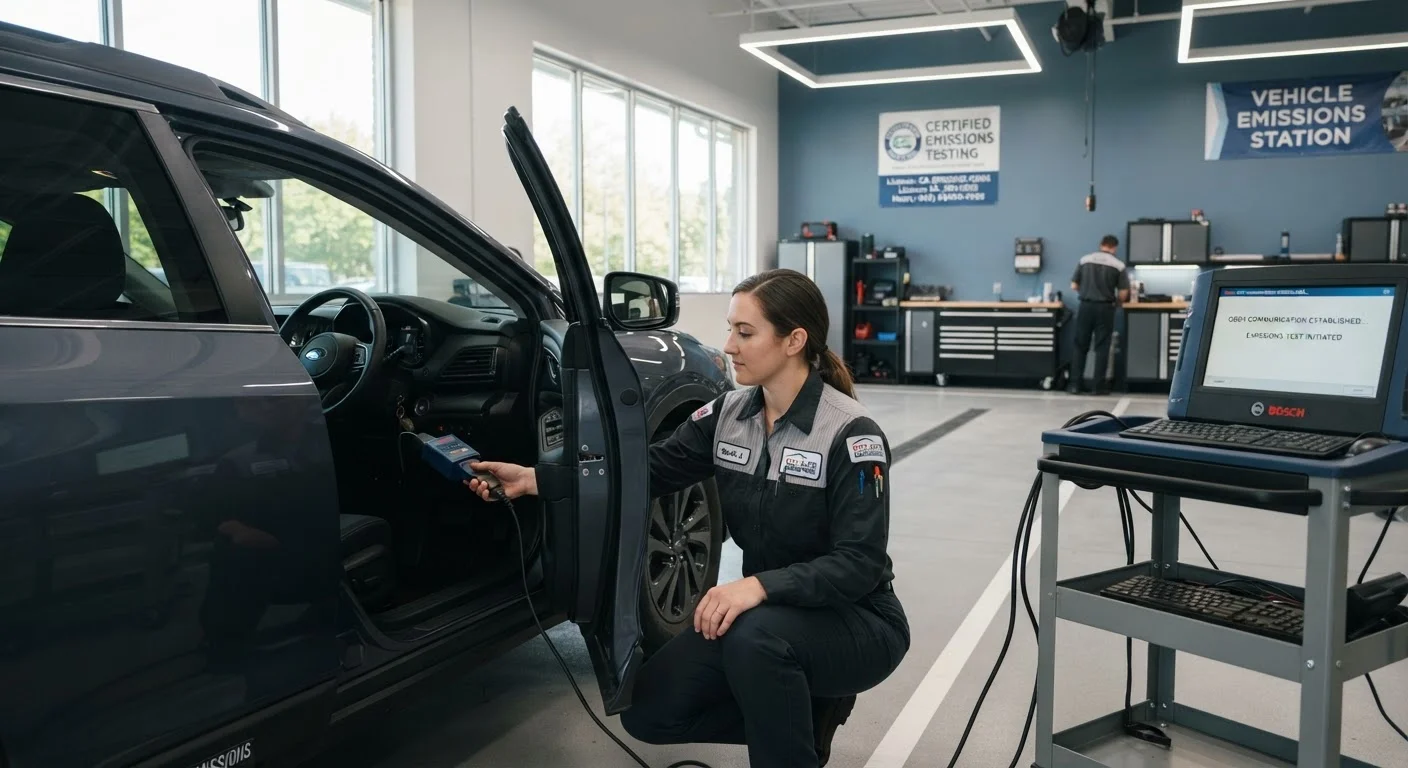
- OBD-II (On-Board Diagnostics) testing: For vehicles manufactured after 1996, a technician connects a scanner to your car's OBD port - typically located under the dashboard - and reads data directly from the vehicle's computer. The system checks whether any emissions-related fault codes are stored and whether the car's self-monitoring readiness checks have completed. A dashboard warning light left on is almost always an automatic failure.
- Tailpipe testing: Older vehicles without full OBD-II systems may be tested by placing a probe in the exhaust pipe to measure pollutants such as hydrocarbons, carbon monoxide, and nitrogen oxides directly.
Certain vehicles are typically exempt from emissions testing. Common exemptions include new vehicles (often for the first one to four model years), very old vehicles (sometimes pre-1975 or pre-1980, depending on the state), electric and fuel-cell vehicles, and farm or off-road equipment. Diesel vehicles may face separate standards. Always verify exemptions with your state's official program, as thresholds change.
What Safety Inspections Cover
Safety inspections focus on mechanical systems that directly affect the ability to control the vehicle and protect occupants and other road users. A typical safety inspection checks:
- Brakes - pad thickness, rotor condition, fluid integrity, and parking brake function
- Tires - tread depth, sidewall condition, and proper inflation
- Lights - headlights, brake lights, turn signals, hazard flashers, and license plate illumination
- Steering and suspension - play in the steering wheel, worn ball joints, and shock absorber condition
- Windshield and wipers - cracks that obstruct the driver's view, wiper blade effectiveness
- Horn, mirrors, and seatbelts
Safety inspection scope also varies by state. Some states run combined facilities that test emissions and safety in a single visit; others use separate programs or licensed private garages. Staying current on routine vehicle maintenance is the most reliable way to avoid a surprise failure on any of these points.
What Happens When You Fail - and What to Do Next
Failing an inspection does not immediately make your car illegal to drive in most states, but it does create a deadline. Most programs allow a grace period - commonly 30 to 60 days - during which you can repair the vehicle and return for a retest. Some states offer partial retests, meaning you only need to retest the component that failed rather than the entire inspection.
Cost limits on repair waivers are an important concept to understand. Many states offer a waiver if you've spent a defined minimum amount on repairs (often $150-$450, depending on the program) but still can't get the vehicle to pass. A waiver allows a vehicle to be registered for one additional cycle despite failing, provided the owner made a good-faith repair effort. Waiver thresholds and eligibility rules differ significantly - confirm details with your state program.
If your vehicle fails an OBD-II emissions test because readiness monitors are incomplete (often after a battery disconnection or recent repair), simply driving the vehicle through a mix of highway and city conditions for several days may allow the monitors to reset and complete - then return for a retest. Your vehicle registration documents will reflect your current inspection status and renewal deadlines, so keep those accessible.
For broader road safety guidance, a well-maintained, inspected vehicle is a foundational element of safe driving for everyone on the road.
This article provides general educational information about vehicle inspection programs. Requirements, exemptions, and procedures vary by state and locality. Always verify current rules with your state's official DMV or environmental agency before making decisions about your vehicle's compliance.