

Key Takeaways
- The VIN (Vehicle Identification Number) is the single most important field on both documents - it uniquely identifies your specific vehicle.
- A title lists the legal owner; a registration lists the authorized operator and must be renewed periodically.
- A lienholder field on the title means a lender has a legal claim on the vehicle until the loan is satisfied.
- The odometer disclosure on a title is a legal statement of mileage at the time of transfer - discrepancies can signal fraud.
- Keeping both documents current and stored safely protects you during traffic stops, sales, and insurance claims.
Vehicle Registration vs. Title
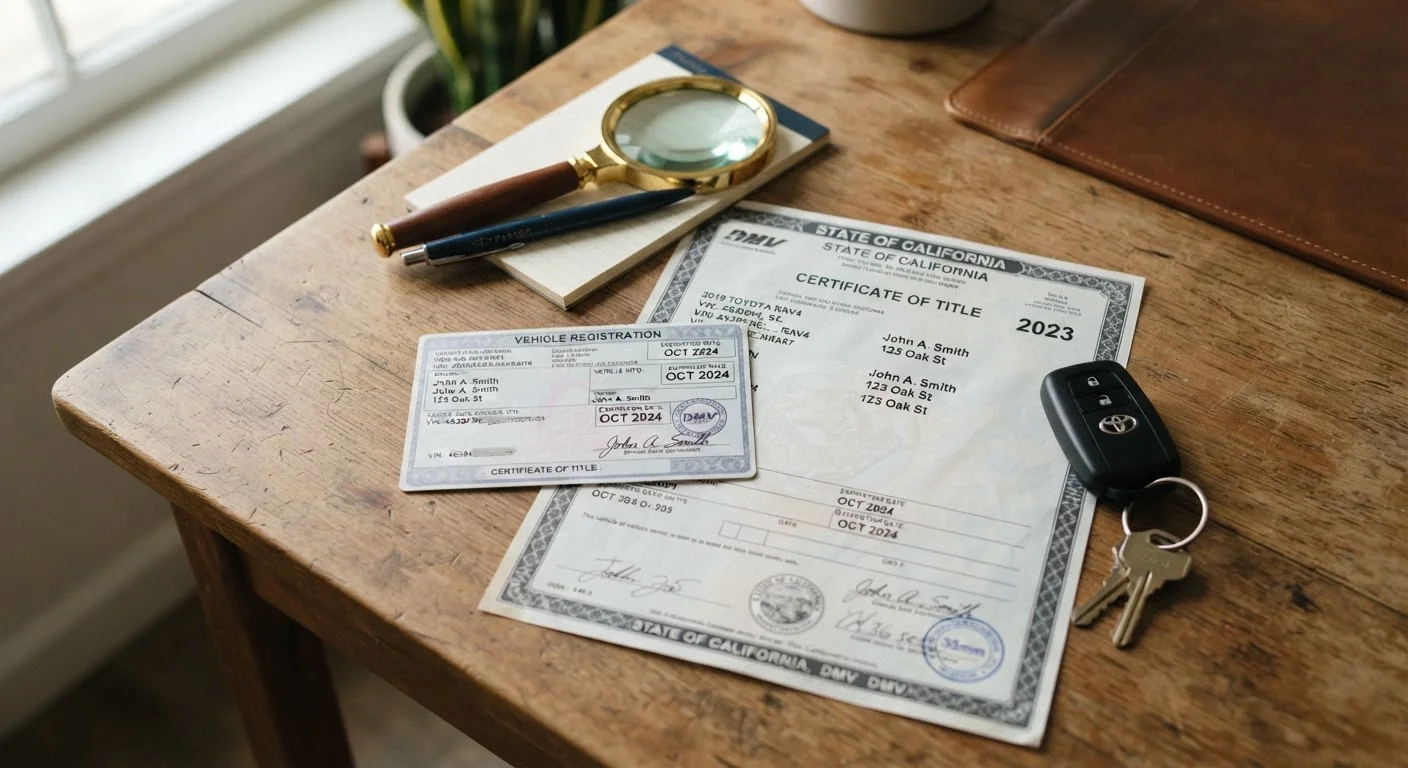
A vehicle title is the legal document that establishes who owns a car. A vehicle registration is the annual government authorization that allows you to operate that car on public roads. Both are issued by your state's motor vehicle agency, but they serve different purposes and contain different information.
In financed vehicles, the title may list a lienholder - typically the lender - as a co-owner until the loan is paid off, at which point the lien is released and a clean title is issued.
The Vehicle Identification Number: The Foundation of Both Documents
Every field on your title and registration points back to one anchor: the Vehicle Identification Number (VIN) - a 17-character alphanumeric code assigned at the factory. No two vehicles share the same VIN, which makes it the authoritative identifier across all official records, insurance policies, and history reports.
Breaking down the VIN reveals useful information: the first character identifies the country of manufacture, characters two and three identify the manufacturer, characters four through eight describe the vehicle's attributes (engine type, body style, restraint systems), character nine is a check digit used to verify the VIN's validity, and the final eight characters form the vehicle's unique serial sequence.
When you receive a new registration sticker or a replacement title, always verify the VIN on the document matches the VIN plate on your vehicle. A mismatch - even a single transposed digit - can create serious legal complications during a sale or insurance claim.
Always Verify the VIN Before Buying Used
Before purchasing any used vehicle, run the VIN through the National Motor Vehicle Title Information System (NMVTIS) or a similar history report service. This can surface title brands, reported accidents, and odometer discrepancies that a seller may not volunteer. It takes only minutes and can prevent costly surprises.
Reading Your Vehicle Title
A certificate of title is a state-issued legal document that establishes ownership. While formats vary by state, most titles share a standard set of fields worth understanding:
- Owner name and address: The legal owner(s) listed here have the right to sell or transfer the vehicle. If two names appear joined by "and," both parties must sign to sell. If joined by "or," either party can sign alone.
- Lienholder: If you financed the vehicle, the lender's name appears here. The lender holds the physical or electronic title until the loan is paid in full. Once satisfied, they issue a lien release and either mail you the title or notify the DMV electronically.
- Odometer disclosure: Federal law (the Truth in Mileage Act) requires sellers to certify the odometer reading at the time of transfer for most vehicles under ten years old. This figure is a legal statement, not an estimate. Always cross-reference it against available service records.
- Title brand: Certain designations - "salvage," "rebuilt," "flood," or "lemon law buyback" - must appear on the title if they apply. A clean, unbranded title is standard; branded titles signal significant past events that affect value and insurability.
If you're buying a used vehicle, understanding the title transfer process is essential before any money changes hands.
Reading Your Vehicle Registration
Your registration card is the document you're most likely to hand to an officer during a traffic stop or present at emissions testing. It confirms that the state has authorized your vehicle for road use and that applicable fees have been paid.
Key fields on a registration card typically include:
- Registered owner: This may differ from the title owner in some states - for example, a business may hold the title while an individual is the registered operator.
- License plate number: Linked to your specific vehicle in state databases. Mismatched plates and registrations are a red flag law enforcement checks routinely.
- Expiration date: Registrations renew on a fixed cycle - usually annually or biannually. The expiration date appears on both the card and the registration sticker affixed to your plate.
- Vehicle description: Year, make, model, and color, used alongside the VIN to confirm the document matches the vehicle.
- Weight or class: Relevant for commercial vehicles and for determining registration fees in states that use weight-based schedules.
For new owners navigating registration deadlines alongside insurance and maintenance schedules, the first-time car owner's roadmap offers a practical overview of what to manage and when.
Why These Documents Matter Beyond the Glove Box
Keeping your registration current isn't just a legal formality - it's directly connected to other ownership responsibilities. Many states tie registration renewal to passing a safety or emissions inspection, meaning an out-of-compliance vehicle can't be legally registered. State inspection requirements vary considerably, so it's worth knowing your state's specific rules.
Your title, meanwhile, is your most important document during any private sale. Sellers who can't produce a clear title - or whose title shows a lien that hasn't been released - should raise immediate caution. Buying a vehicle with an unresolved lien can leave a new owner legally exposed.
Proper record-keeping also supports responsible ownership more broadly. Pairing your document knowledge with sound routine maintenance habits keeps your vehicle safe, road-legal, and better protected against unexpected costs.
Store your title in a secure location - a home safe or fireproof box - and keep a digital photo as a backup. Carry your current registration card in the vehicle at all times, as most states require it to be available for inspection on demand.
Electronic Titles Are Increasingly Common
Many states now issue electronic titles (e-titles) rather than paper certificates, especially for financed vehicles. In these cases, your lender holds the electronic record and the DMV maintains the official digital file. When you pay off your loan, confirm with your lender and state DMV how the lien release will be recorded and whether a paper title will be issued to you.