

Key Takeaways
- Rain reduces tire grip and increases stopping distances - slow down and increase following distance.
- Fog demands lower speeds, low-beam headlights, and full attention on lane position.
- Snow and ice require the gentlest possible inputs: gradual braking, smooth steering, slow acceleration.
- Each weather condition affects visibility, traction, and reaction time in different ways.
- Vehicle preparation - tires, wipers, lights - matters as much as in-the-moment driving habits.
Our Verdict
Rain, fog, and snow are not interchangeable challenges - each impairs driving in a distinct way and calls for a targeted response. Rain primarily attacks traction and stopping distance; fog collapses visibility without warning; snow and ice combine both problems with reduced vehicle responsiveness. Matching your habits to the specific condition you're facing is the clearest path to safer outcomes.
| Best for | Recommended |
|---|---|
| Drivers navigating wet roads and heavy rain | Rain driving techniques |
| Drivers caught in dense or patchy fog | Fog driving techniques |
| Drivers operating in winter snow and ice conditions | Snow and ice driving techniques |
Why Weather Conditions Aren't All the Same Problem
It's tempting to treat bad weather as a single category and apply one blanket rule - slow down and be careful. But rain, fog, and snow each attack different elements of safe driving. Rain primarily degrades traction and extends stopping distances. Fog collapses the visual field, removing your ability to anticipate what's ahead. Snow and ice undermine vehicle control in ways that can't always be corrected once they begin.
Understanding which hazard you're actually dealing with lets you respond with precision rather than general caution. As road safety research consistently shows, informed, condition-specific decisions separate drivers who stay out of trouble from those who don't.
Driving in Rain: Managing Traction and Visibility
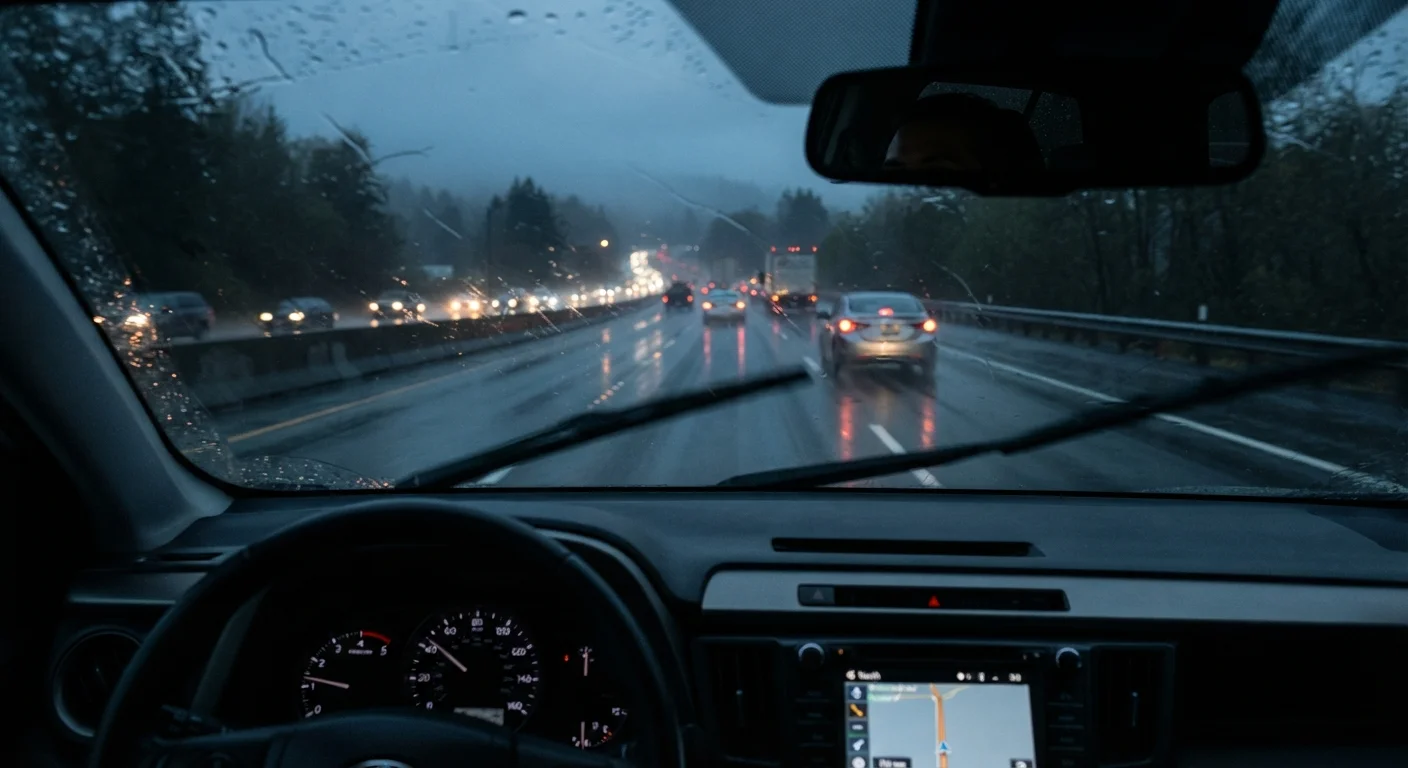
Rain creates two layered problems: it reduces the friction between your tires and the road, and it limits how far ahead you can see. The first few minutes of rainfall are often the most dangerous - water mixes with oil residue on the road surface before it washes away, producing an especially slick film.
Key adjustments for rain:
- Increase following distance. Wet roads can more than double stopping distances compared to dry pavement. The commonly cited three-second following rule should expand to five or more seconds in rain.
- Reduce speed meaningfully. Posted speed limits are designed for ideal conditions. Driving at or just below the limit in heavy rain may still be too fast for conditions.
- Watch for hydroplaning. When water builds up faster than tires can displace it, you lose contact with the road. If this happens, ease off the accelerator gradually - do not brake hard or steer sharply.
- Turn on headlights. Many states legally require headlights when wipers are in use. More practically, lights make you visible to others even in daylight rain.
Your wipers and tire tread are your first line of defense in rain. Worn tires and cracked wiper blades dramatically reduce their effectiveness. Routine maintenance checks that include inspecting these items before wet seasons pay dividends on the road.
| Rain | Fog | Snow & Ice | |
|---|---|---|---|
| Primary hazard | Reduced traction, hydroplaning | Severely compressed visibility | Loss of steering and braking control |
| Speed adjustment | Reduce 5-10 mph below limit | Match speed to sight distance | Substantial reduction; gentle inputs |
| Following distance | Double to triple normal gap | Expand significantly | Triple or more normal gap |
| Headlight use | Low beams on | Low beams or fog lights only | Low beams on; clear snow from lights |
| Critical vehicle feature | Tire tread, wipers | Fog lights, low beams | Winter tires, ABS brakes |
| Most common driver error | Underestimating wet stopping distance | Using high beams in dense fog | Overconfidence in AWD capability |
Driving in Fog: When You Can't See the Hazard Coming
Fog is uniquely disorienting because it can appear suddenly and vary in density within short distances. A stretch of clear road can shift to near-zero visibility within seconds, particularly near bodies of water, valleys, or temperature inversions at dawn and dusk.
Key adjustments for fog:
- Use low-beam headlights, not high beams. High beams reflect off water droplets in fog and actually reduce visibility. If your vehicle has dedicated fog lights, use them.
- Slow down significantly. Your stopping distance must fit within your sight distance. If you can only see 200 feet ahead, you must be able to stop in that space.
- Use the road edge as a guide. In dense fog, focusing on the right edge of your lane rather than the centerline helps you maintain position without being blinded by oncoming lights.
- Avoid stopping on the roadway. If you need to pull over, move completely off the road and turn off your lights so following drivers don't mistake your taillights for a vehicle in motion.
Fog requires heightened anticipatory awareness. Scanning ahead and reading road cues becomes harder when visibility is compressed - which means slowing down buys you the time your eyes can no longer provide.
Driving in Snow and Ice: Control Above Everything Else
Snow and ice represent the most demanding weather scenario for most drivers because vehicle control itself is compromised. Traction is reduced in all directions simultaneously - accelerating, braking, and turning all require more road surface grip than may be available.
Key adjustments for snow and ice:
- Accelerate slowly. Applying power too quickly causes wheels to spin, which reduces traction further. Ease into acceleration gently.
- Brake early and lightly. Begin braking much earlier than you would on dry roads. On ice especially, threshold braking (applying firm but not wheel-locking pressure) helps maintain steering control. Modern ABS (anti-lock braking systems) assist with this automatically.
- Steer smoothly. Abrupt steering inputs on slippery surfaces can trigger skids. If your vehicle does begin to skid, steer gently in the direction you want to go and avoid overcorrecting.
- Know your vehicle's drivetrain. All-wheel drive (AWD) and four-wheel drive (4WD) improve traction during acceleration but do not improve braking or cornering on ice. Overconfidence in AWD is a documented factor in winter crashes.
Black ice - a thin, nearly transparent layer of ice on pavement - is particularly hazardous because it's difficult to see. Bridges, overpasses, and shaded road segments freeze first. If road temperatures are near or below freezing, treat any dark, wet-looking pavement with suspicion. For a broader look at how even experienced drivers get caught out, winter conditions frequently appear on that list.
Before You Drive: Preparation Makes the Difference
Adjusting your habits behind the wheel is only part of the equation. Vehicle condition shapes how well any driving technique performs in adverse weather.
- Tires: Adequate tread depth is critical. Tires worn below 2/32 of an inch lose meaningful grip in rain and snow. Winter tires provide substantially better traction on snow and ice than all-season alternatives in sustained cold-weather climates.
- Wipers: Replace wiper blades when they streak or chatter. Consider winter blades in snow-prone regions - they resist ice buildup in the blade assembly.
- Lights: Ensure all exterior lights work, including fog lights if equipped. Clean lenses regularly; road grime can reduce light output meaningfully.
- Brakes: Worn brake pads increase stopping distance in all conditions, but the effect is amplified on wet or icy roads. If brakes feel spongy or the vehicle pulls during braking, have them inspected before winter driving.
Preparation also includes giving yourself time. Rushing in adverse weather is one of the most consistent contributors to poor decisions - speeding through conditions where slower is demonstrably safer. Driving fatigued compounds every weather hazard, so rest and adequate trip planning matter as much as vehicle checks.