

Key Takeaways
- Familiar routes can reduce alertness, making well-practiced drivers more vulnerable to certain hazards.
- Environmental factors like sun glare, wet roads, and highway monotony catch drivers off guard regardless of experience level.
- Recognizing these scenarios in advance allows you to adjust your behavior before a situation escalates.
- Most caught-off-guard moments share a common cause: reduced attentional readiness at critical moments.
- Simple preparation strategies - scanning farther ahead, slowing down, increasing following distance - counter many of these risks.
Why Experience Isn't Always Enough
Years behind the wheel build genuine skill, but they also breed familiarity - and familiarity can quietly erode the sharp attention that keeps drivers safe. Research in traffic psychology consistently finds that experienced drivers are not immune to lapses; in some cases, over-confidence in their own abilities actually increases risk exposure in specific scenarios.
The situations below aren't rare edge cases. They happen on ordinary roads, during routine commutes, and often in conditions that feel completely manageable. Understanding each one - why it catches drivers off guard and what you can do differently - is the foundation of staying prepared. For a broader framework on situational awareness, the Complete Picture of Road Safety is a useful companion to this article.
Sun Glare at Dawn and Dusk
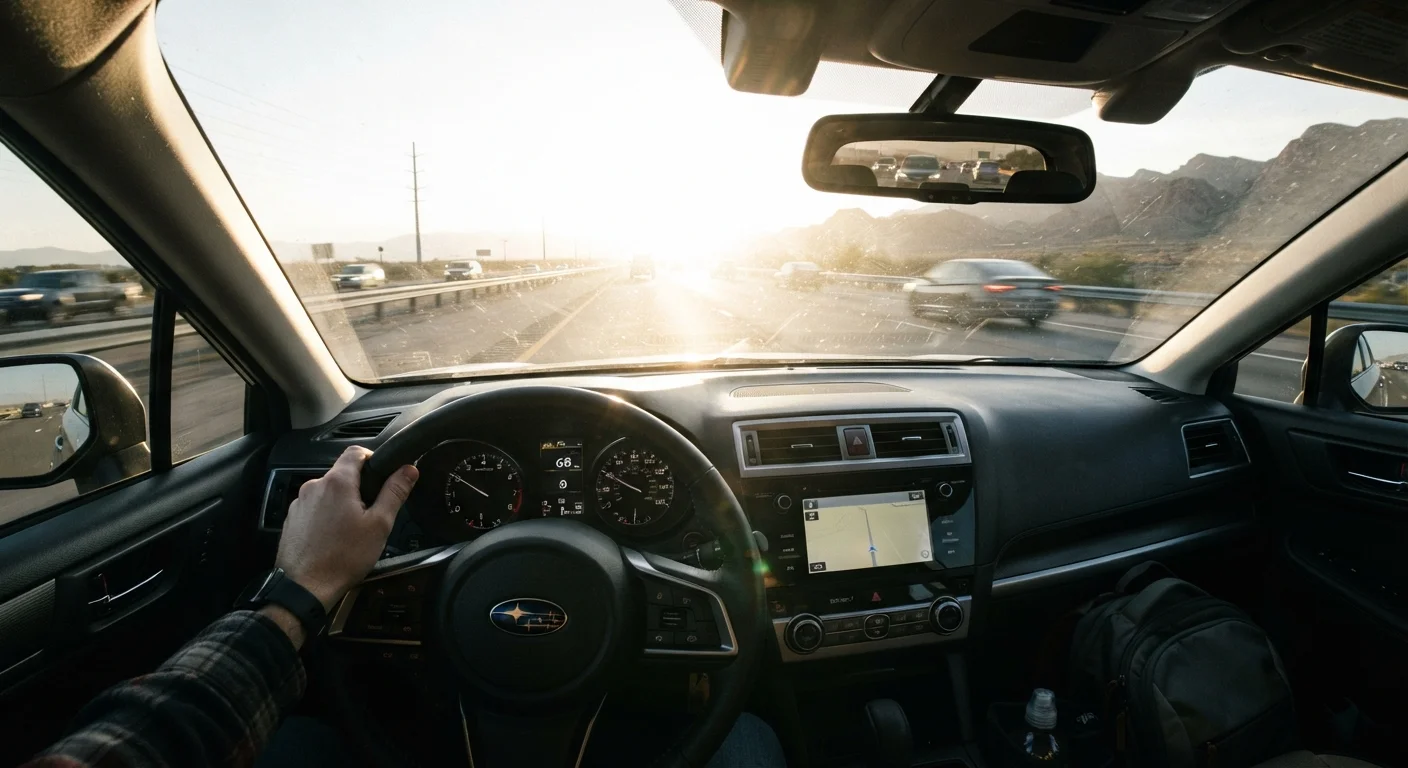
Low-angle sunlight during the first and last hours of daylight can render traffic signals, pedestrians, and lead vehicles nearly invisible within seconds. Unlike nighttime darkness - which drivers actively prepare for - glare often arrives suddenly as you crest a hill or turn a corner. Many drivers instinctively squint or look away, which reduces the field of vision at exactly the wrong moment.
Keeping a clean windshield (inside and out), using your sun visor proactively, and reducing speed when visibility is compromised are practical first responses. Polarized sunglasses also help cut reflective glare off wet pavement. The related challenge of night driving shows how altered light conditions consistently distort perception.
Glare arrives suddenly and reduces your field of vision at exactly the wrong moment.
Highway Hypnosis on Long Straightaways
Extended stretches of monotonous highway create a meditative driving state sometimes called highway hypnosis - where a driver covers miles on autopilot with little conscious awareness of the road. The vehicle stays in the lane, speed holds steady, but genuine hazard processing drops significantly. Drivers often realize they've entered this state only after the fact.
Combatting it involves deliberate strategies: scanning mirrors on a set interval, adjusting the radio, engaging passengers in conversation, or making brief planned stops on longer trips. If fatigue compounds the effect, the risks multiply - driving while fatigued impairs reaction time in ways that closely mirror alcohol intoxication.
Drivers often realize they've entered a hypnotic state only after the fact.
Merging and Lane Changes at Speed
Highway merges demand simultaneous management of multiple variables: matching speed, identifying gaps, monitoring blind spots, and signaling - all while surrounding vehicles continue moving independently. Even practiced drivers can misjudge closing speeds or overlook a vehicle sitting in their blind spot. The compressed timeframe leaves little room to correct errors.
The core habit is checking mirrors and physically turning to check the blind spot before committing to a lane change - not one or the other. Increasing following distance before a merge gives more room to adjust. Highway and city driving each introduce distinct merging challenges worth understanding separately.
Misjudging closing speeds during a merge leaves little room to correct.
Intersection Timing Misjudgments
Intersections are among the most statistically dangerous locations on U.S. roads - and the hazard isn't always obvious. A common trap: a driver sees a light turn green and proceeds without confirming cross-traffic has actually stopped. Another: a driver entering a four-way stop misjudges who arrived first. These split-second judgment calls go wrong even when everyone involved is paying attention.
The recommended practice is a brief pause and a left-right-left scan before moving through any intersection, regardless of signal color. For a thorough breakdown of right-of-way rules across intersection types, navigating roundabouts, four-way stops, and uncontrolled intersections covers each scenario in detail.
Seeing a green light and confirming cross-traffic has stopped are two different things.
Sudden Weather Changes Mid-Drive
A dry road can become slick within moments when rain begins - especially in the first minutes of a storm, when water mixes with road oils before washing them away. Fog can descend rapidly in valleys, and black ice forms without visible warning. Drivers caught in these transitions often maintain speed habits suited to the previous conditions rather than adjusting immediately.
The key response is reducing speed before you feel the road surface change, not after. Increasing following distance gives more stopping room in reduced-traction situations. Driving in rain, fog, and snow each require distinct adjustments that are worth reviewing before conditions arise rather than during them.
Reduce speed before you feel the road change - not after.
Cognitive Distraction from Hands-Free Devices
Many drivers assume that if their hands are on the wheel, their phone isn't a distraction. Traffic safety research challenges this assumption directly: the mental load of a phone conversation - even a passive one through a car's built-in system - reduces the brain's capacity to process visual information from the road. Hazards can be in plain sight and go unregistered.
This is sometimes called "inattention blindness" - looking without seeing. Understanding why hands-free doesn't mean risk-free can help drivers reassess habits they may not have recognized as risky.
Inattention blindness means hazards can be in plain sight and still go unregistered.
Building Lasting Awareness
The thread connecting every scenario above is attentional readiness - the mental state of actively scanning and anticipating rather than simply reacting. This isn't about being anxious behind the wheel; it's about staying genuinely engaged, especially when conditions or routine lull you toward passive mode.
Scan Farther Ahead Than Feels Necessary
Most drivers focus on the vehicle directly in front of them. Skilled hazard anticipation involves scanning 12-15 seconds ahead - roughly a quarter-mile at highway speeds. This gives you time to notice brake lights, merging vehicles, or road debris early enough to respond without emergency braking. Practicing this habit on low-traffic roads first makes it easier to maintain under pressure. See reading the road ahead for practical techniques.
New and returning drivers will find a practical starting point in Road Safety From the Ground Up, which covers the foundational habits that support awareness at every experience level. The goal is never perfect driving - it's consistently informed driving.