

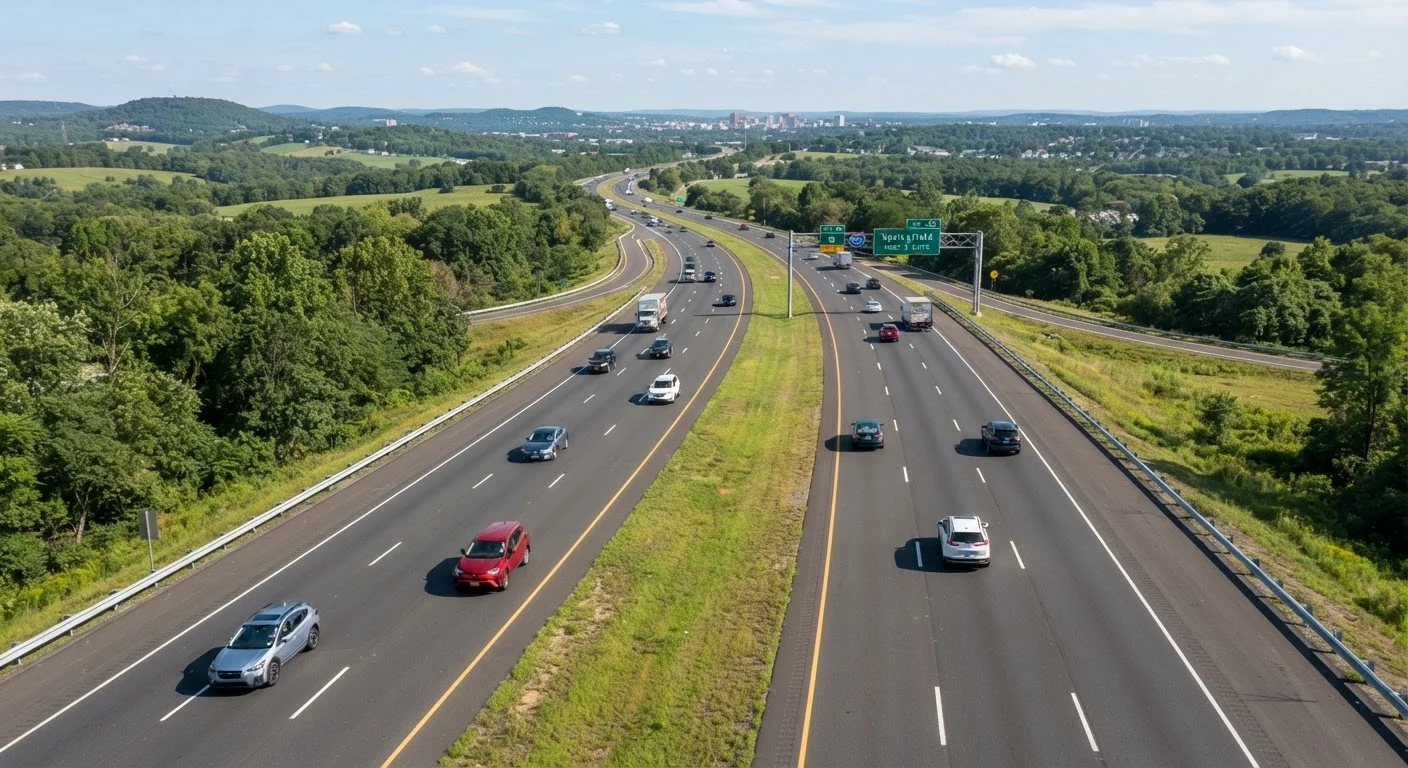
Key Takeaways
- The three-second following rule is a reliable baseline for safe stopping distance in normal conditions.
- Side clearance and rear space are just as critical as the gap in front of your vehicle.
- Adjusting your space cushion for weather, speed, and traffic dramatically lowers collision risk.
- Blind spots, merge zones, and intersections demand extra space management attention.
- No driver assistance technology replaces the habit of actively managing space around your car.
Why Space Management Is the Core of Defensive Driving
Every collision requires two things: an unexpected event and insufficient space to respond to it. Remove that second ingredient - by keeping adequate room around your vehicle at all times - and the risk drops sharply. Space management isn't a passive habit; it's an active, ongoing decision that skilled drivers make hundreds of times per trip.
According to the National Safety Council, rear-end collisions are among the most common crash types in the U.S., and a significant share of them are linked to following too closely. The physics are straightforward: the more space you have, the more time you have to perceive a threat, decide on a response, and execute it before contact occurs. That chain - perception, decision, action - takes real-world seconds, even for attentive drivers.
This article is part of a broader resource on foundational road safety skills for drivers at any experience level.
Best Practices for Managing the Space Around You
The following practices form the framework of effective space management. Apply them consistently and they become second nature.
Use the three-second rule as your baseline following distance in normal conditions.
A three-second gap gives the average driver enough time to perceive a hazard, brake, and stop before reaching the point where the car ahead stopped. It accounts for perception and reaction time, not just braking distance alone.
Increase your following distance to four or more seconds in adverse conditions.
Rain, snow, gravel, and poor visibility all extend stopping distance and reduce your margin for error. Building in extra buffer time directly offsets that increased risk without requiring any special equipment or skill.
Maintain a lateral buffer between your vehicle and others in adjacent lanes.
Side clearance gives you room to respond to a drifting driver or an object in the road without swerving into another lane. Driving at the center of your lane and avoiding prolonged side-by-side positioning reduces this risk.
Be aware of what's behind you, not just what's ahead.
If a vehicle is tailgating you, a sudden stop could result in a rear-end collision regardless of your following distance in front. Knowing what's behind you informs how aggressively you can brake and whether you should create more space in front to brake more gradually.
Identify and plan escape routes as you drive.
An escape route is any available space you could move into if the situation directly ahead deteriorates. Knowing where that space is before you need it turns a potential emergency into a manageable maneuver.
Adapting Your Space Cushion to Conditions
The three-second rule and standard lane positioning work well under ideal conditions, but real driving rarely is ideal. Rain, snow, fog, heavy loads, and fatigue all increase the stopping distance your vehicle needs - sometimes dramatically. Wet roads can double stopping distance; ice can multiply it many times over.
Speed also changes the equation. At highway speeds, every additional mile per hour adds meaningful stopping distance. A vehicle traveling at 65 mph requires substantially more space than one at 40 mph. When traffic is dense, your options for escape routes - swerving, braking, changing lanes - narrow. That's when extra following distance becomes most valuable, not least.
Double Your Following Distance in Poor Weather
A simple rule of thumb: if conditions are anything less than dry and clear, double your usual following distance. This applies to rain, glare, fog, and roads that look dry but may carry morning frost. You don't need to calculate stopping distances precisely - simply adding more seconds of buffer is an effective, low-effort adjustment.
Understanding how your vehicle's condition affects space requirements is equally important. Worn tires, degraded brake pads, and heavy cargo all increase stopping distances. Keeping your vehicle in good mechanical order is part of the space management equation - see our guidance on routine car maintenance for a practical starting point.
For drivers who rely on modern driver assistance features like automatic emergency braking or lane-keeping assist, it's worth understanding their limitations. These systems can support good habits, but as covered in our article on driving assistance technology, they are designed to complement - not replace - attentive space management.
High-Risk Zones That Demand Extra Attention
Certain driving environments consistently compress available space and reduce reaction time. Recognizing them in advance lets you adjust before a situation escalates.
- Intersections: Cross-traffic, turning vehicles, and pedestrians create unpredictable hazards from multiple directions. Slow your approach, scan cross-streets, and never accelerate the moment a light turns green without checking that the intersection has cleared.
- Merge zones: Entering or exiting a highway compresses lateral space. Identify gaps early, match speed to traffic, and avoid riding parallel to another vehicle in a merge lane.
- Blind spots: Every vehicle has areas the mirrors don't fully cover. A quick head-check before lane changes is non-negotiable. Minimize time spent in another driver's blind spot too.
- Stop-and-go traffic: Sudden stops are frequent and unpredictable. Increase your following distance beyond the standard three seconds, and watch the vehicle two cars ahead - not just the one directly in front of you.
Pairing these habits with active hazard scanning helps you act earlier and with more options. For more on reading the environment ahead, see our article on anticipating road hazards.