

Key Takeaways
- Squealing during normal braking usually means brake pads are nearing the end of their usable life.
- Grinding sounds indicate metal-on-metal contact - a situation that warrants immediate professional inspection.
- A pulsating brake pedal or steering wheel vibration often points to warped or unevenly worn rotors.
- A soft or spongy pedal can signal air in the brake lines or a hydraulic system issue requiring prompt attention.
- Pulling to one side while braking may indicate uneven pad wear, a stuck caliper, or a brake fluid issue.
- Most brake problems are caught early during routine inspections, reinforcing the value of scheduled maintenance.
Brake Wear Warning Signs
Brake wear warning signs are physical symptoms - sounds, sensations, and visual cues - that indicate your vehicle's braking system needs inspection or service. These signals typically appear gradually as brake pads, rotors, or hydraulic components degrade over time. Catching them early is the difference between a straightforward pad replacement and a costly rotor or caliper repair.
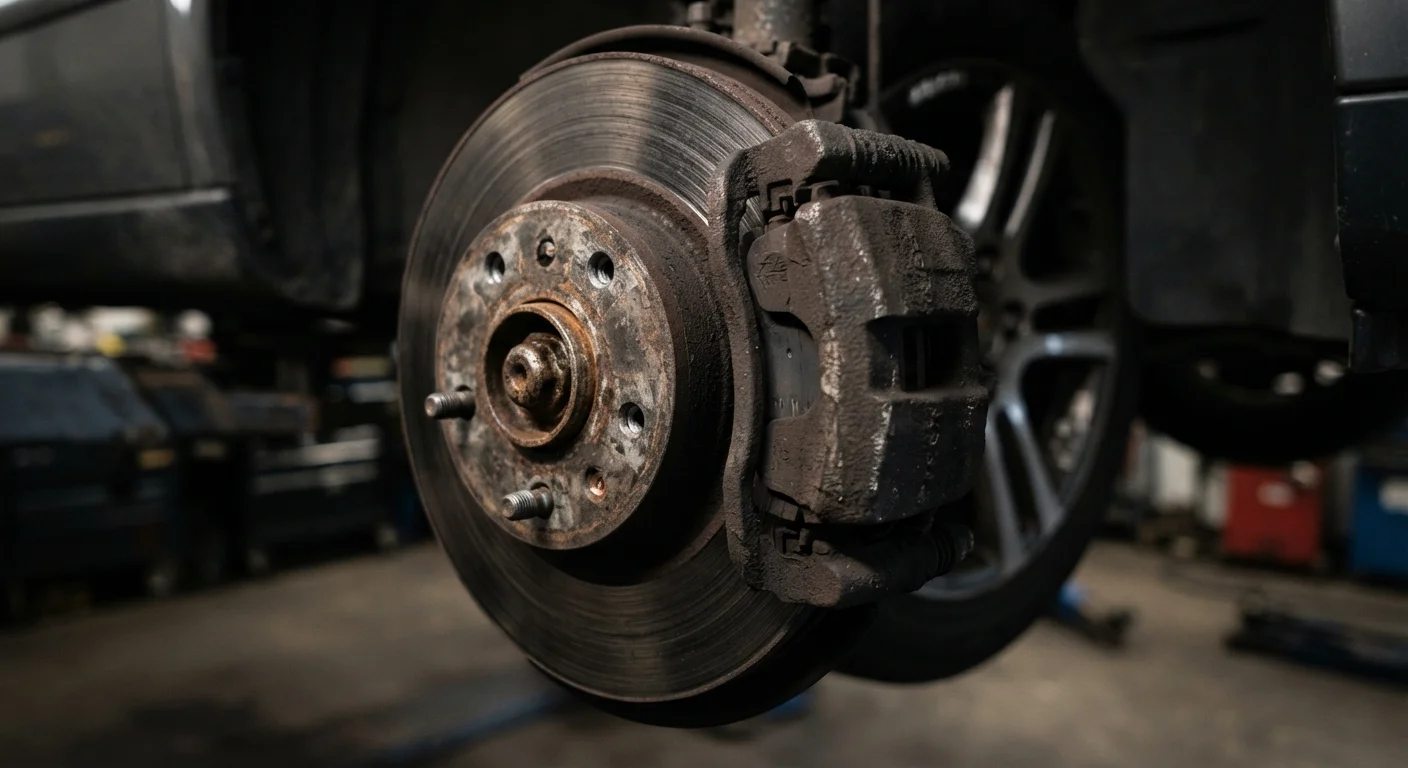
Modern disc brake systems use friction material bonded to a metal backing plate; as the friction material thins, metal-on-metal contact produces the characteristic squealing or grinding that signals replacement is needed.
Why Brakes Degrade Gradually - Not All at Once
Every time you press the brake pedal, friction material on your brake pads converts the vehicle's kinetic energy into heat. That process is controlled and reliable - but it's also consumptive. Pads thin with every stop, rotors develop micro-scoring over thousands of miles, and brake fluid slowly absorbs moisture from the air. None of this happens suddenly. It accumulates.
This is actually good news for drivers. Because brake wear is progressive, it almost always produces warning signals well before a component fails completely. The challenge is knowing what those signals sound, feel, and look like - and acting on them before the repair escalates in cost and urgency. Understanding routine maintenance fundamentals is the foundation for catching these issues early.
The Warning Signals You Should Never Ignore
Brake systems communicate in predictable ways. Here are the most common signals and what they typically mean:
- High-pitched squealing during braking: Most brake pads include a small metal wear indicator - a tab engineered to contact the rotor and produce a squeal when the pad reaches minimum thickness. This sound is intentional: it's the system flagging that replacement is due.
- Grinding or growling: If squealing goes unaddressed, the pad friction material eventually wears away entirely, leaving metal backing plate against rotor. The resulting grinding sound means rotor damage is likely already occurring. This warrants prompt professional inspection.
- Pulsating pedal or steering wheel vibration when braking: A pedal that throbs underfoot or a steering wheel that shudders during braking typically points to rotor issues - either warping from heat cycles or uneven surface wear. The pedal pulsation is the hydraulic system transmitting rotor irregularities back through the brake lines.
- Soft or spongy pedal feel: A pedal that sinks further than normal before the brakes engage suggests reduced hydraulic pressure - commonly caused by air in the lines or low brake fluid. Either condition compromises braking performance and should be assessed promptly.
- Pulling to one side: If the vehicle drifts left or right when braking, brake force is being applied unevenly. A seized caliper, contaminated pad, or fluid issue on one side of the axle is the usual cause.
Do a Quick Visual Check at Home
On most vehicles, you can see brake pad thickness through the wheel spokes without removing the wheel. Look for the pad pressed against the rotor - if the friction material appears thin (less than the width of a pencil eraser), it's worth having a professional measure it. Checking both front wheels takes under two minutes and costs nothing.
A illuminated brake warning light on your dashboard can accompany several of these symptoms. See what dashboard warning lights mean for a broader look at how your vehicle's sensors communicate trouble.
How Driving Habits Accelerate Brake Wear
Brake longevity isn't purely a matter of mileage - driving style plays a meaningful role. Frequent hard stops from highway speeds generate significant heat, which stresses both pads and rotors. Stop-and-go urban commuting wears pads faster than steady highway driving. Riding the brake pedal downhill - rather than using engine braking - adds unnecessary heat cycles.
These patterns aren't just hard on brakes; they're part of a broader picture of how ownership decisions affect a vehicle's wear and tear. Anticipating traffic and braking gradually rather than abruptly is one of the most effective habits for extending brake life - and it's also a core principle of reading the road ahead to avoid hazards before they become emergencies.
~20%
Of U.S. vehicles found with inadequate brakes
The Car Care Council has reported through its vehicle inspection events that roughly one in five vehicles inspected shows brake systems in need of service.
3mm
Minimum safe brake pad thickness (general guideline)
Many automotive technicians and manufacturers use approximately 3mm (about 1/8 inch) as the threshold below which brake pad replacement is recommended.
2 years
Typical brake fluid change interval
Many vehicle manufacturers recommend brake fluid replacement every two years because the fluid is hygroscopic - it absorbs moisture over time, lowering its boiling point and reducing hydraulic performance.
When to See a Mechanic - and What to Expect
Any single warning sign from the list above justifies scheduling a brake inspection. Two or more symptoms occurring together - say, squealing plus a soft pedal - suggest the system needs attention without delay. Brake inspections are typically quick and often included during routine service visits. A mechanic will measure pad thickness, assess rotor condition and surface finish, check caliper operation, and inspect brake fluid condition and level.
If inspection confirms wear, the repair scope depends on what's found. Pad-only replacement is the most straightforward service. If rotors are below minimum thickness or show deep scoring, resurfacing or replacement may be recommended. Hydraulic issues - leaking calipers, compromised brake lines, or moisture-contaminated fluid - require their own targeted repairs. The key principle is simple: address brake wear at the pad stage and you'll typically avoid the more involved and expensive repairs that follow from neglect.
This article is for general informational purposes only. For diagnosis, repair recommendations, or safety concerns about your specific vehicle, consult a qualified automotive technician.