

Key Takeaways
- Native plants are adapted to local soils and climate, typically requiring less water and fertilizer once established.
- Ornamental imports can offer extended bloom seasons and striking aesthetics but may need more intensive care.
- Some non-native ornamentals become invasive and can displace local ecosystems - always check your region's invasive species list.
- Mixing natives and well-behaved non-natives is a practical strategy for most home gardeners.
- Local wildlife - including pollinators and birds - generally depend more on native plant species for food and habitat.
Our Verdict
Neither native plants nor ornamental imports are universally superior - the right choice depends on your goals, your region, and how much maintenance you want to manage. Natives excel for low-input, wildlife-friendly yards, while non-native ornamentals can fill specific aesthetic or seasonal gaps when chosen carefully. A thoughtfully blended landscape often delivers the best of both worlds.
| Best for | Recommended |
|---|---|
| Homeowners wanting low-maintenance, eco-friendly yards | Native Plants |
| Gardeners focused on extended color and formal design | Ornamental Imports |
| Those wanting wildlife habitat and pollinator support | Native Plants |
| Gardeners seeking flexibility across varied conditions | A Thoughtful Mix of Both |
What We Mean by Native vs. Non-Native Plants
A native plant is one that evolved naturally in a specific region over thousands of years, without human introduction. Examples include black-eyed Susans in the Midwest, Eastern red columbine in the Appalachians, or California poppies along the Pacific Coast. These species developed alongside local insects, birds, and soil organisms, making them ecologically integrated.
Ornamental imports (also called non-natives or exotic ornamentals) are plants cultivated and introduced from other regions or countries - often for their visual appeal, longer bloom times, or unusual form. Think butterfly bush from China, English lavender from the Mediterranean, or Japanese barberry from East Asia.
Understanding this distinction is the starting point for smarter planting decisions. See the seasonal planting calendar for American home gardeners to match plant timing to your region.
How Each Performs in the Real-World Garden
Once established, most native plants thrive with minimal intervention because they're adapted to local rainfall patterns, temperature swings, and soil conditions. This translates to lower water bills and fewer fertilizer applications over time. They're also generally more resistant to regional pests and diseases they've co-evolved with.
Ornamental imports can be stunning, but they often require more active support - supplemental irrigation, soil amendments, or winter protection in zones outside their native range. That said, many non-native ornamentals are perfectly well-behaved and do not spread aggressively. The key is knowing the difference.
| Native Plants | Ornamental Imports | |
|---|---|---|
| Water needs (once established) | Generally low - adapted to local rainfall | Often moderate to high - may need irrigation |
| Fertilizer requirements | Minimal - suited to native soils | Moderate - may need soil amendments |
| Wildlife and pollinator support | High - co-evolved with local species | Variable - depends on plant family |
| Invasive risk | None by definition | Ranges from none to serious |
| Aesthetic variety and bloom options | Strong regional variety | Extensive global variety |
| Establishment difficulty | Moderate - slower start, less intervention later | Variable - may establish quickly but need ongoing care |
| Availability at nurseries | Growing but still limited in some regions | Widely available nationwide |
For additional strategies to cut down on yard work, the low-maintenance landscaping approaches article offers practical frameworks for both plant types.
The Invasive Species Problem
Not all non-native plants are harmful, but some become invasive - spreading beyond gardens into natural areas and outcompeting native species. Common examples include kudzu in the Southeast, purple loosestrife in wetland states, and English ivy in the Pacific Northwest. These plants can degrade local ecosystems and prove extremely difficult to remove once established.
Check Before You Plant
Several ornamental plants that were widely sold for decades are now recognized as invasive in parts of the U.S., including burning bush, Japanese barberry, and wintercreeper. Planting invasive species - even unintentionally - can have lasting consequences for local ecosystems. Always verify a plant's invasive status in your specific state before purchasing or planting.
Before planting any ornamental import, check your state's invasive species list through your local cooperative extension service or a state department of agriculture resource. Many formerly popular garden plants have since been flagged as invasive in specific regions.
The year-round lawn and garden care guide covers how to monitor and manage unwanted plant spread throughout every season.
Wildlife Support and Ecological Impact
Research consistently shows that native plants support more local wildlife. Native insects - including many native bee species - have evolved to feed on specific native plants and cannot always use non-native alternatives. These insects, in turn, are food sources for birds raising young. A yard with a strong native plant foundation can meaningfully support local biodiversity.
That doesn't mean ornamental imports offer zero wildlife value. Some non-native flowering plants do attract generalist pollinators like honeybees. However, they rarely replace the ecological role of natives. If supporting pollinators, birds, or beneficial insects is a priority, native plantings should form the backbone of your landscape. The perennials vs. annuals planning guide also explores how plant life cycles affect habitat continuity.
Building a Balanced Yard: Practical Mixing Strategies
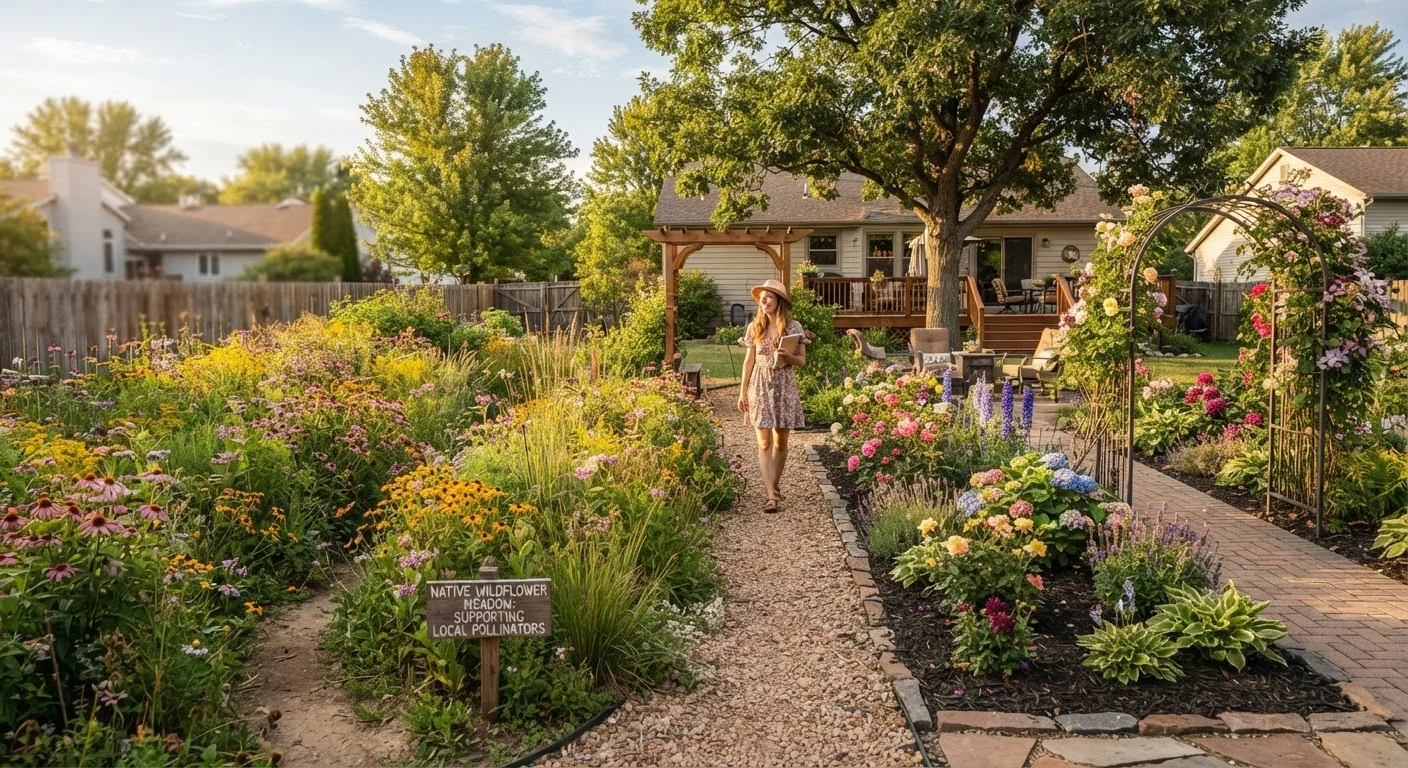
Most American home landscapes don't need to be entirely native or entirely ornamental - a thoughtful mix is usually most practical. A common approach is to anchor beds with native species (particularly trees, shrubs, and perennial wildflowers) and use non-invasive ornamental imports to fill seasonal gaps or provide specific design accents.
- Start with native trees and shrubs - they do the heaviest ecological lifting and require the least intervention long-term.
- Use native groundcovers to suppress weeds naturally, reducing the need for mulch or herbicides. See mulch vs. gravel for garden beds for complementary ground cover decisions.
- Select non-natives intentionally - choose those confirmed as non-invasive in your specific state or region.
- Feed your soil wisely - native plants often need less fertilizer, but any supplemental feeding should match plant needs. The organic vs. synthetic fertilizer guide helps you choose appropriately.
Whether your yard leans native, ornamental, or somewhere in between, the goal is a landscape that's manageable for you and supportive of the environment around you.