

Key Takeaways
- Synthetic fertilizers deliver nutrients quickly but don't improve soil structure over time.
- Organic fertilizers feed soil biology slowly, building long-term fertility and structure.
- Using both types strategically can balance speed with long-term soil health.
- Soil testing helps you choose the right fertilizer type and avoid over-application.
- Neither type is universally superior - the best choice depends on your soil, plants, and goals.
Our Verdict
Organic and synthetic fertilizers each have a legitimate place in a home gardener's toolkit. Synthetics solve immediate nutrient deficiencies fast, while organics build the microbial ecosystem that sustains healthy plants season after season. Most gardeners benefit from understanding both rather than committing exclusively to one.
| Best for | Recommended |
|---|---|
| Gardeners prioritizing long-term soil health and sustainability | Organic fertilizers |
| Situations requiring rapid correction of a nutrient deficiency | Synthetic fertilizers |
| Established gardens with good soil biology seeking maintenance feeding | Organic fertilizers |
| New garden beds or container plants needing precise, controlled nutrition | Synthetic fertilizers |
How Each Type Delivers Nutrients
Fertilizers are broadly categorized by their origin and how they release nutrients into the soil. Understanding the mechanism behind each type makes it easier to choose wisely for your situation.
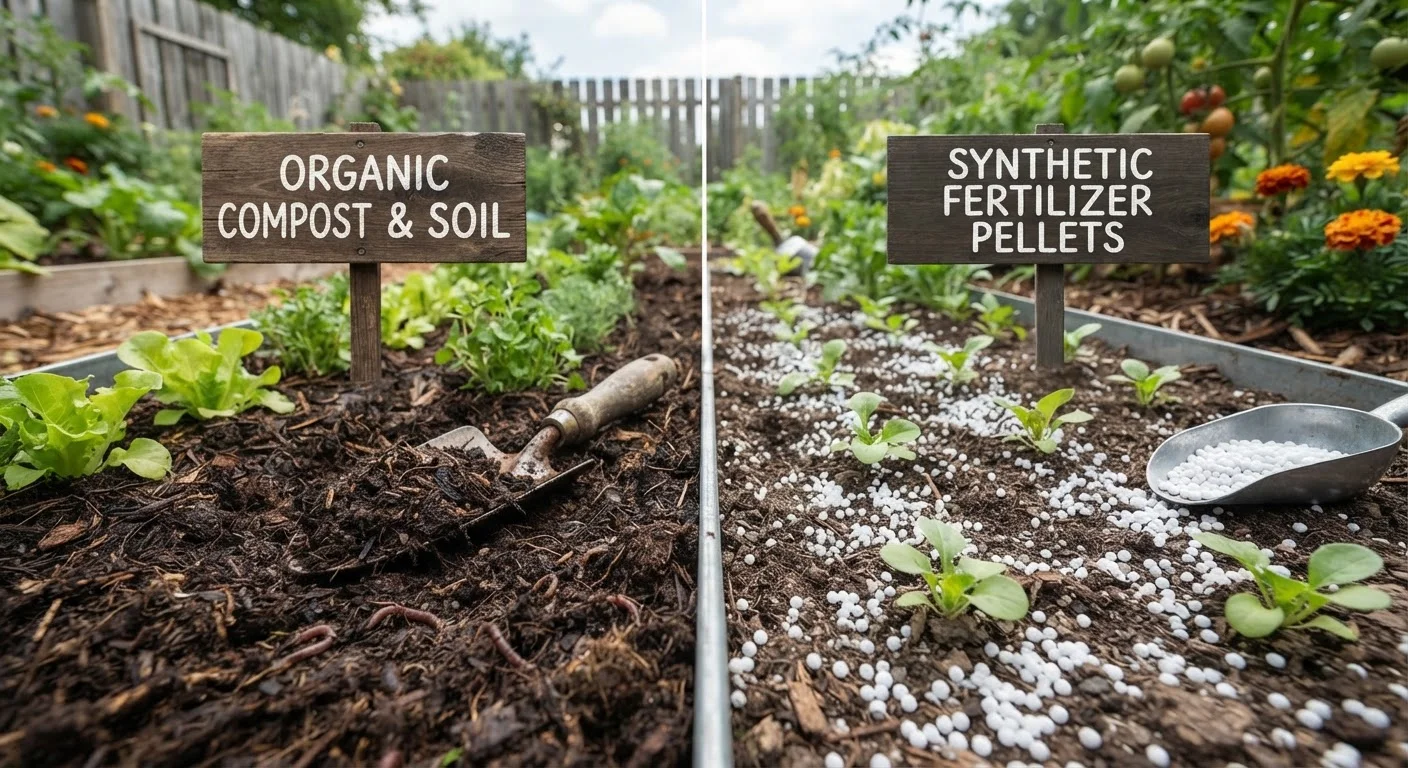
Synthetic fertilizers are manufactured from mineral salts and chemical compounds. They contain nutrients - primarily nitrogen (N), phosphorus (P), and potassium (K) - in forms that dissolve quickly in water and become immediately available to plant roots. This rapid availability is their defining trait: a deficient plant can begin recovering within days of application.
Organic fertilizers come from plant, animal, or mineral sources - examples include compost, bone meal, blood meal, kelp meal, and worm castings. These materials must first be broken down by soil microbes and fungi before plants can absorb the nutrients. This biological process is slower, but it also feeds the living community in your soil, which is responsible for much more than just nutrient delivery. Good soil biology helps with water retention, disease suppression, and aeration - factors that synthetic fertilizers don't directly address. For more on how soil conditions affect nutrient uptake, see our guide on soil pH and nutrient availability.
Speed, Duration, and Risk of Over-Application
One of the most practical differences between these fertilizer types is timing - how fast nutrients become available and how long they continue feeding your plants.
Synthetic fertilizers act quickly, often within 24 to 72 hours, but most are also depleted quickly. They typically don't persist in the soil for more than a few weeks, which is why repeated applications throughout the growing season are common. This frequent reapplication also carries a significant risk: over-fertilization, sometimes called fertilizer burn, can damage or kill plant roots when salt concentrations in the soil become too high.
Organic fertilizers release nutrients gradually - often over several months - as microbes process the raw material. This slow release means plants receive a steadier supply with far less risk of burn. However, it also means organic fertilizers are poor emergency fixes. If your tomatoes show acute nitrogen deficiency in mid-July, a slow-release organic amendment may not act quickly enough to help that season's crop.
| Organic Fertilizers | Synthetic Fertilizers | |
|---|---|---|
| Nutrient release speed | Slow (weeks to months) | Fast (24-72 hours) |
| Duration of effect | Long-lasting, gradual | Short-lived, weeks |
| Risk of over-application | Low - difficult to over-apply | Higher - salt burn possible |
| Soil biology impact | Feeds and supports microbes | Minimal direct benefit to microbes |
| Soil structure over time | Improves texture and drainage | Doesn't build organic matter |
| Precision of nutrients | Variable, less precise | Precise, consistent ratios |
| Cost per application | Often lower per season | Lower upfront, more reapplications |
| Best use case | Long-term soil building | Rapid deficiency correction |
Pairing fertilization with other soil improvement practices - such as lawn aeration - can help nutrients reach root zones more effectively regardless of which type you choose.
What Each Does to Your Soil Over Time
The long-term picture is where organic and synthetic fertilizers diverge most significantly.
Regular use of organic materials steadily improves soil structure. Organic matter - the partially decomposed residue left after microbes process amendments - binds soil particles into aggregates that hold air pockets, drain excess moisture, and retain water during dry spells. Over years of consistent organic feeding, even poor clay or sandy soils can develop a rich, workable texture.
Synthetic fertilizers, used exclusively over many years, can have the opposite effect. They don't contribute organic matter, so they don't support the microbial populations that build soil structure. Some research suggests that long-term reliance on synthetic nitrogen can decrease the diversity of soil microorganisms, though findings vary by soil type and application rate. Repeated use of synthetic formulations with high salt content has also been associated with gradual soil acidification in some conditions - another reason to monitor your soil's chemistry periodically.
This doesn't mean synthetics are harmful in the short term or when used thoughtfully. Many home gardeners use a hybrid approach: organic amendments in fall to build soil over winter, and targeted synthetic applications during the growing season when fast nutrient delivery is needed.
How to Decide What Your Garden Actually Needs
The single most useful step before buying any fertilizer is a soil test. A basic test from a cooperative extension service or a reputable lab will tell you your soil's current nutrient levels, pH, and organic matter content. Applying fertilizer without this information is guesswork - you may be adding nutrients that are already sufficient, wasting money and potentially contributing to runoff.
Once you have that baseline, a few practical questions help guide your choice:
- Is this an urgent problem or long-term maintenance? Rapid deficiency symptoms call for faster-acting solutions; routine seasonal feeding suits organics well.
- What are your environmental priorities? Organic options generally carry lower runoff risk when applied correctly and support local soil ecology.
- What type of plants are you feeding? Container plants in potting mix often do well with controlled-release synthetic formulas; in-ground garden beds benefit more from soil-building organic inputs.
- What's your soil's organic matter level? Soils already rich in organic matter may need less amendment overall; depleted soils often benefit most from organic inputs first.
Choosing plants that are well-matched to your native soil conditions can also reduce fertilizer dependence long-term. Our article on native plants versus ornamental imports explores how plant selection affects your overall garden maintenance workload.