

Key Takeaways
- Soil compaction blocks water, air, and nutrients from reaching grass roots.
- Core aeration is more effective than spike aeration for relieving compaction.
- Cool-season grasses benefit most from fall aeration; warm-season grasses from late spring.
- Most lawns only need aeration once per year - heavily used lawns may need it twice.
- A simple screwdriver test can help you assess whether your soil is actually compacted.
- Aeration works best when paired with overseeding and consistent watering afterward.
Lawn Aeration
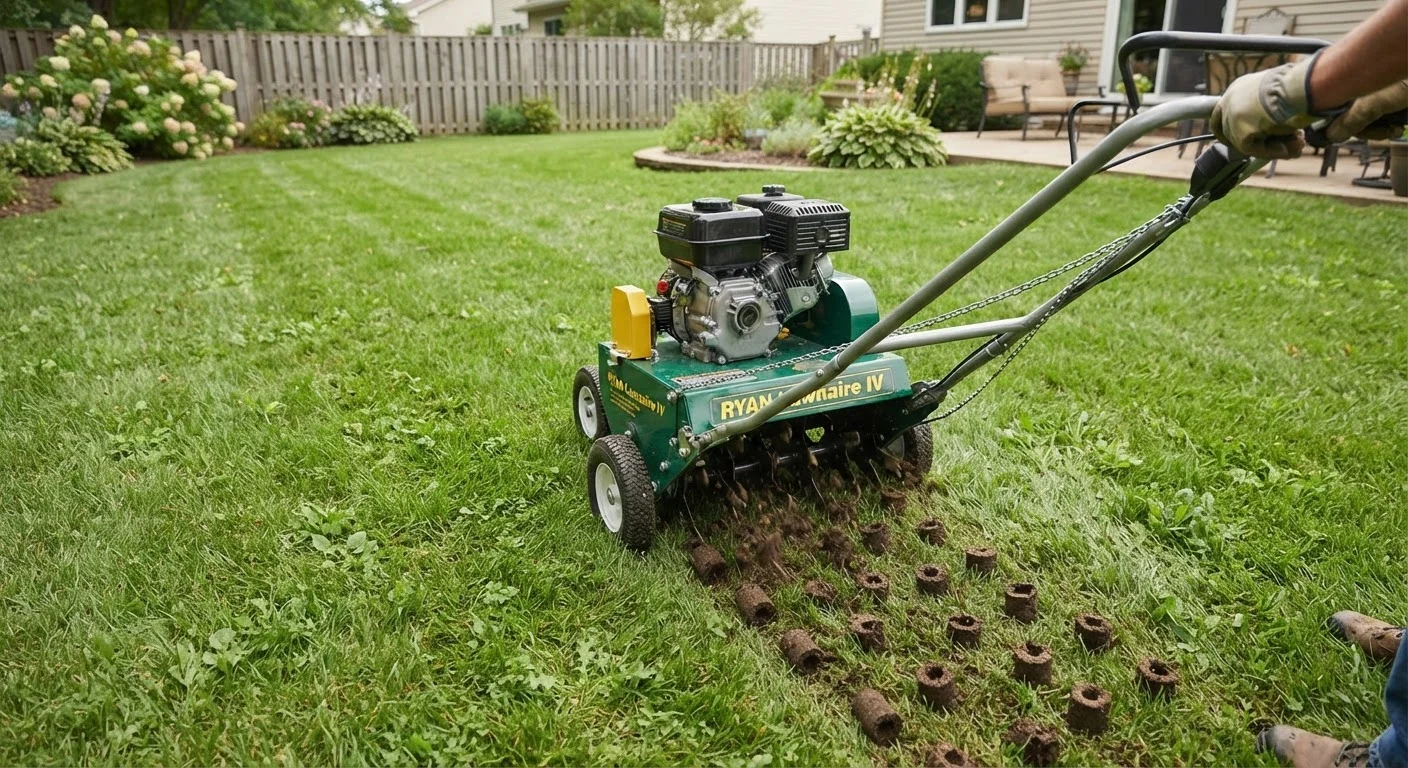
Lawn aeration is the process of creating small holes or channels in compacted soil to allow air, water, and nutrients to reach grass roots more effectively. The most common method - core aeration - uses a machine to pull out small cylinders of soil called plugs, which are left on the surface to break down naturally. The result is a more porous soil structure that supports deeper, healthier root growth.
Core (plug) aeration is generally more effective than spike aeration, which simply punctures the soil and can actually increase compaction around each hole over time.
Why Compacted Soil Is the Real Problem
Before understanding what aeration does, it helps to understand what it fixes. Over time - through foot traffic, heavy rainfall, and the weight of lawn equipment - soil particles get pressed tightly together. This compaction reduces the pore space that grass roots rely on for oxygen, water absorption, and access to nutrients.
Compacted soil creates a frustrating cycle: water runs off instead of soaking in, fertilizer sits on the surface rather than reaching roots, and grass becomes shallow-rooted and less drought-tolerant. You may notice thinning patches, spongy or rock-hard ground depending on moisture conditions, or water pooling after rain. These are often signs of compaction rather than a watering or feeding problem.
Lawns in heavy-traffic areas - kids' play zones, dog runs, or high-use paths - tend to compact faster. Clay-heavy soils are also more susceptible than sandy ones. Understanding this sets a realistic expectation: aeration treats a soil structure problem, not a surface grass problem. That distinction matters when deciding whether it's worth doing in the first place. For a broader look at year-round lawn health, see the complete homeowner's seasonal guide.
How Aeration Actually Works
Core aeration - the method most lawn care professionals recommend - uses a machine fitted with hollow tines that punch into the soil and pull out small plugs of earth, typically two to three inches deep and about half an inch in diameter. These plugs are deposited on the surface, where they break down over a few weeks.
The holes left behind do the real work. They open direct channels into the root zone, allowing water and fertilizer to penetrate more deeply rather than run off. Air circulation in the soil improves, which is essential for healthy root development and for the soil microbes that break down organic matter. Root systems, no longer blocked by compacted earth, can spread laterally and grow deeper.
Time Aeration With Overseeding for Best Results
If your lawn has thin or bare patches, schedule aeration just before overseeding. The holes give seeds direct soil contact, dramatically improving germination rates. Water lightly and consistently for the first two to three weeks after seeding to support establishment.
Core aeration is also the ideal moment to overseed thin or bare patches, since the loosened soil gives grass seed excellent contact with the ground. Pairing aeration with overseeding and a deep watering routine consistently produces better results than either practice alone.
When Aeration Is Worth Doing - and When It Isn't
Aeration is not a universal annual chore. A well-maintained lawn in sandy soil with moderate use may not need it at all. The key is assessing your specific conditions before scheduling the work.
Signs your lawn likely needs aeration:
- Water pools or runs off after rain rather than soaking in
- Grass feels spongy or the ground is unusually hard
- Grass thins despite regular feeding and watering
- A screwdriver or soil probe resists being pushed more than two or three inches into the ground
- Heavy foot traffic, sports play, or dog activity occurs regularly
Timing by grass type:
- Cool-season grasses (fescue, Kentucky bluegrass, ryegrass): aerate in early fall, when grass is actively growing and can recover before winter
- Warm-season grasses (Bermuda, zoysia, St. Augustine): aerate in late spring or early summer, just as growth peaks
Most lawns do well with one aeration per year. Heavily used or clay-soil lawns may benefit from twice annually. Aerating at the wrong time of year - such as aerating warm-season grass in fall - can stress the turf rather than help it. For a full seasonal approach, the fall lawn care checklist covers aeration timing alongside overseeding and fertilization steps.
Getting the Most from Aeration
Aeration delivers the best results when it's part of a broader lawn care routine rather than a standalone fix. A few practices significantly amplify the benefit:
Water before aerating. Soil that is moderately moist is easier for the tines to penetrate. Dry, hard soil limits plug depth and reduces effectiveness. Aim to water one to two days before, not immediately before - saturated soil can become muddy and compacted again quickly.
Apply fertilizer or seed immediately after. The open channels created by aeration give nutrients and grass seed a direct path to the root zone. This is one of the most efficient windows for feeding your lawn. See how organic and synthetic fertilizers work differently to choose an approach that suits your soil health goals.
Leave the plugs. Soil plugs left on the surface will break down in two to four weeks, returning beneficial microbes and organic matter to the lawn. There is no need to collect or remove them.
Maintain good soil health year-round. Aeration works best alongside consistent practices - proper watering depth, appropriate mowing height, and attention to soil pH. Compaction is easier to prevent than to repeatedly correct.