

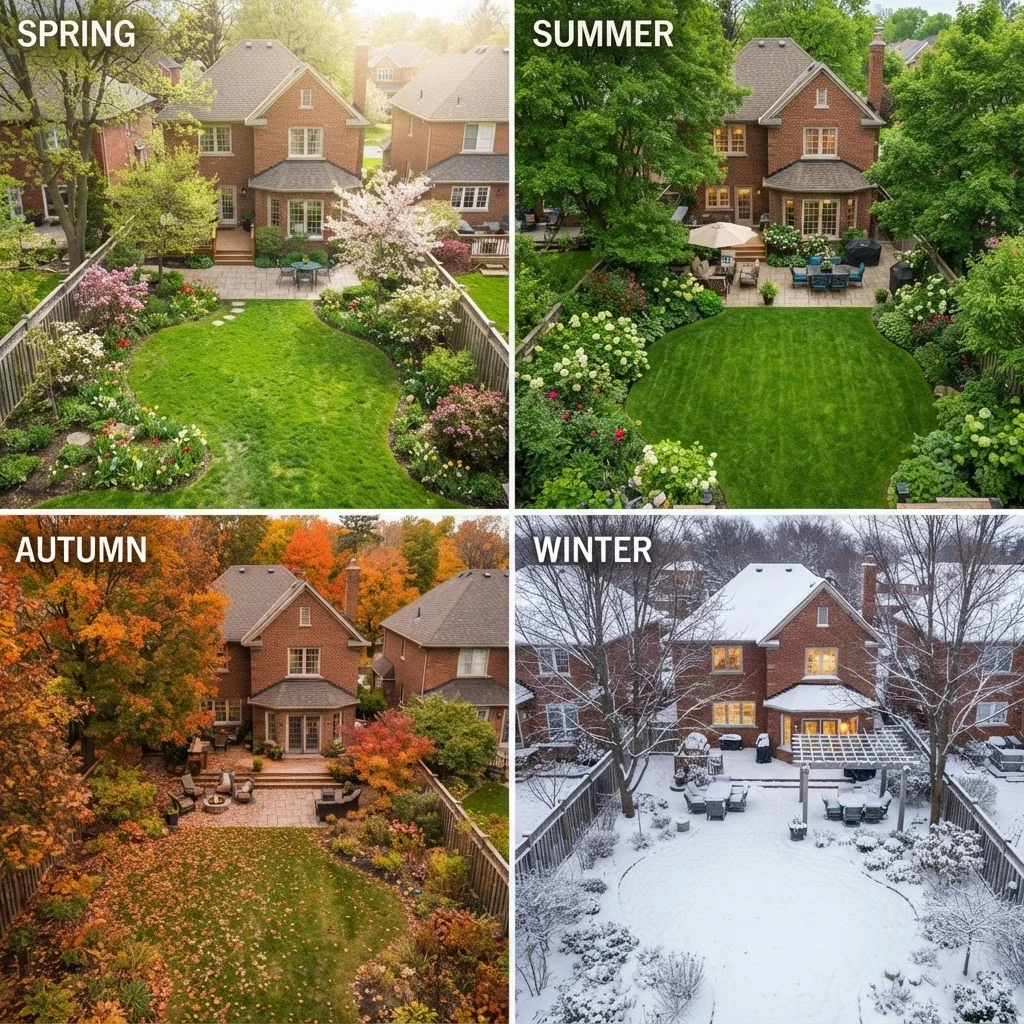
Key Takeaways
- Spring soil testing and aeration set the foundation for a healthy growing season.
- Deep, infrequent watering in summer builds stronger root systems than daily light watering.
- Fall is the best time to overseed cool-season grasses and apply a winterizing fertilizer.
- Winter lawn care focuses on protection and planning rather than active maintenance.
- Consistent year-round habits reduce the effort needed for each seasonal task.
Why Seasonal Lawn Care Matters
A yard that looks great all year isn't the result of luck - it reflects consistent, season-appropriate care. Grass, soil, and garden plants each move through predictable growth cycles, and matching your maintenance tasks to those cycles makes every effort more effective. Skipping spring aeration or neglecting fall fertilization can set back your lawn by an entire growing season.
This guide walks through what to do - and when - so you can maintain a healthy, attractive outdoor space without guesswork. For a broader view of how outdoor upkeep fits into your overall home routine, see the month-by-month home maintenance calendar for a complete seasonal picture.
Spring: Soil Prep and Early Growth
Spring is the most important season for lawn and garden setup. Once overnight temperatures consistently stay above 50°F, the ground is ready to work.
- Test your soil: A basic soil test (available through most cooperative extension offices) reveals pH and nutrient levels. Most lawn grasses prefer a pH between 6.0 and 7.0. Amendments like lime or sulfur can correct imbalances before planting begins.
- Aerate compacted areas: Core aeration - removing small plugs of soil - improves oxygen flow, water absorption, and root depth. Rent a core aerator for larger lawns or use a manual tool for small areas.
- Apply a balanced starter fertilizer: Choose a product formulated for early-season use, with moderate nitrogen to encourage leafy green growth without burning new roots.
- Clean garden beds: Remove winter debris, cut back dead perennial stems, and apply 2-3 inches of compost to improve soil structure and suppress early weeds.
Before spreading any fertilizer in spring, wait until you've seen at least two weeks of consistent growth - applying too early when soil is cold means nutrients leach away before roots can use them.
Fertilizer uptake depends on soil temperature and microbial activity. Cool soils limit both, making early application inefficient and potentially wasteful.
When overseeding in fall, skip the starter fertilizer and use a light top-dressing of compost instead - it feeds new seedlings gently without the nitrogen spike that can favor weeds over grass.
High-nitrogen fertilizers in fall can stimulate weed germination alongside desirable seed, undermining the purpose of overseeding for lawn density.
Spring is also the right time to edge borders, reseed bare patches from winter damage, and divide overgrown perennials. The fall vs. spring maintenance breakdown can help you confirm which tasks are best saved for later in the year.
Summer: Watering, Mowing, and Heat Management
Heat and drought stress are the main threats in summer. The goal is to keep grass and plants healthy without overworking them - or your water bill.
- Water deeply and infrequently: Most lawns need about 1 inch of water per week, including rainfall. Watering 2-3 times per week for longer periods encourages roots to grow deeper than daily shallow watering does. Water early in the morning to minimize evaporation.
- Mow high: Raise your mower deck to leave grass 3-4 inches tall. Taller grass shades the soil, retains moisture, and crowds out weeds. Never remove more than one-third of the blade length in a single mowing.
- Avoid fertilizing dormant or stressed grass: Applying nitrogen fertilizer during a summer drought can burn turf. Hold off until cooler, wetter conditions return.
- Mulch garden beds: A 2-3 inch layer of mulch around trees, shrubs, and garden plants reduces moisture loss and keeps soil temperatures more stable.
Don't Fertilize Drought-Stressed Grass
Applying nitrogen fertilizer to a lawn that's already under heat or drought stress can scorch turf and cause lasting damage. If your grass has gone brown and dormant in summer heat, hold off on feeding until fall conditions arrive and the lawn shows active growth again.
If your yard requires a lot of ongoing upkeep in summer, it may be worth exploring low-maintenance landscaping strategies such as drought-tolerant plantings or groundcovers that reduce irrigation needs.
Fall: Overseeding, Fertilizing, and Cleanup
Fall is arguably the most productive season for cool-season lawn grasses like fescue, Kentucky bluegrass, and ryegrass. Soil is still warm, air is cooler, and moisture is more reliable - ideal conditions for seed germination and root development.
- Overseed thin or bare areas: Rake lightly to expose soil, spread seed at the recommended rate, and keep the area consistently moist for 2-3 weeks until germination is established.
- Apply a winterizing fertilizer: Look for a formulation higher in potassium, which supports root hardiness over winter. Apply in late fall, typically 4-6 weeks before the ground freezes in your region.
- Continue mowing until growth stops: Don't let grass go into winter too long (over 4 inches), as matted grass can harbor disease. Make a final cut when growth slows noticeably.
- Clear fallen leaves promptly: A thick layer of wet leaves can smother turf and promote fungal issues. Compost them or use a mulching mower to break them down in place.
- Plant spring bulbs: Fall is the window for planting tulips, daffodils, and other spring-blooming bulbs. Plant at 2-3 times the bulb's diameter in depth.
Winter: Protecting Plants and Planning Ahead
Active lawn growth stops in most U.S. climates during winter, but there are still meaningful steps to take.
- Protect vulnerable plants: Wrap tender shrubs in burlap or cover perennial beds with a 3-4 inch layer of straw mulch after the ground freezes. This insulates roots from freeze-thaw cycles rather than preventing cold entirely.
- Avoid walking on frozen turf: Frozen grass blades are brittle and can be permanently damaged by foot traffic or equipment. Designate paths to minimize lawn contact.
- Store and service equipment: Drain fuel from mowers and string trimmers, sharpen mower blades, and inspect tools before storing them for the season. Starting spring with sharp, clean equipment makes every task easier.
- Plan for the coming year: Review what worked and what didn't. Sketch out any garden bed changes, new plantings, or lawn repairs you want to tackle in spring.
Winter is also a good time to review your broader home upkeep routine. Our whole-home maintenance overview covers the systems beyond the yard that need attention during cold months.
Year-Round Habits That Make a Difference
Beyond seasonal tasks, a few consistent habits pay dividends across every part of the calendar.
- Keep a yard journal: Note when you fertilize, seed, treat for pests, or notice problems. Patterns become visible over time, helping you anticipate and prevent repeat issues.
- Sharpen mower blades at least once a year: A dull blade tears grass rather than cutting it cleanly, leaving ragged tips that brown and invite disease.
- Pull weeds before they seed: One missed weed can drop hundreds of seeds. Catching them early reduces future workload significantly.
- Match plants to your site: Choosing grass varieties, shrubs, and flowers suited to your local climate, sun exposure, and soil type reduces the amount of supplemental care they need.
Consistent lawn and garden care connects directly to protecting your property's value over time. The annual home maintenance tasks guide explores how outdoor upkeep fits into the bigger picture of preserving your home's condition. For homeowners who want a beautiful yard with less ongoing effort, the low-maintenance landscaping guide offers practical alternatives worth considering.