

Key Takeaways
- Replacing traditional lawn with groundcovers or mulch cuts mowing and weeding time significantly.
- Native and drought-tolerant plants typically need far less watering and fertilizing than ornamental imports.
- Perennials reduce the need to replant each season, saving both time and money over the long term.
- Deep mulching suppresses weeds, retains moisture, and improves soil health with minimal ongoing effort.
- Grouping plants by water needs makes irrigation simpler and more efficient across your entire yard.
Why Low-Maintenance Landscaping Is Worth Planning
Most homeowners spend far more time on yard work than they'd like. Frequent mowing, repeated weeding, seasonal replanting, and constant watering can consume entire weekends. The good news: thoughtful landscaping decisions made once can pay dividends for years, dramatically shrinking your routine workload.
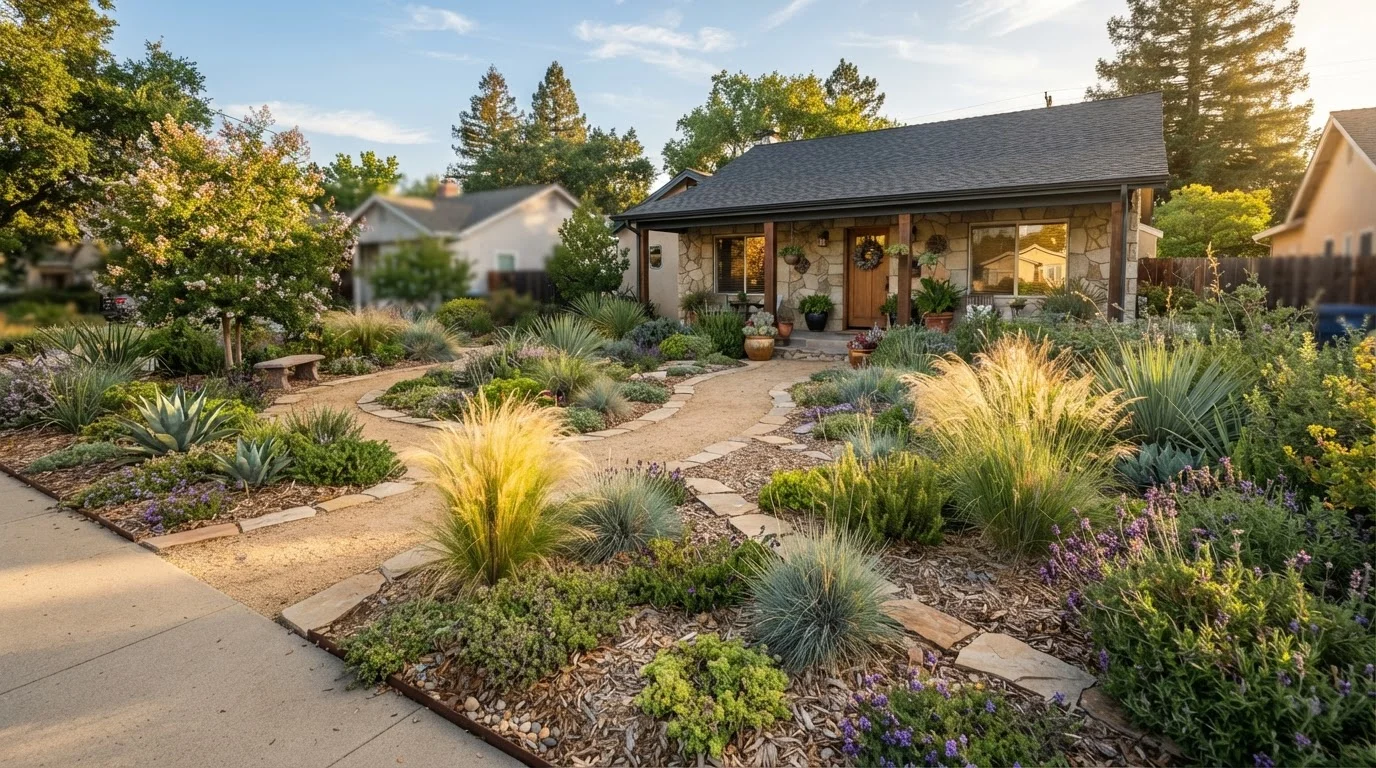
Low-maintenance landscaping isn't about neglecting your yard - it's about designing it so that nature does more of the heavy lifting. When you match plants to your climate, improve your soil structure, and reduce high-upkeep features like traditional grass lawns, upkeep becomes manageable rather than exhausting. For homeowners who already juggle intensive tasks like those described in the year-round lawn and garden care guide, a lower-maintenance approach offers real relief.
The strategies below are practical starting points - choose the ones that fit your yard's size, climate, and your own goals.
Plant Native Species Suited to Your Region
Native plants evolved alongside your local climate, soil, and rainfall patterns. Once established - typically after one to two growing seasons - they generally require little to no supplemental watering, limited fertilizer, and far less intervention than non-native ornamentals. They also support local pollinators and wildlife.
Research which species are native to your specific state or region rather than selecting broadly. Local cooperative extension offices often publish region-specific planting guides at no cost.
Native plants are already adapted to your climate, which means less watering, fertilizing, and intervention.
Use Groundcovers to Replace High-Maintenance Turf
Traditional grass lawns demand consistent mowing, edging, fertilizing, and watering. Replacing sections - or all - of your lawn with low-growing groundcovers like creeping thyme, clover, or liriope reduces most of that labor. Many groundcovers also crowd out weeds naturally once they fill in.
This approach works especially well in shaded areas where grass struggles to grow, or on slopes where mowing is difficult or unsafe.
Groundcovers crowd out weeds naturally once established, eliminating much of the manual weeding burden.
Apply Deep Mulch Around Beds and Trees
A 2-4 inch layer of organic mulch - wood chips, shredded bark, or pine straw - does several things at once: it suppresses weed germination, retains soil moisture between rains, moderates soil temperature, and slowly improves soil as it breaks down. This directly reduces both weeding and watering frequency.
Refresh mulch once or twice a year rather than removing and replacing it entirely. Keep mulch a few inches away from plant stems and tree trunks to prevent rot and pest issues.
Deep mulch is one of the most efficient investments in a low-maintenance yard - it fights weeds and locks in moisture simultaneously.
Choose Perennials Over Annuals Where Possible
Annuals flower prolifically but die at season's end, requiring you to replant each year. Perennials return on their own, meaning less digging, less spending, and less time. Many perennials also spread gradually to fill gaps, further reducing bare soil where weeds take hold.
A mixed planting strategy - using perennials as the backbone and a few annuals for seasonal color - offers a good balance. For a deeper look at this decision, the guide to perennials vs. annuals breaks down the trade-offs clearly.
Perennials return each season on their own, sparing you the annual cost and effort of replanting.
Group Plants by Water Needs
Placing drought-tolerant plants together and moisture-loving plants in another zone - a practice called hydrozoning - makes irrigation far simpler. You water each zone only as much as the plants in it actually need, which also reduces overwatering. Overwatering is a surprisingly common problem; the signs of overwatering guide can help you identify if it's already happening in your yard.
Even without a formal drip system, hydrozoning means you spend less time adjusting sprinkler settings or dragging hoses to different corners of the yard.
Grouping plants by water needs simplifies irrigation and prevents the slow damage caused by overwatering or underwatering.
Install Edging to Reduce Border Maintenance
Grass and weeds routinely creep into garden beds, requiring regular edging or hand-weeding along borders. Installing a physical barrier - metal, rubber, or stone landscape edging - creates a clean, durable separation that holds for years with minimal attention. It also gives beds a neat, finished look without ongoing effort.
Deeper edging materials (those that extend several inches into the ground) are more effective at blocking grass runners than shallow plastic strips.
Physical landscape edging creates a lasting barrier that significantly reduces border weeding and re-edging chores.
Improve Soil Health to Support Stronger, Self-Sufficient Plants
Healthy soil grows resilient plants that outcompete weeds, resist disease, and need less supplemental fertilizer. Adding compost - whether homemade or purchased - improves drainage in clay soils and water retention in sandy ones. The home composting guide explains how to produce your own compost from kitchen scraps.
A one-time soil amendment investment reduces the ongoing costs and labor of chemical fertilizing and replanting struggling plants.
Improving soil health upfront means plants grow stronger on their own, reducing fertilizer use and replanting over time.
Building a Yard That Works for You, Not Against You
No single strategy works for every yard. The most effective low-maintenance landscapes combine several of these approaches in a way that suits your local climate and soil. Even adopting two or three of these ideas can meaningfully reduce the hours you spend outside doing chores.
Start Small and Expand Gradually
You don't need to redesign your entire yard at once. Pick one high-maintenance area - a weedy slope, a struggling shaded patch, or an overwatered bed - and apply one or two of these strategies there first. Once you see the time savings firsthand, it's easier to decide where to expand the approach.
If you're unsure which plants are most appropriate for your region's water availability, the guide to native vs. ornamental plants is a helpful next step. These landscaping principles also connect naturally to broader home maintenance goals - a well-designed yard protects your foundation, improves drainage, and reduces pest pressure around the home's perimeter.