

Key Takeaways
- Organic mulch decomposes over time, enriching soil but requiring replenishment every one to three years.
- Gravel does not break down, making it a long-lasting cover that adds little to soil fertility.
- Mulch retains soil moisture more effectively; gravel can radiate heat and dry soil faster in hot climates.
- Gravel is better suited to drought-tolerant plants; mulch supports a wider range of garden plantings.
- Both materials suppress weeds, though neither eliminates the need for a weed barrier beneath them.
- Your local climate, plant types, and maintenance preferences should drive the final choice.
Option A
Organic Mulch
The soil-building, moisture-retaining classic.
Best for: Plant-filled beds where improving soil health and conserving moisture through the growing season matters most.
Option B
Gravel / Rock
The durable, low-replenishment hardscape option.
Best for: Drought-tolerant or xeriscape plantings, slopes, and beds where permanent, low-maintenance coverage is the priority.
If you grow vegetables, perennials, or moisture-loving shrubs
Organic Mulch
Mulch conserves soil moisture, moderates root-zone temperature, and feeds soil organisms as it breaks down - all conditions most garden plants thrive in.
If you want a ground cover you rarely need to replace
Gravel / Rock
Gravel does not decompose, so it stays in place for years without the annual or biennial top-up that organic mulch requires.
If you garden in a hot, arid climate with drought-tolerant plants
Gravel / Rock
Gravel pairs naturally with succulents, ornamental grasses, and native desert plants that prefer fast drainage and drier root zones.
If improving soil quality over time is a priority
Organic Mulch
As wood chips, bark, or shredded leaves decompose, they add organic matter that improves soil structure, drainage, and microbial activity.
If you are designing a slope or erosion-prone area
Gravel / Rock
Gravel's weight and interlocking texture resists washout on grades where lighter organic mulch can shift or float during heavy rain.
How Each Material Works in a Garden Bed
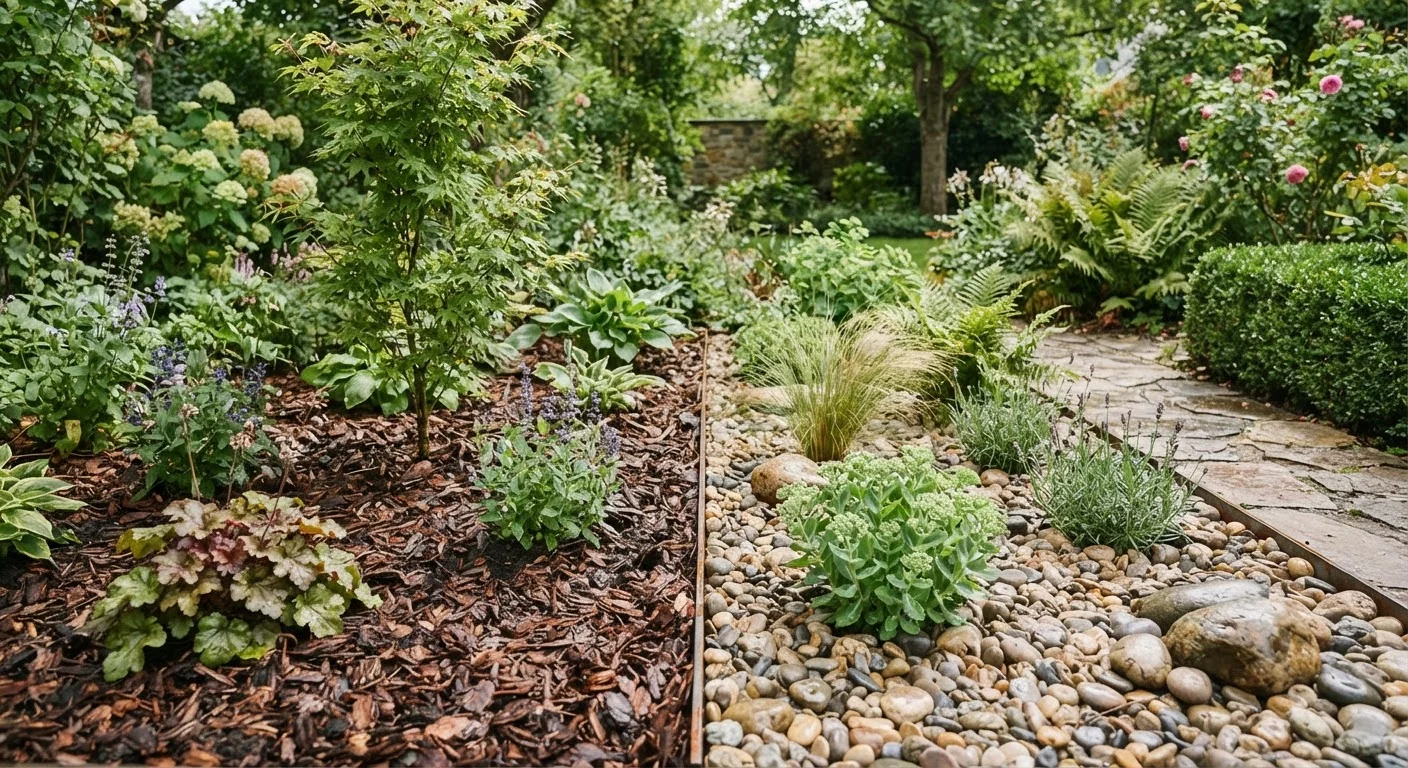
Both mulch and gravel serve the same fundamental purpose - covering bare soil to suppress weeds, limit evaporation, and give beds a finished look - but they achieve that through entirely different means.
Organic mulch (wood chips, shredded bark, straw, or composted leaves) is a living material in a slow process of change. Soil microorganisms and earthworms break it down season by season, gradually incorporating carbon and nutrients into the upper soil layer. That decomposition is a feature, not a bug: it feeds the soil food web and softens compacted ground over time. The trade-off is that you need to replenish it as it shrinks - typically adding 2-3 inches every one to three years depending on your climate and the material used.
Gravel and crushed rock are inorganic and essentially permanent. They do not feed soil organisms, and they do not change the texture or chemistry of the soil beneath them. What they do offer is stability: once placed (ideally over a landscape fabric barrier), a gravel layer can last a decade or more without significant replenishment. For a deeper look at how ground cover choices fit into broader yard planning, see low-maintenance landscaping strategies that reduce ongoing yard work.
Moisture, Temperature, and Soil Health
One of the sharpest practical differences between mulch and gravel is how each material handles water and heat at the soil surface.
Organic mulch acts as an insulating blanket. It slows evaporation, keeping the root zone measurably cooler in summer and warmer in early spring - an advantage for most ornamental plants, edibles, and newly established shrubs. The University of Illinois Extension has noted that a properly applied mulch layer can reduce soil moisture loss significantly compared to bare ground, though exact figures vary by material, depth, and local conditions.
Gravel, by contrast, absorbs and radiates heat. Stone surfaces can reach high temperatures on sunny afternoons, which may stress shallow-rooted plants nearby and accelerate soil drying. In cooler or wetter climates this heat retention can be an advantage - warming soil faster in spring and shedding excess moisture quickly. In hot, dry regions it demands careful plant selection. Succulents, lavender, ornamental grasses, and many native plants are well-adapted to the drier, warmer microclimate gravel creates.
| Criterion | Organic Mulch | Gravel / Rock |
|---|---|---|
| Lifespan | 1-3 years before replenishment | Many years; minimal replacement |
| Soil benefit | Adds organic matter as it decomposes | No soil fertility contribution |
| Moisture retention | High - slows evaporation effectively | Low - dries quickly in heat |
| Heat radiation | Insulates and cools root zone | Absorbs and radiates heat |
| Weed suppression | Good with proper depth (2-4 in.) | Good initially; debris buildup over time |
| Best plant pairing | Most ornamentals, edibles, shrubs | Drought-tolerant, xeriscape plants |
| Upfront cost | Generally lower | Higher (material + delivery weight) |
| Long-term effort | Moderate - periodic top-up needed | Low - occasional raking |
If soil improvement is a long-term goal, mulch has a clear edge. Over several years, decomposing organic material raises organic matter content, which in turn supports better drainage in clay soils and better water retention in sandy soils. Gravel contributes nothing to this process - and if fine soil particles migrate upward through a gravel layer over time (a common occurrence), the surface can become weedy and difficult to manage without periodic raking and occasional complete replacement.
Weed Suppression: Realistic Expectations
Neither mulch nor gravel eliminates weeds entirely, and both work better when paired with a quality landscape fabric or several layers of overlapping cardboard (a technique called sheet mulching) placed directly on the soil first.
A 2-4 inch layer of organic mulch blocks sunlight from reaching weed seeds in the soil below, and because it is loose and easy to pull through, any weeds that do establish are usually quick to remove. The decomposition process also means weed seeds carried by wind can find purchase in the top layer of aged mulch - so staying on top of hand-weeding in the first weeks after application matters.
Gravel provides a less hospitable surface for many weeds because it dries out quickly and offers little organic matter for roots to anchor in. However, fine windblown debris accumulates in gravel over time, eventually creating a thin layer of soil-like material that weeds exploit. Periodic raking and spot treatment keep this manageable. For beds featuring perennials returning each season, mulch is generally easier to work with since you can pull it back from crowns in spring without disrupting the surface permanently.
Aesthetics, Cost, and Practicality
Visual preference is a legitimate factor. Shredded hardwood bark and wood chips give beds a natural, earthy look that complements most traditional and cottage-style gardens. Gravel and crushed stone offer a cleaner, more architectural appearance that suits Mediterranean, desert, and contemporary landscape designs.
On cost, organic mulch is generally less expensive to purchase upfront and is often available free or cheaply from municipal composting programs or tree-trimming services. However, because it requires periodic replenishment, cumulative cost over a decade can rival or exceed a gravel installation, which - despite higher upfront material and labor costs - rarely needs replacing. If you are working with a raised garden bed, mulch is typically the more practical surface choice since gravel's weight adds strain to bed walls and impedes easy soil amendment.
Weight and installation effort also differ: a cubic yard of gravel can weigh over a ton, requiring delivery and careful spreading. Bagged or bulk mulch is lighter and easier to move by wheelbarrow. For anyone planning a planting scheme that incorporates native plants, matching your ground cover to the plant's natural habitat conditions - whether that's moisture-retaining mulch for woodland natives or gravel for prairie and desert species - will support healthier, more resilient beds over time.