

Key Takeaways
- Perennials return each year from their root system, reducing replanting costs over time.
- Annuals complete their full life cycle in one season, offering longer and often more vivid bloom periods.
- Most experienced gardeners mix both types to balance structure, color, and seasonal flexibility.
- Perennials typically require a higher upfront cost but lower annual spending compared to annuals.
- Climate zone and soil conditions influence how well either plant type performs in your yard.
Option A
Perennials
The long-term investment that returns each season.
Best for: Gardeners who want a stable, low-maintenance planting structure that grows and fills in over multiple years.
Option B
Annuals
The flexible, high-impact option for season-long color.
Best for: Gardeners who enjoy refreshing their beds each year and want continuous, vivid blooms from spring through frost.
If you want to plant once and build a lasting garden framework
Perennials
Perennials re-emerge each year from established root systems, gradually spreading to fill your beds with less effort and expense each season.
If you want bold, continuous color all season without gaps
Annuals
Annuals bloom prolifically from planting until frost, providing uninterrupted color that perennials - which often bloom for only a few weeks - cannot match alone.
If you're working with a limited yearly gardening budget
Perennials
Although the initial purchase price is higher per plant, perennials eliminate the need to rebuy plants each spring, reducing your long-term spending.
If you enjoy experimenting with new colors and layouts each year
Annuals
Annuals give you a clean slate every season, making it easy to change your garden's palette, layout, or theme without any long-term commitment.
If you want a balanced garden that's both reliable and colorful
Perennials
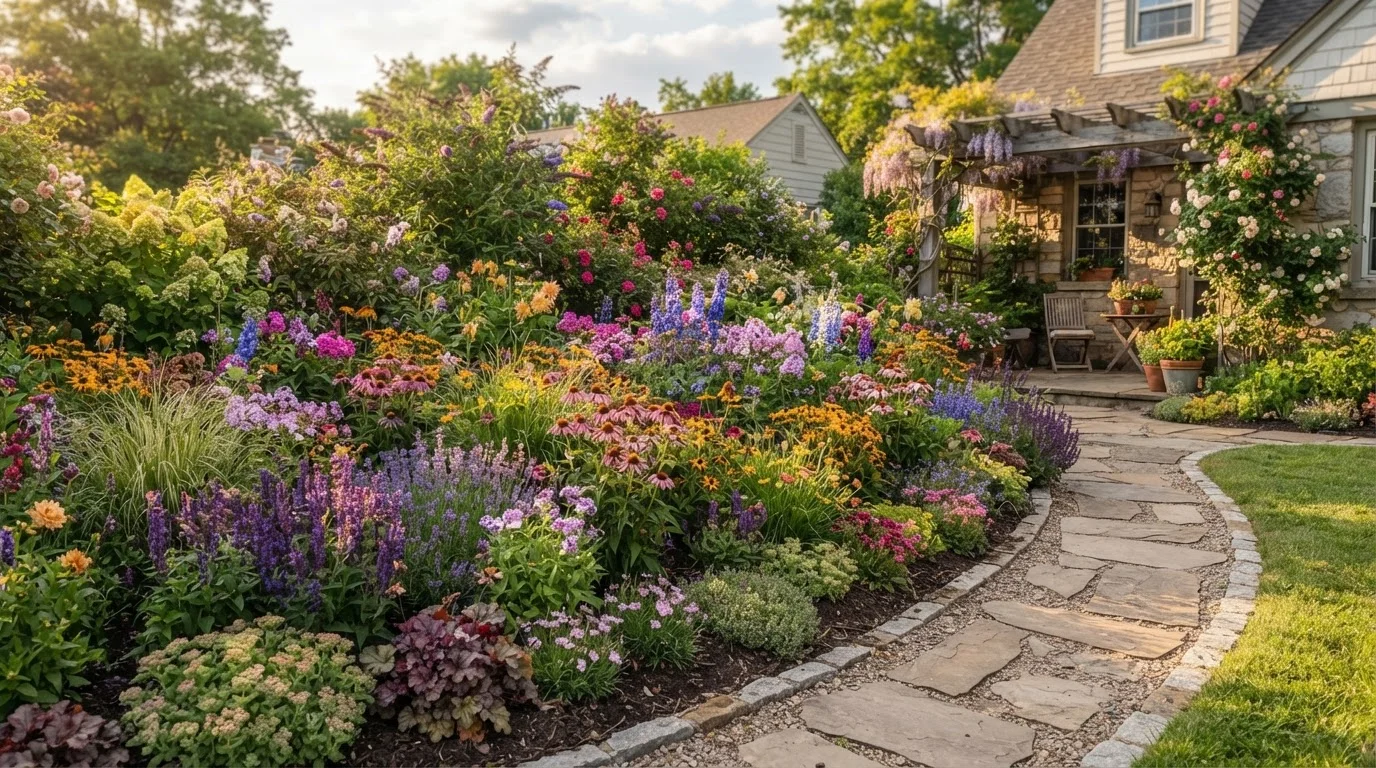
Use perennials as your structural backbone and fill gaps with annuals for season-long color - this hybrid approach is what most experienced home gardeners favor.
What Sets Perennials and Annuals Apart
The core distinction between these two plant types comes down to life cycle. Perennials are plants that live for more than two years, dying back to their root systems in winter (in most climates) and re-emerging each spring. Annuals complete their entire life cycle - germination, growth, flowering, and seed production - within a single growing season, then die with the frost.
This biological difference shapes nearly every gardening decision that follows: how much you spend, how often you replant, and how your garden looks at different times of year. Understanding it helps you plan a space that suits your time, budget, and aesthetic goals rather than one that constantly surprises you with gaps or unexpected costs.
It's also worth knowing a third category exists: biennials, which complete their cycle over two years. Plants like foxglove and hollyhock fall here, though gardeners often treat them similarly to annuals for planning purposes.
How They Compare Side by Side
Below is a direct comparison across the factors that matter most to everyday gardeners - from upfront cost and bloom duration to maintenance demands and design flexibility.
| Criterion | Perennials | Annuals |
|---|---|---|
| Life span | 3+ years from same plant | One growing season only |
| Upfront cost | Higher per plant | Lower per plant |
| Long-term cost | Lower - no yearly repurchase | Higher - replant each spring |
| Bloom duration | Weeks per season (varies by species) | Spring through frost |
| First-year performance | Often modest while establishing | Strong color almost immediately |
| Design flexibility | Fixed placement, grows over time | Change layout each season |
| Typical maintenance | Division, cutback, mulching | Regular deadheading, fertilizing |
| Best use in the garden | Structural backbone of beds | Seasonal color and gap-filling |
One pattern stands out: perennials reward patience. In their first year, many perennials focus energy on root development rather than showy blooms, following the old gardening adage: sleeps, creeps, leaps - describing how a perennial establishes itself over three seasons. Annuals, by contrast, deliver visual impact almost immediately after transplanting.
Planning Your Garden: When to Use Each
Most seasoned home gardeners don't choose one type exclusively - they layer both strategically. Here's a practical framework for thinking through your planting plan:
- Use perennials as your backbone. Plant them in the middle or back of beds where their foliage and seasonal blooms anchor the design year after year. Coneflowers, black-eyed Susans, hostas, and daylilies are reliable performers across much of the U.S.
- Fill gaps with annuals. During the weeks between perennial bloom cycles, annuals keep the bed looking full and colorful. Marigolds, zinnias, and impatiens are common choices for long-season color.
- Account for your USDA Hardiness Zone. Some plants marketed as perennials in warmer zones (zones 8-10) behave as annuals in colder climates. Always check the zone range on the plant tag before buying.
If you're growing in raised beds, both plant types work well, though the improved drainage and soil control of a raised setup can especially benefit perennials that are sensitive to waterlogged roots. See our guide to raised garden beds for a full breakdown of that approach.
For those interested in reducing overall yard work, pairing perennials with smart ground cover strategies is worth exploring. Our article on low-maintenance landscaping approaches covers companion strategies that work well alongside perennial plantings.
Seasonal Care and Long-Term Maintenance
Your maintenance calendar differs significantly depending on which plants you're growing - and mixing both types means managing two distinct routines.
Perennial Care Highlights
- Deadheading and dividing: Remove spent blooms to encourage reblooming in some species. Every three to five years, divide clumping perennials to prevent overcrowding and refresh vigor.
- Fall cutback: Some perennials benefit from being cut back after frost; others provide winter interest and wildlife habitat if left standing until spring. Research each species individually.
- Mulching: A 2-3 inch layer of mulch over perennial roots helps regulate soil temperature and retain moisture through winter. See our mulch vs. gravel comparison for choosing the right material.
Annual Care Highlights
- Consistent deadheading: Most annuals bloom more prolifically when spent flowers are regularly removed, preventing the plant from setting seed and slowing down.
- Fertilizing: Because annuals push so much energy into flowering over a short window, they're generally heavier feeders than perennials. A balanced, slow-release fertilizer at planting and periodic feeding through the season supports sustained bloom.
- End-of-season cleanup: Pull spent annuals after frost and compost healthy plant material. This also reduces overwintering habitat for pests and disease.
For a month-by-month breakdown of when to sow, transplant, and fertilize across U.S. growing regions, refer to our seasonal planting calendar for American home gardeners.
If you're also evaluating which plant species are most ecologically appropriate for your region, our article on native plants vs. ornamental imports explores how that choice interacts with local wildlife and water use - a consideration that applies to both perennials and annuals.