

Key Takeaways
- Experienced travelers prioritize versatile, mix-and-match clothing over packing for every scenario.
- A disciplined toiletry kit - using travel sizes or decanted products - is one of the biggest space savers.
- Most items travelers 'just in case' pack never get used; editing ruthlessly before zipping is essential.
- Understanding airline size and weight limits before you pack prevents problems at the gate.
- A well-packed carry-on saves time at baggage claim and eliminates checked-bag fees.
Why Experienced Travelers Go Carry-On Only
Seasoned travelers have a quiet advantage at the airport: they walk straight to their gate. No waiting at baggage claim, no checked-bag fees, no risk of an airline losing a suitcase on a tight connection. The carry-on-only approach isn't a sacrifice - it's a deliberate skill refined over many trips.
The shift in mindset is the first step. Rather than asking "What might I need?", experienced packers ask "What will I actually use?" That single reframe leads to a fundamentally different bag. For a deeper look at when checking a bag actually makes sense, see our guide on checking vs. carrying on.
The Clothing Formula That Actually Works
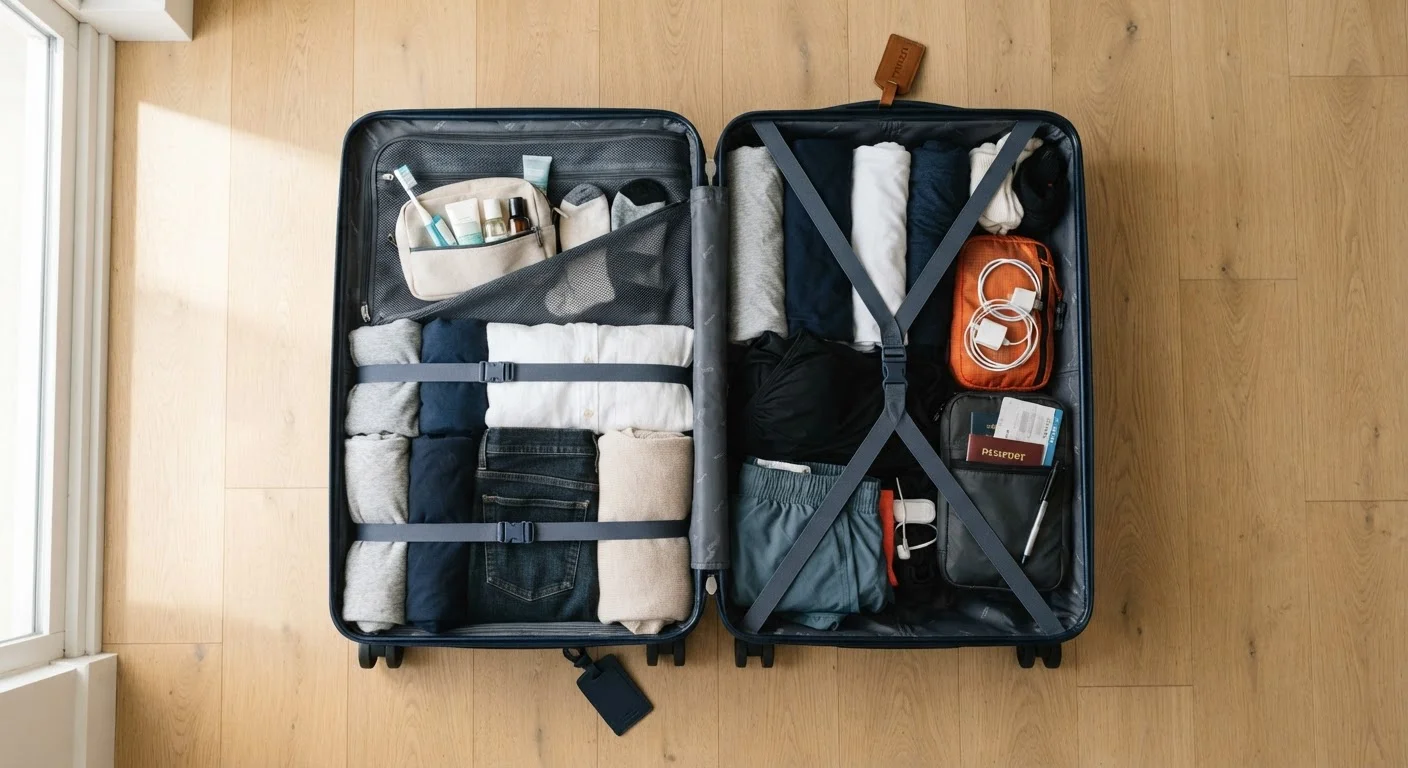
The most reliable carry-on packing system revolves around a clothing formula rather than a per-day approach. Instead of packing an outfit for each day, experienced travelers pack pieces that layer and mix across multiple combinations.
A practical starting point for a week-long trip: three to four tops, two bottoms, one layer (a lightweight jacket or cardigan), and shoes worn on the travel day - with one compact backup pair packed. For more on building this kind of wardrobe, our article on packing light without sacrificing comfort goes deeper into fabric choices and outfit planning.
Toiletries: Where Most Bags Get Overloaded
Toiletries are the single biggest space drain for most travelers. The TSA 3-1-1 rule (liquids in containers of 3.4 oz or less, in one quart-sized clear bag) applies to U.S. domestic and many international departures, and it enforces a natural discipline. Always verify current rules with the TSA and your airline before travel, as policies can change.
The practical fix: decant products into small reusable containers rather than buying full-size travel versions of everything. Solid versions of shampoo, conditioner, and even sunscreen eliminate liquid restrictions entirely. Plan to buy certain bulky items - sunscreen, large bottles of shampoo - at your destination if the trip is longer than a week.
If you're traveling with prescription medications, the considerations are separate from general toiletry planning. Our guide on traveling with medications covers documentation, storage, and border rules in detail.
What Experienced Travelers Have Stopped Packing
Knowing what to leave behind is just as important as knowing what to bring. Veteran travelers have a mental "do not pack" list developed through hard experience.
- Multiple shoes: Each pair takes significant space. Most travelers find one versatile walking shoe and one dressier option - or just one pair - handles most trips.
- Full-size books: A phone or e-reader replaces a stack of paperbacks without adding measurable weight.
- Redundant electronics: A laptop, tablet, and e-reader rarely all get used. Pick the one or two devices that actually match how you travel.
- "Just in case" clothing: Formal wear, specialty gear, or weather-specific layers packed speculatively almost always come home unworn.
- Excessive first-aid supplies: A small kit is smart. A full pharmacy is not - most destinations have pharmacies where basics are readily available.
This discipline connects directly to how you plan your trip. A tightly planned itinerary from our trip itinerary guide helps identify exactly what activities - and therefore what gear - you'll actually need.
Bag Selection and Airline Rules
Not all carry-ons are created equal, and airline size limits vary more than most travelers realize. U.S. carriers typically allow a carry-on up to 22 x 14 x 9 inches, but budget airlines and international carriers often set stricter limits - sometimes significantly smaller. Always check your specific airline's current policy before you pack.
Soft-sided bags can often be compressed to fit in tight overhead bins where rigid suitcases cannot. A bag with exterior pockets adds organization without requiring you to dig through main compartments at security. Weight matters too: some carriers impose carry-on weight limits even when the bag fits in the overhead bin.
Always Verify Airline Size and Weight Rules
Carry-on size and weight policies vary by airline, route, fare class, and even aircraft type. What fits on one carrier may be gate-checked on another. Check your airline's current published dimensions - not third-party summaries - before every trip, particularly when flying budget or international carriers. Policies do change, and the overhead bin is the enforcer.
Traveling solo adds another layer of freedom to the carry-on-only approach - you're accountable only to your own pace and bag. For travelers going it alone, our solo travel safety guide covers practical habits worth building before any trip.