

Key Takeaways
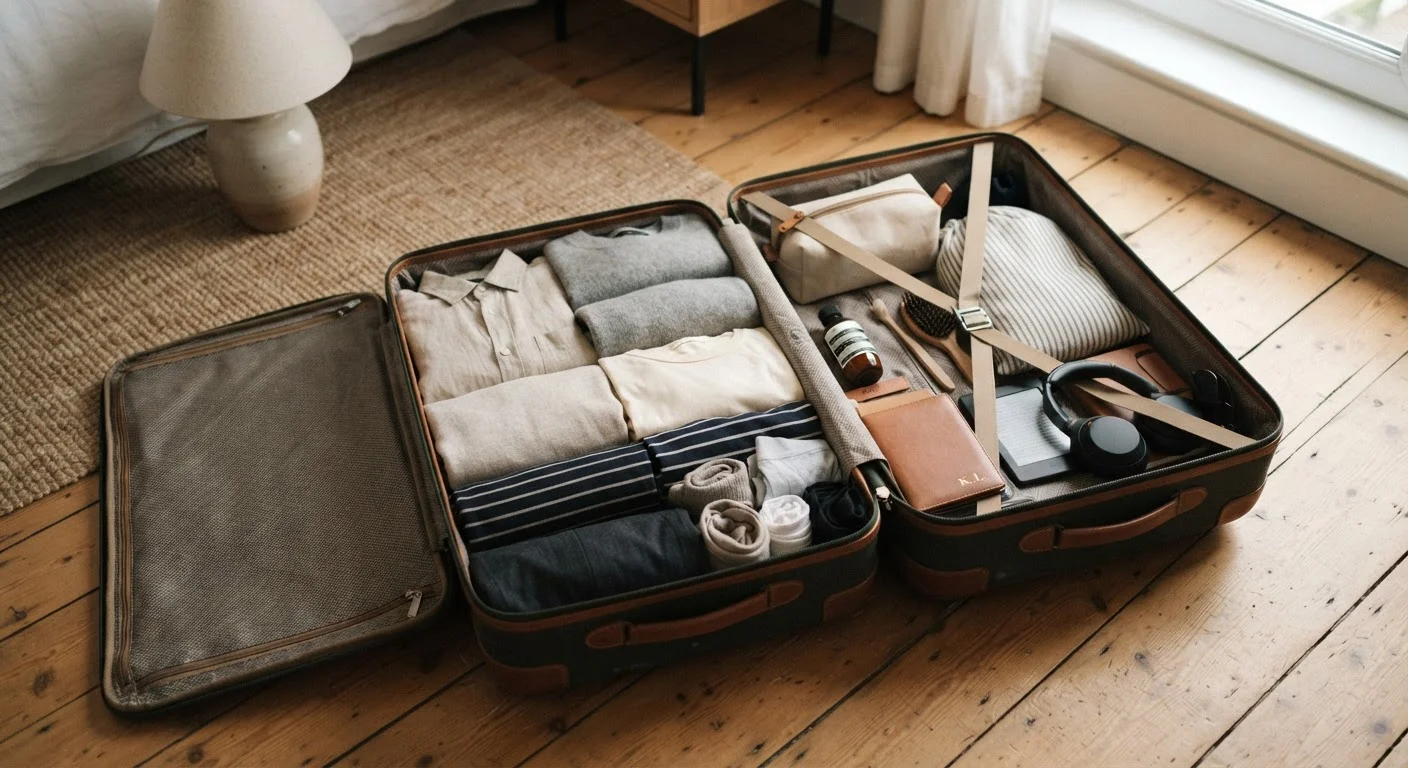
- A capsule wardrobe of 5-7 versatile pieces covers most trips up to 10 days.
- Choosing the right bag size before packing prevents overpacking by default.
- Decanting toiletries and using solid formats cuts liquid bulk significantly.
- Rolling clothes and using packing cubes maximizes space without adding weight.
- Leaving a small buffer in your bag makes room for items acquired during travel.
What you will need
Why Packing Light Is a Skill Worth Developing
Overpacking is one of the most common and avoidable sources of travel friction. A heavy bag means checked baggage fees, slower airport navigation, aching shoulders on cobblestone streets, and less flexibility to move between accommodations. Packing light isn't about deprivation - it's about accuracy. Most travelers return home with items they never touched.
The goal of this guide is a realistic one: a bag you can carry confidently through any airport, on any transit, without checking it or struggling. This pairs directly with having a clear plan for your trip. If you haven't structured your itinerary yet, our guide on building a trip itinerary that actually works can help you identify exactly what activities - and therefore what gear - your trip actually demands.
Test Your Pack Before You Leave Home
Pack your bag completely, then wear or carry it for 15 minutes around your home. If it feels too heavy or awkward, remove items until it's comfortable. This step reveals dead weight before it becomes a problem at the airport or on cobblestone streets.
For trip planning resources covering everything from destination research to logistics, the hub covers a wide range of practical topics for all experience levels.
What to Do Once You're Packed
A well-packed bag is a foundation, not a guarantee of a smooth trip. Once you've dialed in your kit, apply the same intentionality to the rest of your preparation. If you're traveling alone, practical safety habits - like keeping documents secure and staying situationally aware - matter as much as what's in your bag. Our guide on solo travel safety habits covers those basics without alarmism.
It's also worth leaving room for spontaneity. A lighter bag and a loosely structured itinerary often produce the most satisfying trips. For a thoughtful take on that balance, see the case for planning less. The physical and logistical prep covered here is most effective when it frees you to actually enjoy where you are - rather than managing your luggage.
Packing cubes
Compress and organize clothing by category, making it easier to find items without unpacking everything.
Small digital luggage scale
Verify your bag's weight before leaving for the airport to avoid surprise fees.
Silicone travel bottles
Decant shampoo, conditioner, and other liquids into TSA-compliant containers to reduce bulk.
Solid toiletry bars (shampoo, soap)
Replace liquid toiletries entirely, eliminating liquid restrictions and reducing overall weight.
Wrinkle-resistant or quick-dry clothing
Allows re-wearing and overnight hand-washing so you carry fewer pieces.