

Key Takeaways
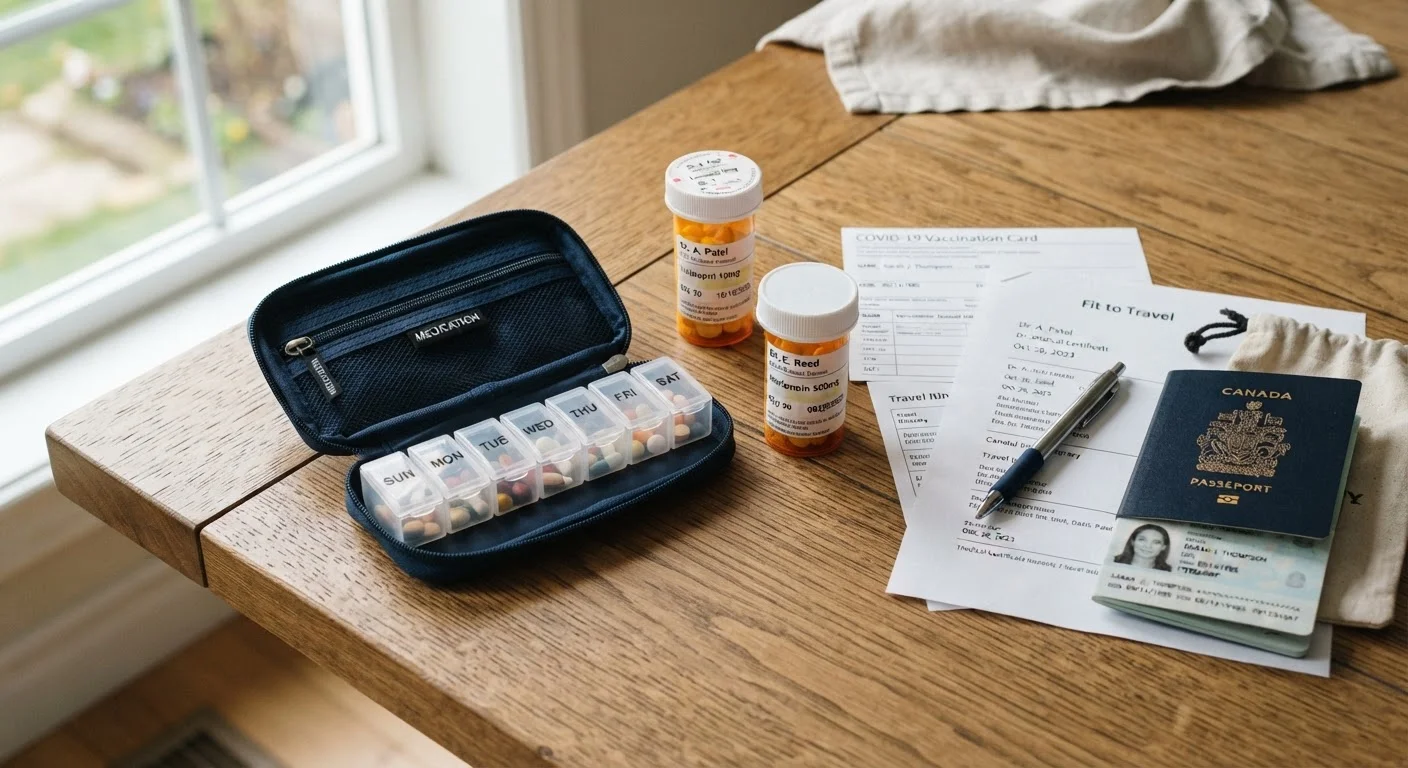
- Always carry original prescription labels and a physician's letter when traveling internationally with medications.
- Border rules for controlled substances vary significantly by country - verify restrictions before you depart.
- Keep medications in carry-on luggage to avoid temperature extremes and lost-baggage risk.
- Quantities exceeding a 30-day supply may require advance import permits in some destinations.
- Official embassy and government health sources are the most reliable way to confirm entry rules.
What you will need
Why Medication Planning Matters Before You Travel
Carrying medications across an international border is not simply a matter of tossing a pill bottle into your bag. Different countries classify drugs differently - a common prescription pain reliever or attention medication that is entirely legal in the United States may be a controlled or even prohibited substance at your destination. Failing to prepare can result in confiscation, fines, delays at the border, or, in rare cases, detention.
This is especially relevant for travelers managing chronic conditions, mental health, or pain-related prescriptions. The good news: with the right paperwork and a bit of advance research, most travelers can bring what they need legally and safely. This guide walks through the key steps. For a broader pre-trip planning framework, see our pre-travel departure checklist.
What you will need
Gathering the Right Documentation
Documentation is your first line of defense at any border crossing. Before departing, gather the following:
Obtain a physician's letter
Ask your prescribing doctor for a signed letter on official letterhead. The letter should include your full name, the medication name (both brand and generic), dosage, the condition being treated, and confirmation that the medication is medically necessary. Some destinations require this to be notarized or apostilled - check in advance.
Keep medications in original, labeled containers
Pharmacy-dispensed containers with your name, the prescribing physician's name, and the dispensing date are the clearest proof that a medication is legitimately prescribed to you. Transferring pills into unlabeled organizers for convenience can create problems at border screenings, especially for controlled substances.
Research destination-specific regulations
Visit the official website of your destination country's embassy in the United States, as well as the relevant health or customs ministry site. Look specifically for rules on controlled substances, quantity limits, and whether an import permit is required. Make note of any documentation requirements unique to that country.
Obtain translations if required
Some countries require medical documentation in their official language. If so, arrange a certified translation of your physician's letter and prescription labels. Your doctor's office or a certified translation service can assist. Embassy websites will typically specify whether translations are mandatory.
Apply for import permits if needed
If your medication is a controlled substance and your trip exceeds the destination's allowed supply limit, you may need to apply for a formal import permit through that country's health authority. This process can take several weeks, so begin well in advance of your travel date.
For travelers heading to multiple countries on a single trip, confirm requirements for each country individually - rules do not carry over between nations. The destination-vetting checklist at Checking a Destination's Readiness Before You Travel offers a useful structure for this research.
Keep a Medication Summary Card
Create a wallet-sized card listing all medications, their generic names, dosages, and your physician's contact information. This is useful not only at border crossings but also in medical emergencies abroad, where local healthcare providers may need to quickly understand your current regimen. Your pharmacist can often help you compile this list accurately.
Packing and Storing Medications Safely
Where and how you pack medications matters as much as the paperwork. Baggage holds are not temperature-controlled on many flights, which can degrade heat-sensitive medications such as insulin or certain biologics. As a rule, keep all medications in your carry-on bag - this also protects you if checked luggage is delayed or lost.
If you take injectables, liquid medications, or use a nebulizer, be aware of TSA's liquid rules for domestic U.S. flights and equivalent rules for international carriers. Medically necessary liquids in quantities exceeding 3.4 oz are generally permitted but must be declared at screening. Pair smart medication packing with a broader packing strategy - our carry-on packing guide covers how experienced travelers organize essentials efficiently.
For medications requiring refrigeration, research your airline's policy in advance. Many carriers allow insulated carry-on coolers; some airports have medical refrigeration available at medical centers. If you are traveling alone, a contingency plan for your medications is also a safety consideration covered in our solo travel safety guide.
Navigating Border and Customs Rules
Customs declarations for medications differ by country. In the United States, travelers arriving from abroad are generally expected to declare all medications, particularly controlled substances. Other countries have their own thresholds and processes.
Key principles to keep in mind:
- Controlled substances require extra scrutiny. Opioids, benzodiazepines, stimulants (including ADHD medications), and some sleep aids are tightly regulated in many countries. Some Gulf states, Southeast Asian nations, and others have near-zero tolerance for certain drug classes. Always check with the destination country's embassy or official health authority before travel.
- Quantity limits are common. Many countries cap the permissible supply at 30 days without advance authorization. Longer trips may require an import permit, which typically must be arranged weeks ahead of departure.
- Generic and brand-name differences matter. If your medication was dispensed under a generic name, confirm that the destination country recognizes it - the active ingredient should match what appears on any translated documentation.
The most reliable sources for country-specific medication rules are the U.S. Embassy or Consulate in the destination country, the destination nation's embassy in the United States, and the country's official customs or health ministry website. Do not rely solely on travel forums or third-party aggregators for this information - requirements change and vary by circumstances.
For a broader overview of international travel preparation, Everything First-Time International Travelers Need to Know provides grounded context on customs, documentation, and entry processes.