

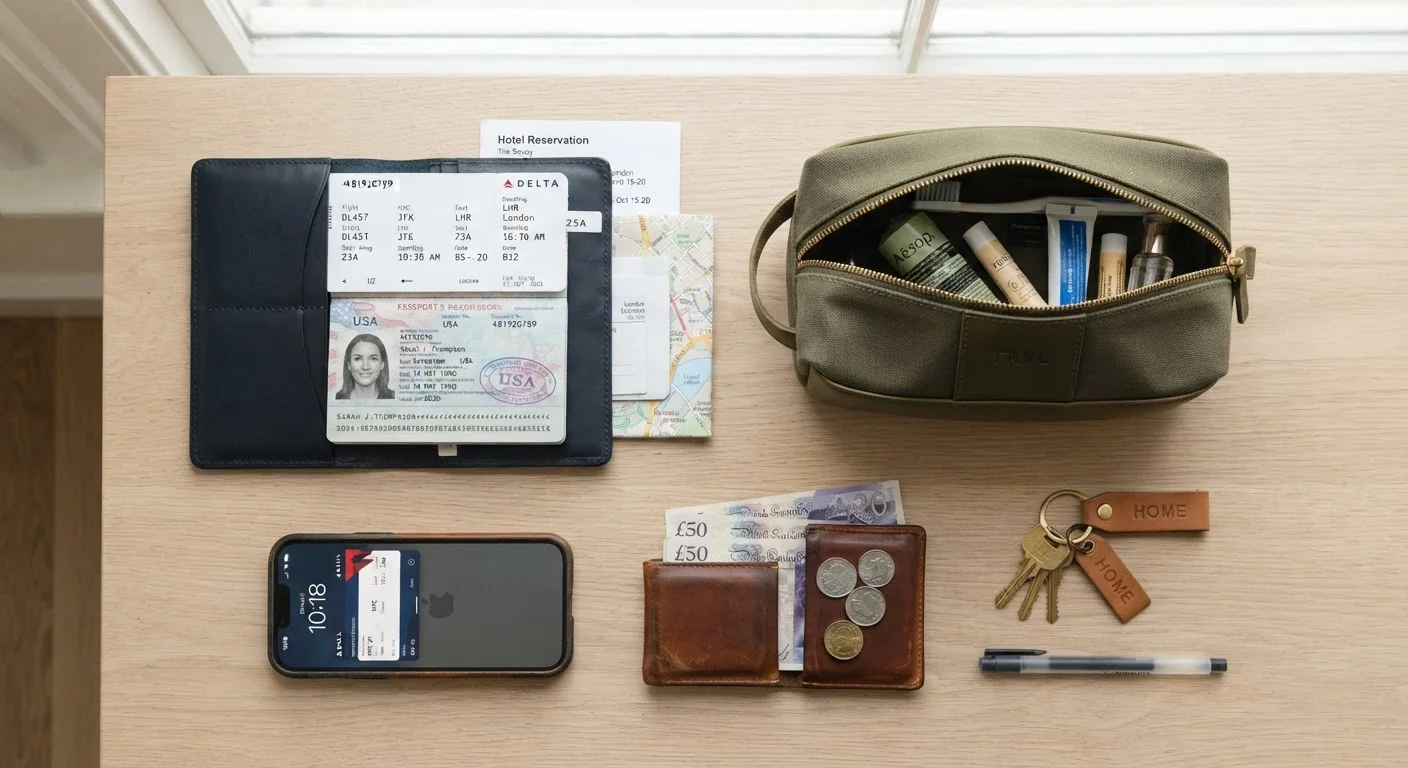
Key Takeaways
- Verifying your passport validity and visa requirements well in advance prevents the most common departure emergencies.
- Notifying your bank and setting up travel alerts can prevent your cards from being blocked abroad.
- Securing your home before departure - locks, lights, mail - reduces risk while you're away.
- Carrying physical and digital copies of key documents protects you if originals are lost or stolen.
- Health prep, including prescriptions and travel insurance review, is especially critical for international trips.
Summary
28 items · 45-90 minutes
Why a Pre-Travel Checklist Matters
Even seasoned travelers occasionally board a flight only to realize they left their travel adapter behind, forgot to pause mail delivery, or never told their bank they'd be overseas. A structured pre-departure checklist closes those gaps before they become real problems.
This checklist is designed for both domestic and international trips, though some items - visa requirements, medications documentation, border rules - apply primarily to international travel. Work through it at least 48-72 hours before departure, not the morning of your flight. For a fuller picture of how this fits into the overall planning arc, see The Trip Planning Checklist: From First Idea to Departure Gate.
Documents & Identity
Finances & Banking
Health & Safety Prep
Home Security
Packing & Luggage
Day-of Departure
What You'll Need to Work Through This Checklist
Most of these tasks require only a few minutes and tools you already have. Having everything in one place before you start will speed up the process considerably.
Passport and travel document folder
Keeps your passport, visas, insurance documents, and confirmations organized and accessible throughout your trip.
Secure cloud storage or email
Used to store digital copies of key documents so they're accessible from any device if originals are lost.
Banking app with travel notification feature
Allows you to alert your bank of travel plans and monitor for unauthorized transactions while abroad.
Luggage scale
Helps you verify bag weight before leaving home to avoid airline overweight fees at check-in.
Smart plug or light timer
Schedules interior lights to simulate occupancy and deter opportunistic theft while your home is empty.
Luggage tracker device
Placed inside checked bags to help locate or recover luggage if it's lost or misrouted by the airline.
If you're driving to the airport or taking a road trip, don't overlook the vehicle side of preparation. A pre-trip safety check for everyday journeys covers mirrors, tires, and driver readiness worth reviewing before any long drive.
Visa and Entry Requirements Can Change Quickly
Entry requirements - including visa rules, health documentation, and proof of onward travel - can change with little public notice. Always verify current requirements directly with the official embassy or consulate of your destination country, as well as your own government's travel advisory page, no more than a few days before departure. Relying on information from third-party sites or information gathered weeks in advance carries real risk of being out of date.
A Note on Documents and Health Preparation
Two areas consistently catch travelers off guard: document completeness and health logistics. For documents, the standard rule of thumb is to carry both a digital copy (stored in a secure cloud folder or email) and a physical photocopy of your passport, travel insurance policy, and any visas. Keep the physical copies separate from the originals.
For health preparation, travelers carrying prescription medications face unique considerations at international borders - what's legal, how much you can bring, and what documentation customs may require. Traveling with Medications: Documentation, Storage, and Border Considerations provides general guidance worth reading before any international trip.
This checklist is a practical tool, not a substitute for checking official government sources for entry requirements, travel advisories, and health recommendations specific to your destination. Requirements change, and verifying directly with your country's foreign affairs office and the destination country's embassy or consulate is always the right call before you travel.
For a comprehensive guide covering every stage from destination research through your first day back home, visit Trip Planning From Start to Finish. Additional trip planning tips and resources are also available to help you prepare with confidence.