

Key Takeaways
- Six or more hours of direct sunlight per day is the minimum requirement for most vegetables.
- Soil quality determines plant health - amend before you plant, not after problems appear.
- Starting small with a 4×8 foot bed prevents overwhelm and builds confidence.
- Matching your planting timing to your local frost dates is essential for success.
- Consistent watering at the root zone matters more than frequency or volume alone.
Start here
Choosing the Right Spot
Next
Understanding and Improving Your Soil
Then
Planning Your Garden Layout
Ready to plant
Planting Seeds and Transplants
Keep it growing
Watering, Feeding, and Basic Upkeep
Choosing the Right Spot
The single biggest factor in vegetable garden success is sunlight. Most vegetables - tomatoes, peppers, squash, beans, cucumbers - need at least six hours of direct sun each day, and eight hours is even better. Walk your yard at different times of day before committing to a location, and note which areas stay shaded by trees, fences, or your home.
Beyond sunlight, look for level or gently sloping ground where water drains rather than puddles. Soggy soil suffocates plant roots and encourages disease. Also consider proximity to a water source - dragging a hose from the far corner of the yard every day becomes a genuine obstacle. A spot close to your home is also easier to monitor for pests or wilting plants.
If your yard has no area meeting these criteria, a raised bed placed in a sunny spot - even on a patio or driveway edge - can solve drainage and soil challenges at once.
Understanding and Improving Your Soil
Vegetables are heavy feeders that depend on loose, nutrient-rich, well-draining soil. Before planting anything, assess what you're working with. Soil that compacts into a hard ball and cracks when dry is high in clay; soil that crumbles through your fingers without holding any shape is too sandy. Both extremes need amendment.
The most reliable all-purpose amendment is compost - decomposed organic matter that improves drainage in clay soils, adds water retention in sandy soils, and feeds beneficial soil microbes in both. Work two to four inches of compost into the top six to eight inches of your bed before planting. For a steady long-term supply, consider making your own compost from kitchen and yard scraps.
If you suspect nutrient deficiencies or pH problems, a basic soil test - available through most university extension programs - gives you specific guidance on what your soil actually needs rather than guessing.
Frost date
The average date of the last freezing temperature in spring or the first in fall for your area. Used to time planting so tender crops aren't killed by cold.
Direct seeding
Sowing seeds directly into the garden bed where they will grow to maturity, rather than starting them indoors first.
Soil amendment
Any material - such as compost, perlite, or aged manure - worked into existing soil to improve its texture, drainage, or nutrient content.
Transplant
A seedling started indoors or purchased from a nursery and moved into the garden once conditions are suitable.
Mulch
A layer of organic or inorganic material spread on the soil surface to retain moisture, suppress weeds, and regulate soil temperature.
pH
A measure of how acidic or alkaline your soil is. Most vegetables grow best when soil pH falls between 6.0 and 7.0.
Planning Your Garden Layout
A little planning on paper saves a lot of frustration in the ground. Sketch your bed dimensions, then map which vegetables will go where using the mature plant sizes on seed packets as a guide. Taller plants like tomatoes or corn belong on the north side of the bed so they don't shade shorter neighbors.
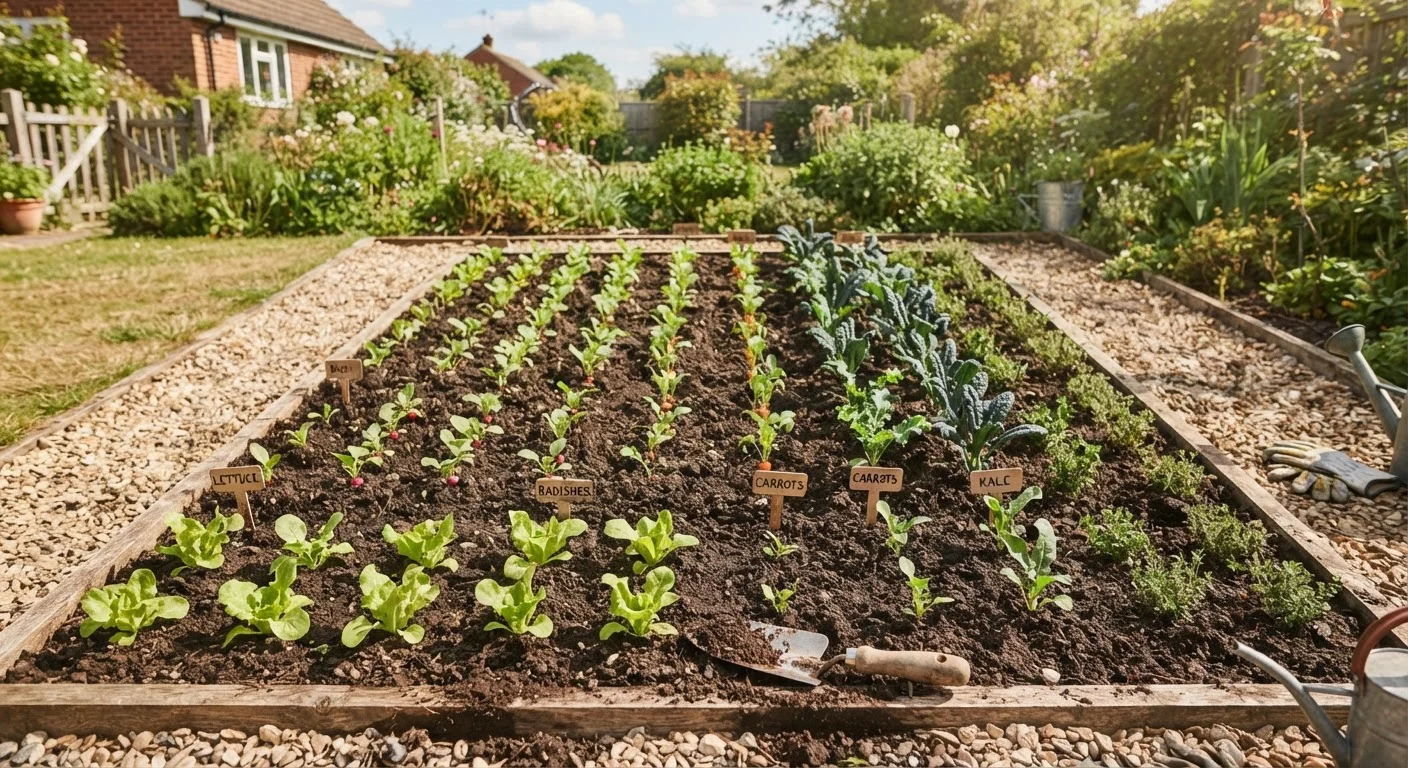
For a first garden, a 4×8 foot plot offers enough room for genuine variety without overwhelming you. A practical beginner mix might include one tomato plant, a row of bush beans, a short row of radishes, and a cluster of lettuce - crops with different harvest windows that keep the bed productive across the season.
Check our Seasonal Planting Calendar to align your layout with planting dates specific to your U.S. growing region. Timing cool-season crops like lettuce before warm-season crops like squash lets you maximize the same space across spring and summer.
Planting Seeds and Transplants
Some vegetables grow best when direct-seeded into the garden - beans, carrots, beets, and radishes dislike root disturbance and should be sown where they'll grow. Others, like tomatoes and peppers, benefit from being started indoors six to eight weeks before the last frost date and transplanted as seedlings, or purchased as transplants from a nursery.
When direct seeding, follow the depth and spacing instructions on the packet - planting too shallow or too deep are the most common beginner mistakes. Cover seeds lightly, firm the soil gently with your palm, and keep the surface consistently moist until germination. When transplanting, dig a hole sized for the root ball, settle the plant at the same depth it grew in its container (tomatoes are an exception and can be buried deeper), and water immediately.
Harden Off Transplants Before Planting
Seedlings grown indoors or in a greenhouse need gradual exposure to outdoor conditions before going in the ground. Set them outside in a sheltered spot for a few hours each day over one to two weeks, increasing sun and wind exposure gradually. Skipping this step can cause transplant shock that sets plants back by weeks.
Watering, Feeding, and Basic Upkeep
Most vegetables need roughly one inch of water per week. The goal is to water deeply and less often, encouraging roots to grow downward rather than staying near the surface. Water at the base of plants rather than overhead to reduce fungal disease risk. A simple drip line or soaker hose does this automatically and conserves water compared to sprinklers.
Mulching - spreading two to three inches of straw, shredded leaves, or wood chips around plants - dramatically reduces how often you need to water by slowing evaporation. Mulch also suppresses weeds and moderates soil temperature. Remove weeds promptly when they're small; they compete for water and nutrients and become much harder to pull once established.
For feeding, a balanced, slow-release granular fertilizer worked into the soil at planting covers most vegetables through the early season. Heavy producers like tomatoes and peppers benefit from additional feeding midseason. Avoid over-fertilizing with nitrogen, which grows lush foliage at the expense of fruit. For a full seasonal upkeep plan, the Year-Round Lawn and Garden Care guide covers every maintenance phase in detail.