

Key Takeaways
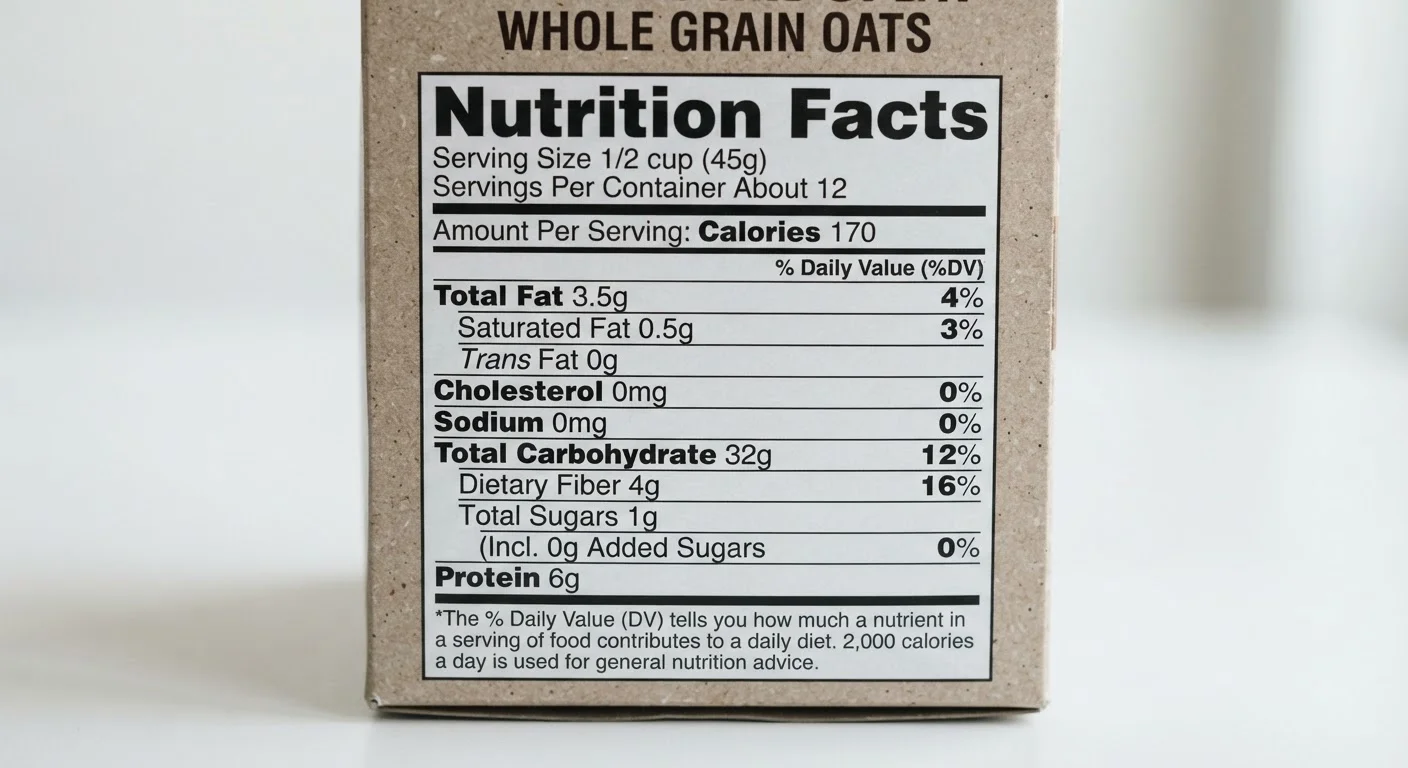
- Serving size is the foundation of every other number on the label - always check it first.
- % Daily Value of 5% or less is considered low; 20% or more is considered high for any nutrient.
- Added sugars and sodium are two of the most actionable numbers for most American diets.
- Fiber, potassium, calcium, and iron are nutrients the FDA flags as ones many Americans under-consume.
- Front-of-package claims like 'natural' or 'light' are marketing terms, not regulated health claims.
- No single number defines a food's quality - context and overall dietary pattern matter most.
What you will need
Why Nutrition Labels Often Feel More Confusing Than Helpful
The Nutrition Facts label, standardized by the U.S. Food and Drug Administration (FDA), was designed to make it easier for consumers to understand what they're eating. Yet for many people, a quick glance at those columns of numbers raises more questions than it answers. Should you be tracking grams, percentages, or calories? Which nutrients actually matter for your health goals? And what do all those front-of-package buzzwords really mean?
The short answer: most of the label's power is in a handful of key data points. Once you understand how the label is structured, you can scan it in seconds and walk away with genuinely useful information - without needing a nutrition degree. This guide walks through each section in order, explaining what it tells you and when it deserves your attention.
For a deeper look at how individual nutrients function in the body, see our guide to macronutrients.
How to Read Each Section of the Label
Follow these steps from the top of the label down - each section builds on the one before it.
Start with serving size and servings per container
Every other number on the label is calculated per serving - not per package. If a bag of chips lists 140 calories per serving but contains 3.5 servings, eating the whole bag means consuming 490 calories. The FDA updated label requirements to use more realistic serving sizes based on how people actually eat, but it's still common to underestimate how many servings you consume in one sitting.
Check calories in context
Calories measure total energy. The label displays calories prominently because energy balance is relevant to weight management for many people. However, calorie counts alone don't reflect nutritional quality - 200 calories from almonds and 200 calories from a cookie deliver very different nutrients. Use calories as one data point, not the whole story.
Use % Daily Value as your quick reference guide
The % Daily Value (%DV) column tells you how much of a nutrient one serving contributes to a standard 2,000-calorie daily diet. The FDA's practical rule of thumb: 5% DV or less is low for a nutrient; 20% DV or more is high. Use this scale to quickly assess whether a food is a meaningful source of a nutrient you want more of (like fiber or iron) or a significant contributor to one you want less of (like sodium or saturated fat). The 2,000-calorie reference doesn't match everyone's needs, but %DV is still the most useful at-a-glance comparison tool on the label.
Distinguish total sugars from added sugars
Since the FDA's updated label format, added sugars appear as a separate line indented beneath total sugars. This distinction matters because naturally occurring sugars in whole fruit or plain dairy come packaged with fiber, protein, vitamins, and minerals. Added sugars - syrups, cane sugar, honey, and other caloric sweeteners added during processing - provide calories without those accompanying nutrients. A food can be high in total sugars but low in added sugars (plain yogurt is a common example) or relatively low in total sugars while being entirely made up of added sugars.
Scan the nutrients to limit and nutrients to get enough of
The label is divided into two functional zones. Nutrients to limit - saturated fat, trans fat, sodium, and added sugars - are listed first because over-consumption is associated with increased risk of chronic disease. Nutrients to get enough of - dietary fiber, vitamin D, calcium, iron, and potassium - appear lower on the label; these are flagged by the FDA because many Americans fall short of recommended amounts. A high %DV for the first group is a caution signal; a high %DV for the second group is generally a positive indicator.
Glance at the ingredients list
The ingredients list sits just below or beside the Nutrition Facts panel and is ordered by weight - the first ingredient makes up the largest proportion of the food. This list reveals what the numbers can't show: whether 'whole grain' is the primary ingredient, how many different types of added sugars appear, and how long or short the overall ingredient list is. A long list isn't automatically bad, and a short list isn't automatically good - but reading ingredients alongside the numbers gives a more complete picture.
Once you've worked through the label systematically, the numbers stop feeling abstract and start connecting to real eating decisions. For a closer look at one of the most misunderstood figures on the panel, our article on what the science says about sugar provides evidence-based context.
Numbers Worth Watching - and Numbers You Can Often Skip
Not every row on the label deserves equal attention. Research and federal dietary guidance consistently point to a short list of nutrients that most Americans are either over-consuming or under-consuming.
Pay closer attention to:
- Added sugars - distinct from naturally occurring sugars in fruit or dairy, added sugars contribute calories with little nutritional return. The Dietary Guidelines for Americans recommend keeping added sugars below 10% of total daily calories.
- Sodium - the average American consumes well above the recommended limit. Processed and packaged foods are the primary source, making the label an essential check.
- Dietary fiber - most Americans fall significantly short of recommended intake. Learn more in our fiber overview.
- Saturated fat - current consensus supports limiting saturated fat, though research on dietary fat is nuanced. See our nutrition myths explainer for context.
Often less critical for most people:
- Total fat - type of fat matters more than total grams. Unsaturated fats from nuts, seeds, and fish are associated with positive health outcomes.
- Cholesterol - dietary cholesterol has a more modest effect on blood cholesterol than once believed for most people, per current evidence.
The 5%/20% Rule Is Your Fastest Label Tool
When you're short on time, apply the FDA's %DV benchmark across the whole label. Anything at 5% DV or below is low in that nutrient; anything at 20% DV or above is high. This single rule lets you evaluate sodium, fiber, saturated fat, and vitamins in seconds without doing any mental math.
The label also lists vitamins and minerals - primarily vitamin D, calcium, iron, and potassium - that the FDA identifies as under-consumed in the U.S. population. Our plain-language vitamins and minerals guide explains what each one does.
Front-of-Package Claims: What They Mean and What They Don't
The front of a package is prime marketing real estate, and the terms used there are not always regulated the same way as the Nutrition Facts panel. A few key distinctions:
- 'Natural' - the FDA has not established a formal definition for this term on food labels. It does not indicate organic, minimally processed, or nutritionally superior.
- 'Light' or 'lite' - regulated to mean reduced calories, fat, or sodium compared to a reference food, but the reference food may not have been particularly healthy to begin with.
- 'Multigrain' - means the product contains more than one type of grain, not that those grains are whole grains. Check the ingredients list for 'whole grain' as the first ingredient.
- 'No added sugar' - does not mean low in sugar; the food may still contain significant naturally occurring sugars or other caloric sweeteners.
The most reliable information on any package is always the Nutrition Facts panel and the ingredients list - not the front label. For a broader look at how food processing affects nutritional value, see our article on whole foods vs. processed foods.
This article provides general nutrition education and is not a substitute for personalized dietary advice. For guidance tailored to your health needs, consult a registered dietitian or qualified healthcare provider.