

Key Takeaways
- Most American adults consume only about half the daily fiber recommended by major health guidelines.
- Dietary fiber supports healthy digestion, blood sugar control, and cardiovascular health.
- Both soluble and insoluble fiber serve distinct but complementary roles in the body.
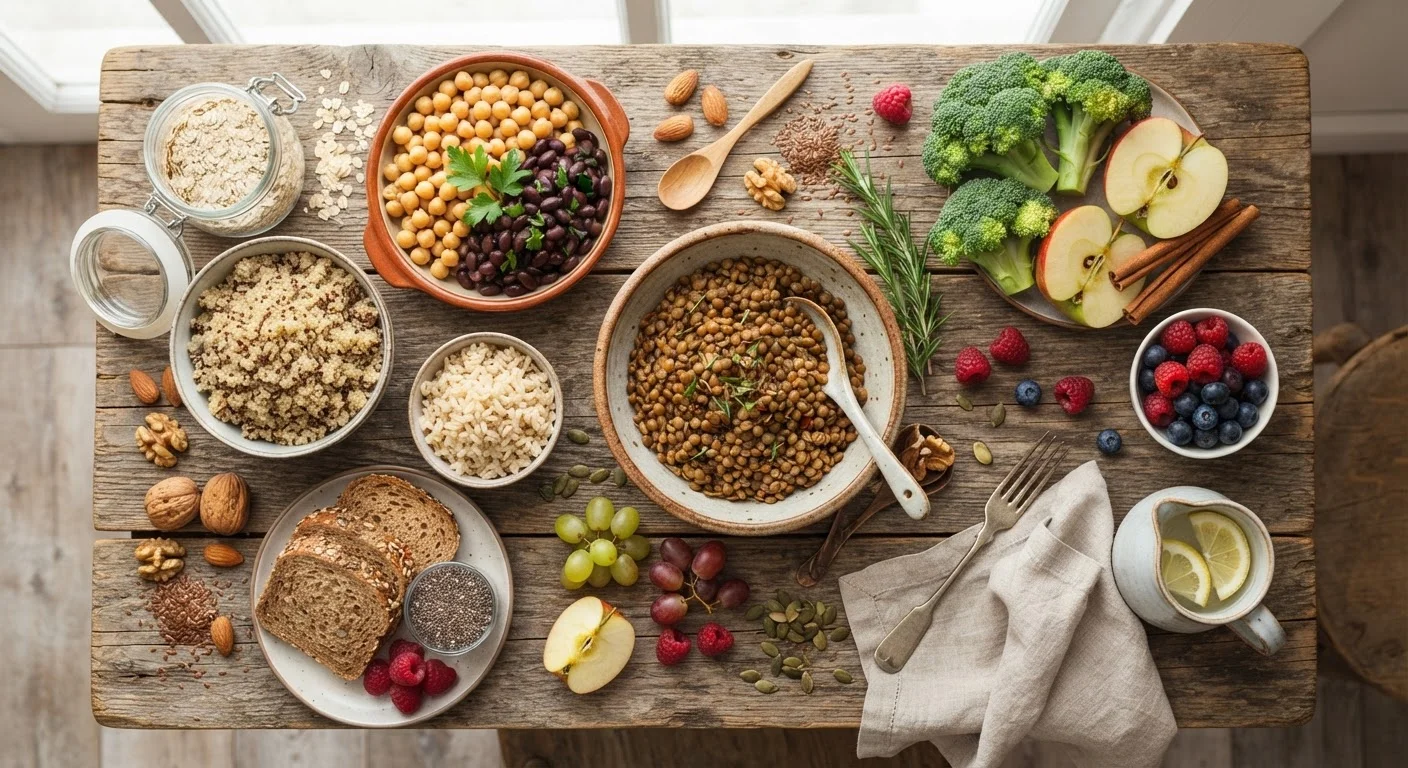
- Whole grains, legumes, fruits, and vegetables are among the most reliable fiber sources.
- Increasing fiber intake gradually - and drinking enough water - helps avoid digestive discomfort.
- Fiber from whole foods generally provides greater health benefit than isolated fiber supplements.
Dietary Fiber
Dietary fiber is the portion of plant-based foods that your body cannot fully digest or absorb. Unlike fats, proteins, or carbohydrates that break down and enter the bloodstream, fiber passes relatively intact through your stomach and intestines. It plays a vital role in digestion, blood sugar regulation, and heart health.
Fiber is broadly classified into two types: soluble fiber, which dissolves in water and forms a gel-like substance, and insoluble fiber, which does not dissolve and adds bulk to stool. Most whole plant foods contain both types in varying proportions.
Why Fiber Deserves More Attention
In an era crowded with diet trends - low-carb, high-protein, intermittent fasting - one of the most consistently supported nutritional recommendations gets surprisingly little attention: eat more fiber. Research published by institutions including the NIH and the American Heart Association has repeatedly linked adequate fiber intake to lower risks of heart disease, type 2 diabetes, colorectal cancer, and digestive disorders. Yet national dietary surveys suggest the average American adult consumes around 15 grams of fiber per day - roughly half of what health guidelines recommend.
Understanding what fiber actually does, where it comes from, and how to get more of it is more useful than almost any fad diet swap. For readers trying to cut through conflicting nutrition advice, see our examination of common nutrition myths to understand which popular claims hold up under scrutiny.
~15g
Average daily fiber intake for U.S. adults
According to national dietary survey data analyzed by the NIH, most American adults consume roughly 15 grams of fiber per day.
25-38g
Recommended daily fiber intake for adults
The Dietary Guidelines for Americans recommend 25g/day for women and 38g/day for men, dropping modestly after age 50.
~8g
Fiber in half a cup of cooked lentils
Lentils are one of the most fiber-dense foods available and are consistently cited by nutrition researchers as an underutilized staple.
10-15%
Estimated reduction in LDL cholesterol from soluble fiber
Research reviewed by the American Heart Association suggests regular soluble fiber intake can reduce LDL cholesterol by approximately 10-15% in some individuals.
Soluble vs. Insoluble Fiber: What the Difference Means for Your Body
Fiber is not a single substance - it encompasses a broad family of plant compounds, commonly divided into two functional categories.
Soluble fiber dissolves in water and forms a viscous gel in the digestive tract. This gel slows the movement of food through the gut, which helps moderate blood sugar spikes after meals and can lower LDL cholesterol by binding bile acids. Oats, barley, legumes, apples, and citrus fruits are particularly rich in soluble fiber. Beta-glucan, the soluble fiber found in oats, has one of the strongest bodies of evidence for cholesterol reduction among dietary components.
Insoluble fiber does not dissolve in water. Instead, it adds bulk to stool and helps food move more efficiently through the intestines, supporting regularity and reducing constipation. Whole wheat, bran, most vegetables, and nuts are primary sources.
Most whole plant foods contain both types, which is one reason dietary guidance focuses on food variety rather than isolating specific fiber fractions. Pair a fiber-rich diet with adequate hydration - the connection between water intake and digestion is more significant than many people realize.
The Real-World Benefits Backed by Evidence
The health case for fiber rests on decades of epidemiological research and clinical trials, not nutritional theory alone.
- Heart health: Soluble fiber has been shown to modestly but meaningfully reduce total and LDL cholesterol. The FDA recognizes an authorized health claim linking beta-glucan soluble fiber from oats and barley to reduced risk of heart disease.
- Blood sugar regulation: Fiber slows glucose absorption, which helps prevent rapid blood sugar spikes. This is particularly relevant for people managing or at risk for type 2 diabetes.
- Digestive health: Adequate insoluble fiber intake is associated with lower rates of constipation, diverticular disease, and - at higher intakes - reduced colorectal cancer risk.
- Gut microbiome support: Certain fibers, called prebiotics, ferment in the large intestine and feed beneficial gut bacteria. A diverse microbiome is increasingly linked to immune function and metabolic health, though research in this area is still evolving.
“Dietary fiber is one of the most underappreciated nutrients in the American diet. The evidence consistently shows that populations eating more fiber have better cardiovascular outcomes, better blood sugar control, and lower rates of colorectal disease.”
— Walter Willett, Professor of Epidemiology and Nutrition, Harvard T.H. Chan School of Public Health
Practical Ways to Eat More Fiber
Reaching recommended fiber levels doesn't require expensive specialty foods or dramatic dietary overhauls. The most fiber-dense foods are often among the most affordable staples available.
Consider these straightforward strategies:
- Swap refined grains for whole grains. Choose whole wheat bread, brown rice, or oats instead of their white counterparts. A single cup of cooked oats delivers around 4 grams of fiber.
- Make legumes a regular fixture. Lentils, black beans, chickpeas, and kidney beans are among the highest-fiber foods available - a half-cup of cooked lentils contains roughly 8 grams. They're also among the most budget-friendly protein sources. For more ideas on affordable nutrition, see practical strategies for nutritious eating on a budget.
- Eat the whole fruit, not just juice. Juicing strips away most of the fiber. A whole apple with skin provides about 4-5 grams; apple juice provides almost none.
- Add vegetables wherever you can. Broccoli, carrots, Brussels sprouts, and leafy greens all contribute meaningfully. Frozen varieties are nutritionally comparable to fresh and often more economical.
- Check nutrition labels. Foods listing 5 or more grams of fiber per serving are generally considered high-fiber. Learning to read those labels accurately matters - see our guide to interpreting nutrition labels for help.
This article is for informational and educational purposes only and is not a substitute for professional medical or dietary advice. Speak with a qualified healthcare provider before making significant changes to your diet, especially if you have a digestive condition or chronic illness.