

Key Takeaways
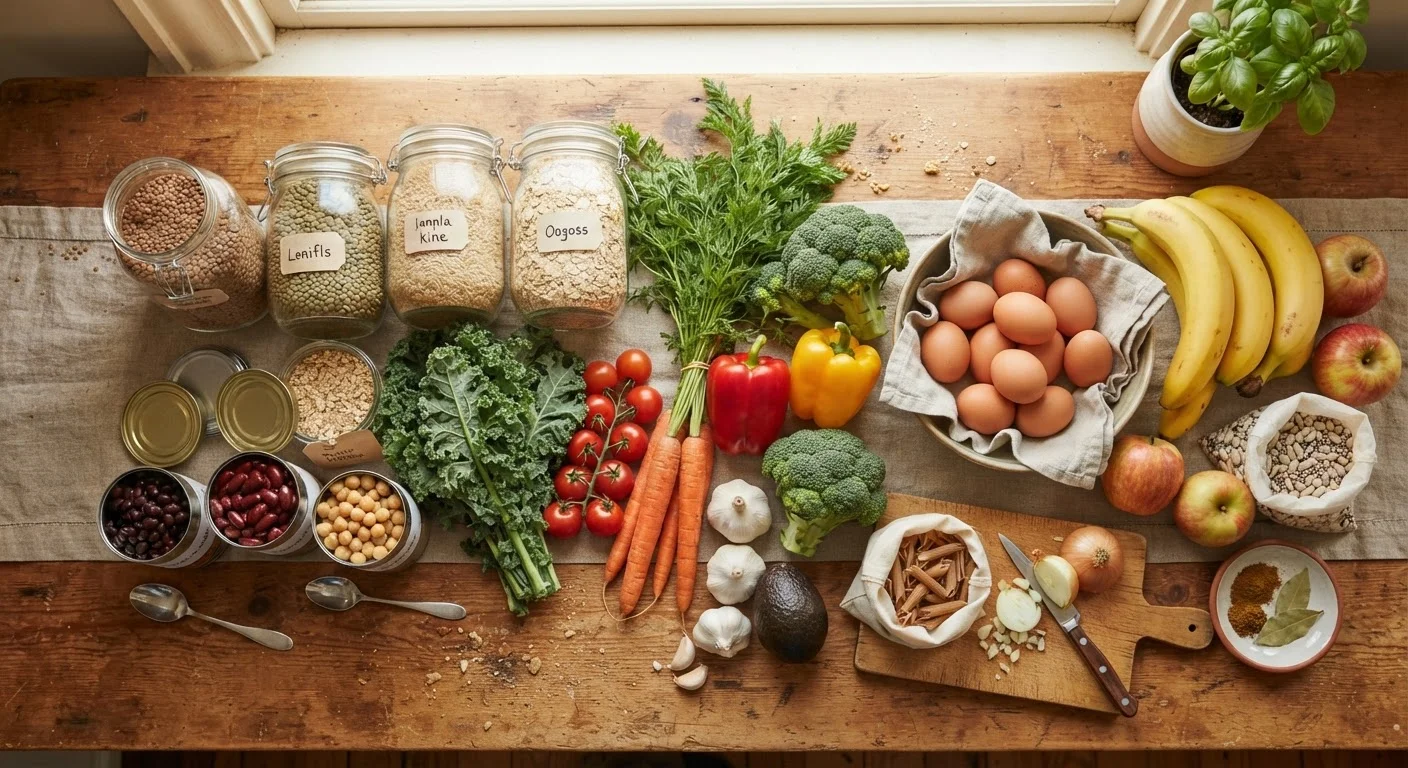
- Plant proteins like lentils, beans, and eggs deliver strong nutrition at a fraction of the cost of most animal proteins.
- Meal planning and a written shopping list are two of the most effective tools for reducing weekly food spending.
- Frozen and canned vegetables are nutritionally comparable to fresh and often significantly cheaper.
- Cooking in bulk and repurposing leftovers stretches ingredients further without extra effort or expense.
- Whole grains and legumes are among the most cost-effective sources of fiber, vitamins, and sustained energy.
Why Budget Eating Gets a Bad Reputation
The idea that eating healthfully costs more than eating poorly is widely held - and partly grounded in reality. Research published in journals such as PLOS ONE has found that nutrient-dense diets can cost more per calorie than energy-dense processed foods. But cost-per-calorie is only one lens. When researchers compare cost-per-serving or cost-per-nutrient, affordable whole foods often compete favorably with highly processed options.
The gap narrows further when you factor in planning, preparation, and purchasing habits. Many households spend more than necessary not because healthy food is inherently expensive, but because of food waste, impulse purchases, and unfamiliarity with lower-cost nutrient-dense ingredients. Understanding these patterns is the first step toward changing them.
This article focuses on evidence-backed strategies - not fad diets or extreme restrictions - that make genuinely nutritious eating accessible on a tight budget. For a broader look at how dietary frameworks compare, see our overview of popular diet approaches.
Best Practices for Eating Well Without Overspending
The following practices are drawn from nutrition research, public health guidance, and the practical realities of grocery shopping on a limited income. None require specialized cooking skills or unusual ingredients.
Prioritize dried and canned legumes as your primary protein source
Dried lentils, chickpeas, black beans, and kidney beans consistently rank among the lowest-cost sources of protein and fiber available in American grocery stores. They require minimal preparation, store for months, and adapt to dozens of cuisines. Canned versions add convenience with only modest cost increase.
Choose frozen and canned vegetables over skipping vegetables entirely
Frozen vegetables are typically harvested and flash-frozen at peak ripeness, preserving most of their vitamins and minerals. They cost significantly less than fresh out-of-season produce and eliminate spoilage. Canned vegetables, particularly those packed without added sodium, are similarly nutritious and shelf-stable.
Build meals around whole grains as your primary carbohydrate
Oats, brown rice, barley, and whole-wheat pasta cost little per serving, keep you full longer than refined grains due to their fiber content, and provide B vitamins and minerals. They act as a flexible base for both savory and sweet preparations.
Plan meals for the week before writing your grocery list
Planning reduces food waste - one of the biggest hidden costs in household food budgets - and prevents the expensive habit of buying items that don't get used. It also makes it easier to identify ingredients that can stretch across multiple meals.
Cook in batches and use leftovers intentionally
Batch cooking reduces time spent cooking on busy weeknights, lowers energy costs, and makes it far less likely that you'll reach for expensive convenience food when you're tired. Intentional use of leftovers - rather than letting them sit forgotten - extends the value of every ingredient purchased.
Use eggs as a versatile, affordable nutrient source
Eggs deliver high-quality complete protein, choline, vitamin D, and B12 at a cost that remains among the lowest of any animal-sourced food. They can anchor breakfast, lunch, or dinner, making them one of the most flexible budget staples available.
Smart Shopping: Before You Enter the Store
Much of what determines your weekly food spending is decided before you reach the checkout line. Planning meals in advance reduces both waste and the temptation of impulse purchases. Our weekly meal planning checklist offers a structured approach to organizing balanced meals across the week.
Building meals around a short list of versatile base ingredients - grains, legumes, eggs, and seasonal vegetables - keeps shopping focused. Checking store circulars or digital sales before writing your list lets you plan around what's already discounted rather than paying full price for a rigid recipe list.
For readers working on the broader financial picture, our guide to habits that sustain a budget long-term covers the consistency skills that support lasting financial control, including food spending.
Nutrition Without Compromise
Budget eating doesn't mean nutritional gaps. Affordable staples like dried lentils, canned sardines, eggs, oats, and frozen spinach are nutritional powerhouses. Legumes in particular offer protein, dietary fiber, iron, and folate - nutrients many Americans fall short on - at very low cost per serving.
Variety matters even within budget constraints. Rotating through different vegetables, grains, and protein sources throughout the week helps ensure a broader range of vitamins and minerals. For a reference guide to what each nutrient does and where to find it affordably, see our vitamins and minerals reference.
For those interested in shifting toward more plant-centered meals - a strategy that often reduces costs - plant-based eating for beginners is a practical starting point. And for understanding how to structure any meal nutritionally, our balanced plate guide explains what evidence-based frameworks actually recommend.
This article is for general informational and educational purposes only and is not a substitute for personalized advice from a registered dietitian or qualified healthcare professional. Nutritional needs vary by individual - consult a professional before making significant changes to your diet, especially if you have a health condition.