

Key Takeaways
- Hands-free phone calls still significantly impair driving cognition, according to traffic safety research.
- Cognitive distraction - not just physical distraction - is a leading cause of driver inattention.
- Multitasking behind the wheel is a neurological myth; the brain switches tasks rather than doing both at once.
- Distracted driving laws vary widely by state; legal doesn't always mean safe.
- Even experienced drivers are not immune to the attention deficits caused by in-car conversations.
Why Distracted Driving Is More Than Just Looking Away
Most drivers picture distracted driving as a teenager texting at a red light. The reality is broader and more troubling. Traffic safety researchers identify three categories of distraction: visual (eyes off the road), manual (hands off the wheel), and cognitive (mind off the task of driving). Many in-car behaviors - including hands-free phone calls - score high on cognitive distraction even when a driver's eyes are forward and hands are in place.
Understanding all three types is essential, particularly as vehicles become more connected and drivers grow more reliant on voice commands, dashboards, and built-in assistants. For a broader look at how modern vehicle technology shapes driver attention, see our piece on driving assistance technology and its real-world limits.
Myth
Hands-free phone calls are safe to take while driving because your hands stay on the wheel.
Fact
Hands-free calls still impose significant cognitive load, reducing a driver's ability to process road hazards.
Research from the AAA Foundation for Traffic Safety found that hands-free calling produced moderate to high levels of cognitive distraction - comparable in some measures to handheld calls. The problem isn't where your hands are; it's where your brain is. When engaged in a conversation, the mind narrows its focus, causing drivers to miss visual cues like stop signs, pedestrians, and merging vehicles - a phenomenon researchers call "inattention blindness."
Myth
Experienced drivers can multitask behind the wheel better than inexperienced ones.
Fact
The human brain does not multitask - it switches rapidly between tasks, and driving performance degrades for everyone.
Neuroscience is clear that true simultaneous multitasking is not how the brain operates. Instead, it rapidly alternates attention between tasks, and each switch carries a cognitive cost. Studies have found no meaningful advantage for experienced drivers when it comes to managing a secondary cognitive task while driving. Experience builds pattern recognition and vehicle control, but it does not rewire the brain's attention architecture.
Myth
If something is legal - like using a mounted phone for GPS - it must be safe.
Fact
Legality and safety are not the same thing. Many legal in-car behaviors still impair driving performance.
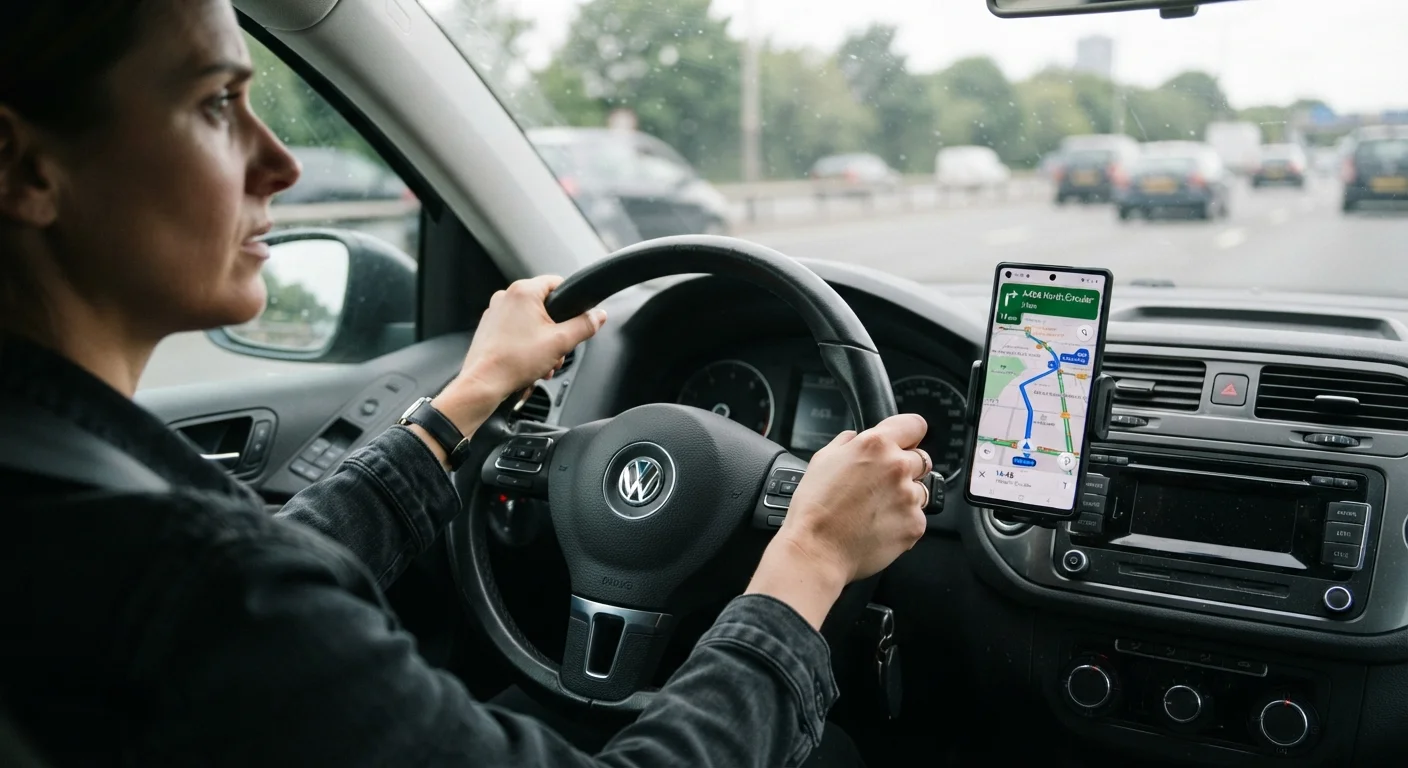
Distracted driving laws in the U.S. vary significantly from state to state, and most focus on handheld device use rather than cognitive distraction broadly. A mounted phone used for GPS is legal in most states, but manually adjusting a route, browsing options, or following unfamiliar instructions still draws cognitive resources away from driving. Drivers should evaluate behaviors by their actual risk, not only their legal status.
Myth
Voice-activated systems are distraction-free because you don't have to look at a screen.
Fact
Voice interfaces reduce visual and manual demands but can introduce substantial cognitive distraction.
AAA research has evaluated the cognitive demand of various in-vehicle voice systems and found that some produce high mental workload - particularly when the system misunderstands commands, requires correction, or involves complex interactions like composing messages. The more effort a voice interaction requires, the more it competes with the mental processing that safe driving demands. A system being "eyes-free" does not make it attention-free.
Myth
Glancing at a phone for just a second is not really dangerous.
Fact
At 55 mph, a two-second glance away from the road covers the length of nearly two basketball courts.
NHTSA data has long illustrated this point through a straightforward calculation: at highway speeds, even a brief glance at a phone means traveling substantial distances without any visual awareness of the road ahead. Hazards - a vehicle braking suddenly, a child entering the road, debris - can appear and become critical within those seconds. Brief does not mean inconsequential when the vehicle is in motion.
Common Myths That Put Drivers at Risk
Misconceptions about distracted driving are deeply embedded in everyday driving culture. Many of these beliefs feel intuitive - which is precisely what makes them dangerous. The myth-fact pairs below reflect findings from traffic safety research, including studies by the National Highway Traffic Safety Administration (NHTSA) and university transportation labs.
~3,300
U.S. deaths attributed to distracted driving annually
According to NHTSA data, distraction is a reported factor in thousands of fatal crashes each year in the United States.
4x
Increased crash risk while using a handheld phone
The National Safety Council cites research indicating that cell phone use while driving quadruples crash risk, including hands-free use in some analyses.
27 seconds
Cognitive distraction after completing a voice task
AAA Foundation for Traffic Safety research found that drivers can remain cognitively distracted for up to 27 seconds after finishing a voice-activated interaction.
If you're working to build stronger general road awareness, our road safety fundamentals guide covers situational awareness and space management as foundational skills.
What You Can Do to Drive with Fewer Distractions
Knowing the risks is only the first step. Adjusting behavior requires deliberate habits. Before you start driving, consider setting your GPS route, adjusting mirrors, and placing your phone in do-not-disturb mode. Pulling over safely to handle a call or urgent message is always a reasonable choice - and it models good behavior for passengers.
Passengers themselves can be a resource: ask them to manage navigation or respond to messages on your behalf. On longer trips, plan regular stops so fatigue doesn't compound distraction. Road conditions also change the stakes - highway and city driving carry different distraction risks, and what feels manageable in one environment may not be in another.
Finally, be aware of scenarios where even careful drivers can be caught off guard. Unexpected hazards amplify the cost of divided attention. Our article on situations that trip up experienced drivers outlines several worth knowing.