

Key Takeaways
- Apply for or renew your passport at least six months before your intended departure date.
- Visa requirements vary by destination and U.S. passport holder status - always verify with official government sources.
- Notify your bank before traveling internationally to avoid frozen cards or fraud flags.
- A realistic itinerary includes buffer time for transit, rest, and the unexpected.
- Entry rules, health requirements, and travel advisories can change - check official sources close to your departure date.
Start here
Start With the Basics: Passports and Entry Requirements
Next
Research Your Destination Before You Book
Then
Managing Money Abroad
When you're ready
Building a Workable Itinerary
Final step
Final Steps Before Departure
Start With the Basics: Passports and Entry Requirements
Before anything else - flights, hotels, itineraries - confirm that your travel documents are in order. For U.S. citizens, that starts with a valid passport. Many countries require your passport to be valid for at least six months beyond your planned departure date, so check the expiration stamp carefully. If your passport is new or expired, apply as early as possible; the U.S. State Department advises allowing several months for routine processing.
Once your passport is sorted, research entry requirements for your specific destination. "Visa-free" travel doesn't always mean automatic entry - countries set their own rules. The U.S. State Department's country information pages are the most reliable starting point. For a deeper look at common document misconceptions, see common myths about passport and visa rules that catch travelers off guard.
Passport validity
The number of months remaining before your passport expires. Many countries require at least six months of validity beyond your travel dates, even for short visits.
Visa on arrival
A type of entry permission granted at a border or airport rather than arranged in advance. Not all nationalities qualify, and requirements vary by country.
Travel advisory
An official government warning that rates the safety level of traveling to a particular country, typically on a scale from normal caution to do-not-travel.
Foreign transaction fee
A charge added by some banks or credit card issuers when you make a purchase in a foreign currency. Some travel-oriented accounts waive this fee.
Travel insurance
A policy that may reimburse costs from trip cancellations, medical emergencies abroad, or lost luggage. Coverage details vary widely between providers and plans.
Research Your Destination Before You Book
Knowing a destination's basics before you commit to dates saves headaches later. Research three core areas: climate and seasonality, cultural norms, and any travel advisories. The U.S. State Department's travel.state.gov site publishes updated advisories and health information by country - bookmark it.
If you're considering a region rather than a single country, factor in how that affects logistics. A guide like Southeast Asia for first-time visitors illustrates how regional differences in visas, climate zones, and cultural expectations require destination-specific preparation rather than a one-size-fits-all approach.
Also check whether vaccinations or health documentation are required or recommended. Your doctor or a travel medicine clinic can advise based on your health history - not all recommendations apply equally to every traveler.
Managing Money Abroad
Currency and payment logistics trip up many first-time international travelers. Start by notifying your bank and credit card providers before you leave - without a travel notice, overseas transactions may trigger fraud alerts and leave your card frozen at the worst possible time.
Research whether your destination is largely cash-based or card-friendly. In many urban centers, cards are widely accepted; in rural areas or smaller markets, local cash is essential. Using ATMs at your destination is generally a straightforward way to access local currency at reasonable exchange rates, though your bank may charge withdrawal fees. Avoid airport currency exchange kiosks if possible - their rates are typically unfavorable.
Set Up a Dedicated Travel Folder
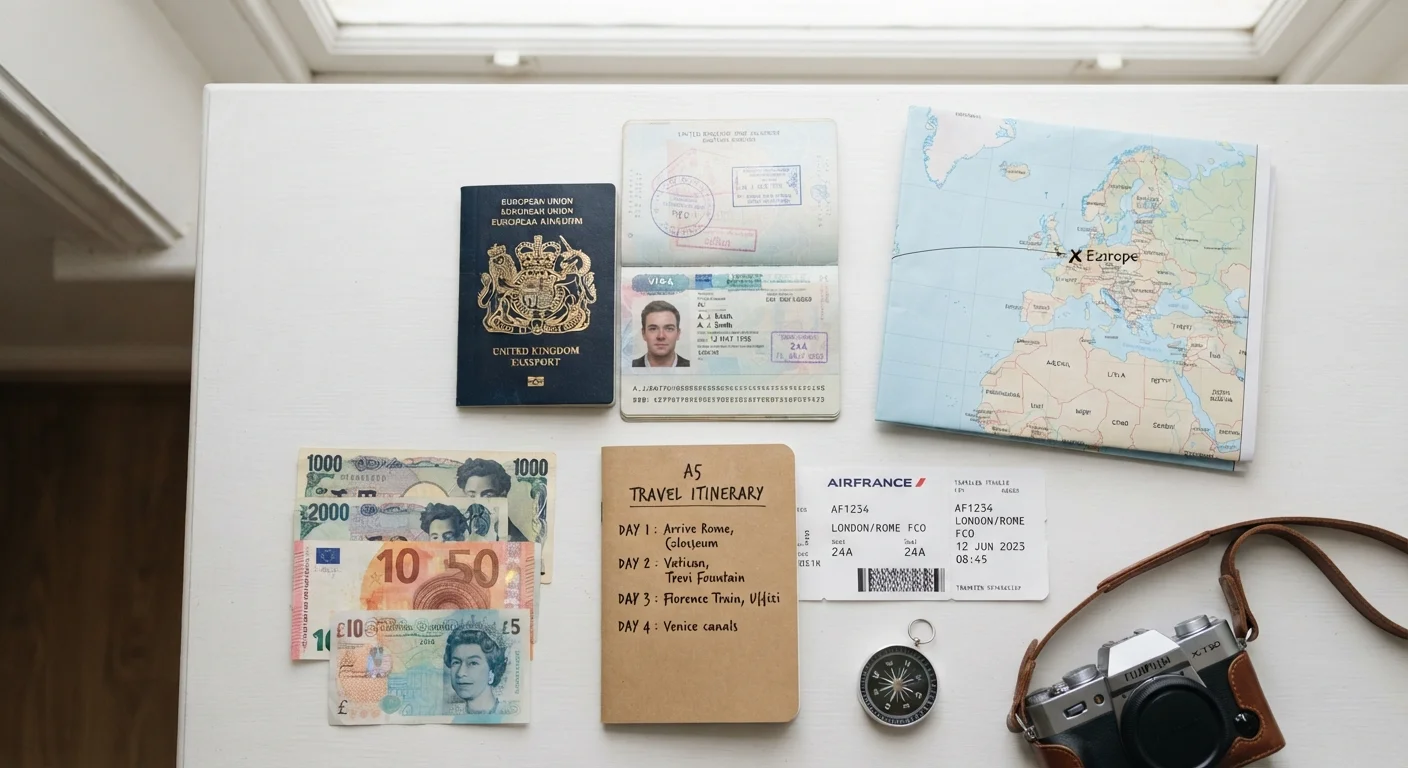
Create a folder - digital or physical - that holds copies of your passport, visa confirmation, itinerary, accommodation details, and emergency contacts. Keep a digital copy in cloud storage and a printed backup in your carry-on bag. This single habit can save significant stress if something goes missing while you're abroad.
Keep a small emergency reserve of U.S. dollars or local currency separate from your main wallet. If a card fails or an ATM is unavailable, having backup cash prevents a stressful situation from becoming a crisis.
Building a Workable Itinerary
A common first-timer mistake is over-scheduling. Jet lag, longer transit times between sights, and the unexpected will all eat into a tightly packed plan. Build in breathing room - aim for two to three anchor activities per day rather than six, especially in the first few days after a long-haul flight.
Think of your itinerary in blocks: arrival logistics, a few full travel days, and a lighter final day before your return flight. For a practical framework on structuring travel days realistically, building an itinerary that actually works walks through how to balance sightseeing, rest, and transit without burning out.
Research transit options within your destination early - trains, local transit passes, or airport connections often require advance booking or specific payment methods.
Final Steps Before Departure
In the week before you leave, run through a pre-departure checklist. Confirm your accommodation reservations, recheck passport and visa validity, and download offline maps for your destination. Share your itinerary with someone at home, including hotel contact details and your return flight information.
For a thorough pre-departure review, the pre-travel checklist for stress-free departures covers documents, home security, health prep, and finances in one place. Re-verify any entry requirements or travel advisories close to your departure date - conditions can and do change. With the groundwork laid, your first international trip is far more likely to feel manageable from day one.