

Key Takeaways
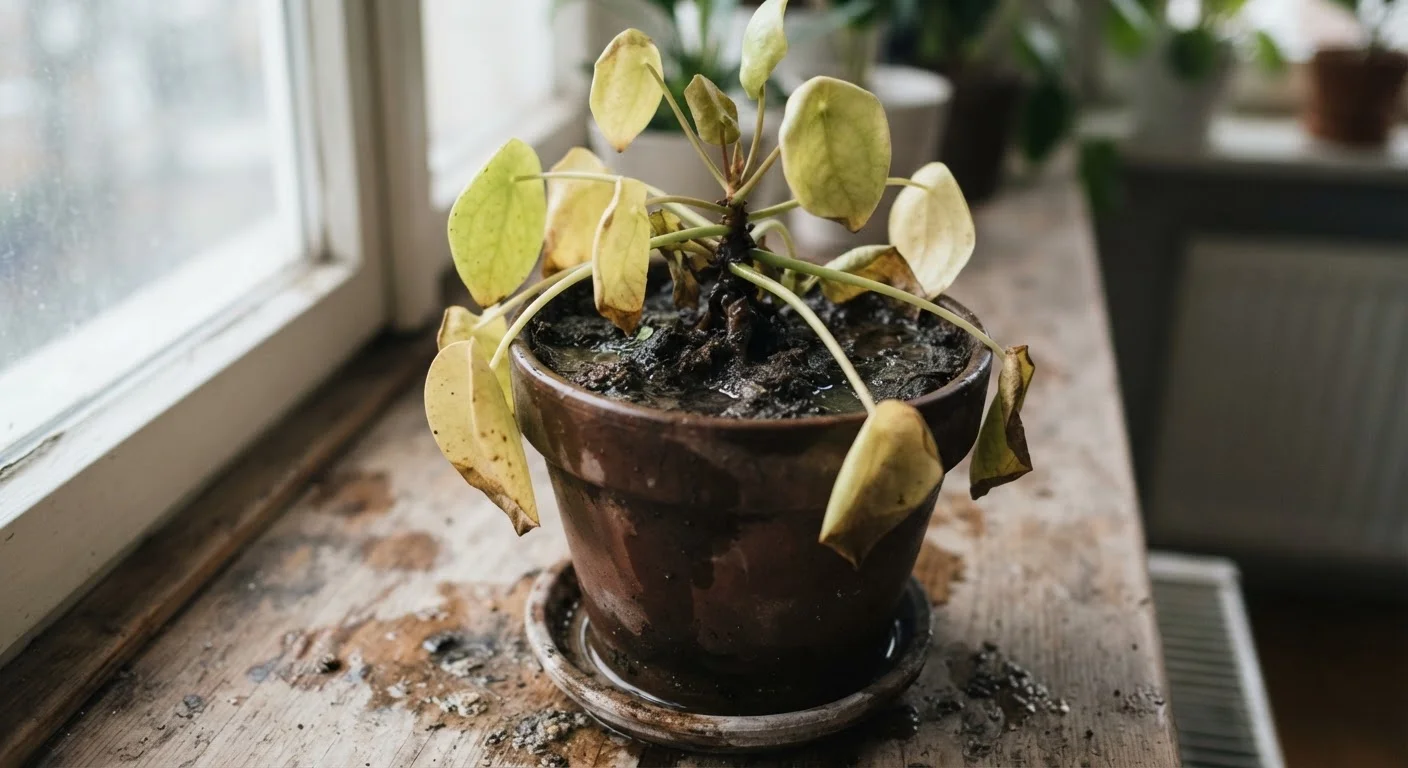
- Wilting and yellowing leaves can signal overwatering just as often as underwatering.
- Checking soil moisture before watering is the single most reliable diagnostic step.
- Overwatered roots suffocate and rot, cutting off the plant's access to water and nutrients.
- Musty soil odor and soft, dark stems are strong indicators of root rot from excess moisture.
- Correcting overwatering takes patience - improvement rarely happens overnight.
Why Overwatering Mimics Drought Stress
Plants communicate distress through a limited vocabulary: wilting, yellowing, browning, dropping leaves. The frustrating truth is that these signals mean different things depending on their cause, and overwatering produces nearly the same visible symptoms as underwatering. The underlying mechanism explains why.
Roots need both water and oxygen to function. When soil stays saturated, air pockets fill with water and roots begin to suffocate. Stressed roots can no longer pull moisture and nutrients up into the plant - so even though the soil is soaking wet, the plant behaves as if it's in a drought. It wilts. Its leaves yellow. It drops foliage. To a well-meaning gardener, every symptom points toward adding more water, which only deepens the problem.
Understanding this cycle is the foundation for avoiding the most damaging mistakes in home gardening. For a broader picture of keeping your landscape healthy year-round, the complete homeowner's lawn and garden guide covers seasonal care from soil prep through winter protection.
Common Mistakes That Make Overwatering Worse
The errors below are among the most frequent - and most consequential - that everyday gardeners make when reading plant distress signals. Each one tends to compound the original problem rather than solve it.
Watering again when you see wilting, without checking the soil first.
Why it happens: Wilting is the brain's shorthand for thirst - it's the most intuitive signal that a plant needs water. Most gardeners don't pause to consider that a waterlogged root system causes the same drooping symptom.
Interpreting yellowing leaves as a sign of underwatering or nutrient deficiency.
Why it happens: Nutrient deficiency and underwatering both cause pale or yellow foliage, so gardeners often assume yellow means the plant needs more - more water, more fertilizer. In reality, yellowing from overwatering is caused by roots that can no longer absorb nutrients due to oxygen deprivation.
Treating soggy, compacted soil the same way as dry, cracked soil.
Why it happens: Both overwatered and underwatered soils can pull away from pot edges or look dull on the surface, especially if a crust has formed. Gardeners may misread surface appearance without examining depth.
Assuming brown leaf tips are caused by dry air or underwatering.
Why it happens: Brown, crispy tips are widely associated with low humidity or drought, so they prompt immediate watering. However, overwatering can also cause browning when root damage prevents water from reaching leaf edges.
Continuing a fixed watering schedule regardless of season or weather.
Why it happens: Watering on a rigid schedule feels responsible and systematic. Many gardeners set reminders and stick to them through heat waves and cool, rainy stretches alike, not accounting for how dramatically plant water needs shift.
Root Rot Is a Medical Emergency for Plants
Once root rot takes hold, the plant loses its ability to absorb water and nutrients even when soil moisture is adequate. If you suspect root rot, remove the plant from its pot, trim any black or mushy roots with clean scissors, and repot into fresh, well-draining soil. Acting quickly gives the plant its best chance at recovery.
If you want to reduce the overall watering burden in your yard, exploring low-maintenance landscaping strategies - such as drought-tolerant plantings and improved drainage design - can help prevent chronic overwatering at the landscape level.
How to Tell the Difference: A Practical Diagnostic
When a plant looks stressed, resist the instinct to act immediately. Run through these checks in order:
- Soil moisture at root depth: Push a finger 1-2 inches into the soil or use a moisture meter. Damp and cool means hold off; dry and crumbly means water.
- Container weight: Lift the pot. Heavy relative to its size usually means wet soil; surprisingly light typically means dry.
- Smell: Healthy moist soil smells earthy and neutral. A sour or musty odor suggests anaerobic conditions - a sign of standing water and possible root rot.
- Stem and root feel: Firm stems and white or tan roots indicate health. Soft, dark, or slimy roots confirm overwatering damage.
- Drainage check: Does water drain freely from pot holes or garden beds, or does it pool? Poor drainage is a structural problem that watering frequency alone won't fix.
90%
Houseplant deaths attributed to overwatering
Horticulture educators commonly cite overwatering as the leading cause of houseplant death, often estimated at around 90% of cases.
48-72 hrs
Time for root oxygen deprivation to begin
Research in plant physiology indicates roots in saturated, poorly aerated soil can begin to suffer oxygen deprivation within 48 to 72 hours.
2-4 weeks
Typical recovery time after correcting overwatering
Gardening extension resources generally suggest plants with mild to moderate overwatering damage may show visible improvement within two to four weeks after drainage is corrected.
Pairing these observations with a more intentional watering routine - rather than a fixed schedule - will protect most garden plants from both extremes. For more on building sustainable outdoor habits, see our guidance on practical landscaping approaches that reduce ongoing yard work.