

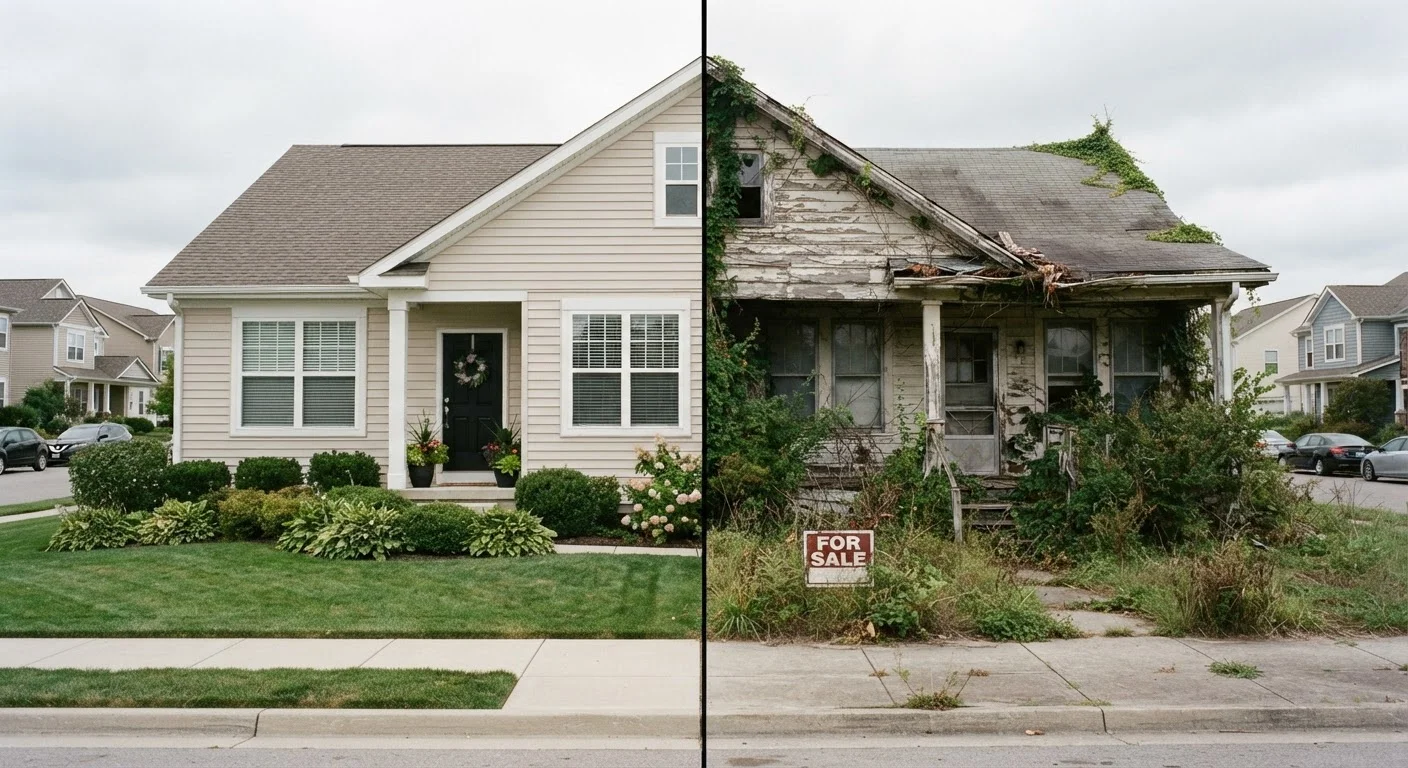
Key Takeaways
- Deferred home maintenance rarely saves money - minor issues compound into major repairs over time.
- Water intrusion, HVAC neglect, and ignored caulking are among the costliest mistakes homeowners make.
- Routine inspections and small seasonal tasks are far cheaper than emergency repairs or full replacements.
- Understanding your home's age helps you prioritize which systems need the most attention first.
Why Deferred Maintenance Is a False Economy
Many homeowners put off routine upkeep with the best intentions - budgets are tight, weekends disappear, and a small crack or dripping faucet rarely feels urgent. But deferred maintenance doesn't stay small. Each skipped task creates conditions for the next, larger failure.
A missing shingle invites water. Water warps sheathing. Warped sheathing allows mold. Mold requires professional remediation. What started as a $50 shingle replacement can become a $10,000 interior repair. This pattern repeats across nearly every system in a home - plumbing, HVAC, foundation, electrical, and exterior envelope.
The good news is that awareness of the most common maintenance mistakes gives homeowners a clear path to avoiding them. See how neglected upkeep erodes home value for a broader picture of the financial stakes involved.
Ignoring gutter cleaning and drainage grading around the foundation.
Why it happens: Gutters don't fail visibly until they overflow, and grading problems are easy to miss without deliberate inspection. Homeowners often assume rain washes debris through naturally.
Skipping HVAC filter changes and annual system servicing.
Why it happens: A dirty filter doesn't cause an immediate breakdown, so the urgency feels low. Many homeowners simply forget the schedule or underestimate how quickly filters clog in dusty or pet-occupied homes.
Letting caulking and weatherstripping deteriorate around windows, doors, and wet areas.
Why it happens: Caulk degrades slowly and the gaps it leaves are easy to miss during day-to-day living. Homeowners often don't realize how much energy is lost - or how much moisture is entering - until they see staining or feel drafts.
Delaying roof inspections after storms or at seasonal transitions.
Why it happens: Climbing a roof feels risky, and damage from above isn't visible from the ground. Homeowners often wait until an interior water stain appears - by which time structural damage is already underway.
Overlooking slow plumbing leaks under sinks and around water-using appliances.
Why it happens: Cabinet interiors are rarely opened unless something is needed, and small leaks may drip only intermittently. The slow accumulation of moisture doesn't announce itself until mold or soft flooring appears.
Building a Maintenance Habit That Holds
The homeowners who spend the least on emergency repairs tend to follow one consistent practice: they treat maintenance as a recurring system, not a reaction to visible problems. A seasonal checklist - reviewed each spring and fall - catches most issues before they compound.
Never Delay Repairs Involving Water or Structural Integrity
Water intrusion and foundation concerns are among the fastest-escalating home problems. If you notice damp drywall, efflorescence (white mineral deposits) on basement walls, or cracks wider than a quarter-inch in foundation masonry, contact a licensed professional promptly. These are not issues to monitor and revisit next season - waiting significantly increases both repair complexity and cost.
Consider scheduling an annual walkthrough of your home's exterior with a checklist covering gutters, roof flashing, caulking around windows and doors, grading around the foundation, and the condition of your HVAC filters and condensate drain. For a comprehensive season-by-season breakdown, annual home maintenance tasks is a practical starting point.
The age and era of your home also shapes which systems need the most attention. A home built in the 1970s carries different risks than one built in 2005. Understanding those differences helps you allocate time and budget wisely - how home age shapes your maintenance priorities walks through what to watch in homes of different eras.
When you're unsure whether a repair is within your skill set, the decision matters. Attempting work beyond your experience level - especially anything involving electrical panels, gas lines, or structural elements - can turn a manageable repair into a dangerous and expensive one. DIY home repairs vs. hiring a professional can help you make that call confidently. For broader home improvement context, explore the Home Improvement hub.
1%-3%
Of home value recommended annually for maintenance
Housing industry guidance commonly suggests homeowners budget between 1% and 3% of their home's value each year for routine upkeep and repairs.
$1 to $4
Saved per dollar spent on preventive maintenance
Research from the National Institute of Building Sciences has estimated that proactive maintenance and mitigation investments can return multiple dollars in avoided repair costs.