

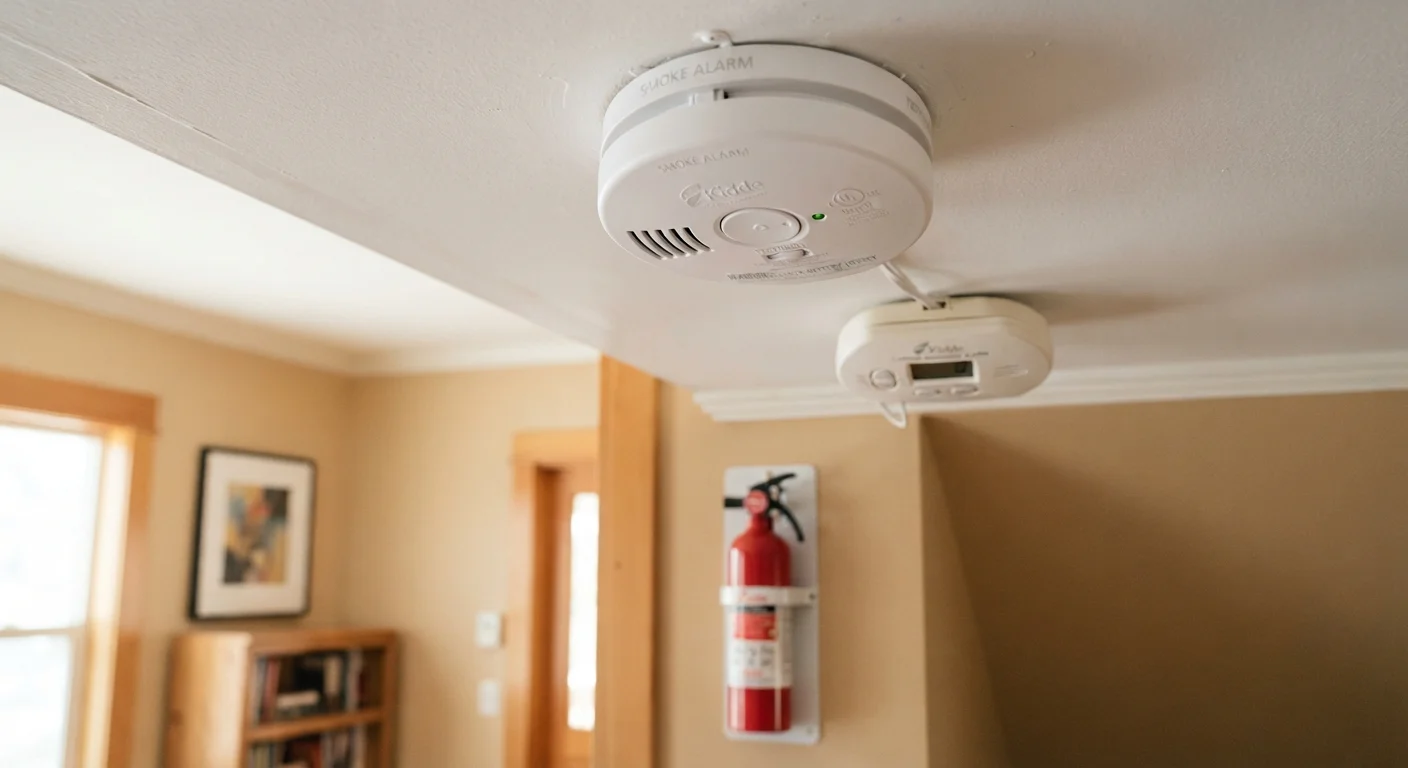
Why Maintenance Schedules Matter for Safety Devices
Smoke alarms, carbon monoxide (CO) detectors, and fire extinguishers are among the most important safety systems in any home - but they only perform as designed when they're properly maintained. A smoke alarm with a dead battery or a fire extinguisher past its service date provides little more than false reassurance.
Most safety device failures aren't caused by defects. They're caused by neglect: missed battery changes, sensors coated in dust, or pressure gauges that drifted without anyone noticing. Building a simple, calendar-based maintenance routine removes that risk.
This guide covers the core maintenance tasks for each device type, how often to perform them, and the placement principles that maximize their effectiveness. For a broader view of home upkeep tasks, see our annual home maintenance guide.
Smoke Alarms: Testing, Cleaning, and Replacement
Monthly: Press the test button and hold it for several seconds. A loud, consistent alarm tone confirms the unit is functional. If the sound is weak or absent, replace the battery first, then retest.
Every 6 months: Use a vacuum with a soft brush attachment or a can of compressed air to clear dust from the alarm's vents and sensing chamber. Accumulated dust is a leading cause of false alarms and reduced sensitivity.
Battery replacement: For alarms with replaceable batteries, change them at least once a year - many households use a seasonal reminder like daylight saving time as a trigger. Alarms with sealed 10-year lithium batteries don't need this step, but the unit itself still requires periodic replacement.
Full unit replacement: Smoke alarms should be replaced every 10 years from the manufacture date, which is printed on the back of the unit. Ionization and photoelectric sensors degrade over time regardless of outward appearance.
Placement: Install smoke alarms on every level of the home, inside each sleeping area, and outside each sleeping area. Mount them on the ceiling or high on a wall (within 12 inches of the ceiling). Keep them away from kitchens and bathrooms where steam and cooking fumes can trigger false alerts.
CO Detectors: Maintenance and Sensor Lifespan
Carbon monoxide is odorless and colorless, which means a functioning detector is the only reliable early warning available. CO detectors use electrochemical sensors that wear out over time, making replacement schedules just as important as battery changes.
Monthly: Test the unit using the test button. A properly functioning detector will sound its alarm pattern within a few seconds.
Every 6 months: Vacuum gently around vents to prevent dust buildup from interfering with sensor accuracy.
Full unit replacement: Most CO detectors have a sensor lifespan of 5 to 7 years. Check the manufacture date on the back of the unit and follow the manufacturer's stated service life. Many combination smoke/CO alarms have different replacement timelines for each sensor - check documentation carefully.
Placement: Install CO detectors on every level of the home, near sleeping areas so the alarm wakes occupants at night. Avoid placing them directly beside fuel-burning appliances or in garages - these locations can trigger nuisance alarms. Keep one near any attached garage, gas furnace, or water heater room.
See our home maintenance inspection guide to understand how professionals evaluate safety device placement during a routine inspection.
Fire Extinguishers: Inspection and Service Intervals
A fire extinguisher that hasn't been checked in years may be partially or fully discharged, have a corroded pin, or contain a propellant that has lost pressure - none of which is visible without a physical inspection.
Monthly: Check the pressure gauge needle. It should sit in the green zone. Inspect the pull pin and tamper seal for signs of damage. Look for visible corrosion, dents, or a clogged nozzle.
Annually: Have the extinguisher professionally inspected by a licensed fire protection service. Technicians verify internal pressure, check for corrosion, and confirm the agent hasn't settled or compacted.
Hydrostatic testing: Depending on the extinguisher type, cylinders require hydrostatic pressure testing every 5 to 12 years to confirm structural integrity. Your inspection technician can advise on the applicable schedule.
Replacement: Disposable (non-rechargeable) extinguishers should be replaced every 12 years or after any use. Rechargeable models can be professionally serviced and refilled after discharge.
Placement: Keep at least one extinguisher in the kitchen, mounted in a visible, accessible location away from the stove itself. Additional units are recommended in garages, workshops, and on each floor. Choose a multipurpose ABC-rated extinguisher for general home use, which handles ordinary combustibles, flammable liquids, and electrical fires.
Staying current on home safety maintenance pairs naturally with other upkeep routines - our HVAC maintenance primer covers another critical system worth scheduling alongside your safety device checks.