

Key Takeaways
- Replacing air filters every 1-3 months is the single most impactful DIY HVAC task a homeowner can do.
- Dirty coils force your system to work harder, raising energy bills and shortening equipment life.
- Blocked or closed vents disrupt airflow balance and can strain the entire HVAC system.
- Annual professional tune-ups catch problems that routine homeowner maintenance can't address.
- Duct leaks and coil issues typically require a licensed HVAC technician to repair safely.
Start here
Why HVAC Maintenance Matters
Next
Air Filters: How Often and What to Look For
Then
Evaporator and Condenser Coils
Continue
Vents, Registers, and Ductwork
Final step
When to Call a Professional
Why HVAC Maintenance Matters
Your home's heating, ventilation, and air conditioning (HVAC) system quietly runs thousands of hours per year - pushing conditioned air through filters, across coils, and out through registers in every room. Like any mechanical system, it degrades without care. Dust accumulates, components strain, and efficiency drops. The result is higher utility bills, poorer indoor air quality, and a shortened equipment lifespan.
The good news is that most of the degradation is preventable. A straightforward maintenance routine - covering filters, coils, and vents - addresses the most common failure points and keeps your system operating close to its designed efficiency. This guide walks you through each component, what it does, and what you should be doing to maintain it. For a broader view of seasonal upkeep, see your home's annual maintenance calendar for month-by-month guidance.
Air Filters: How Often and What to Look For
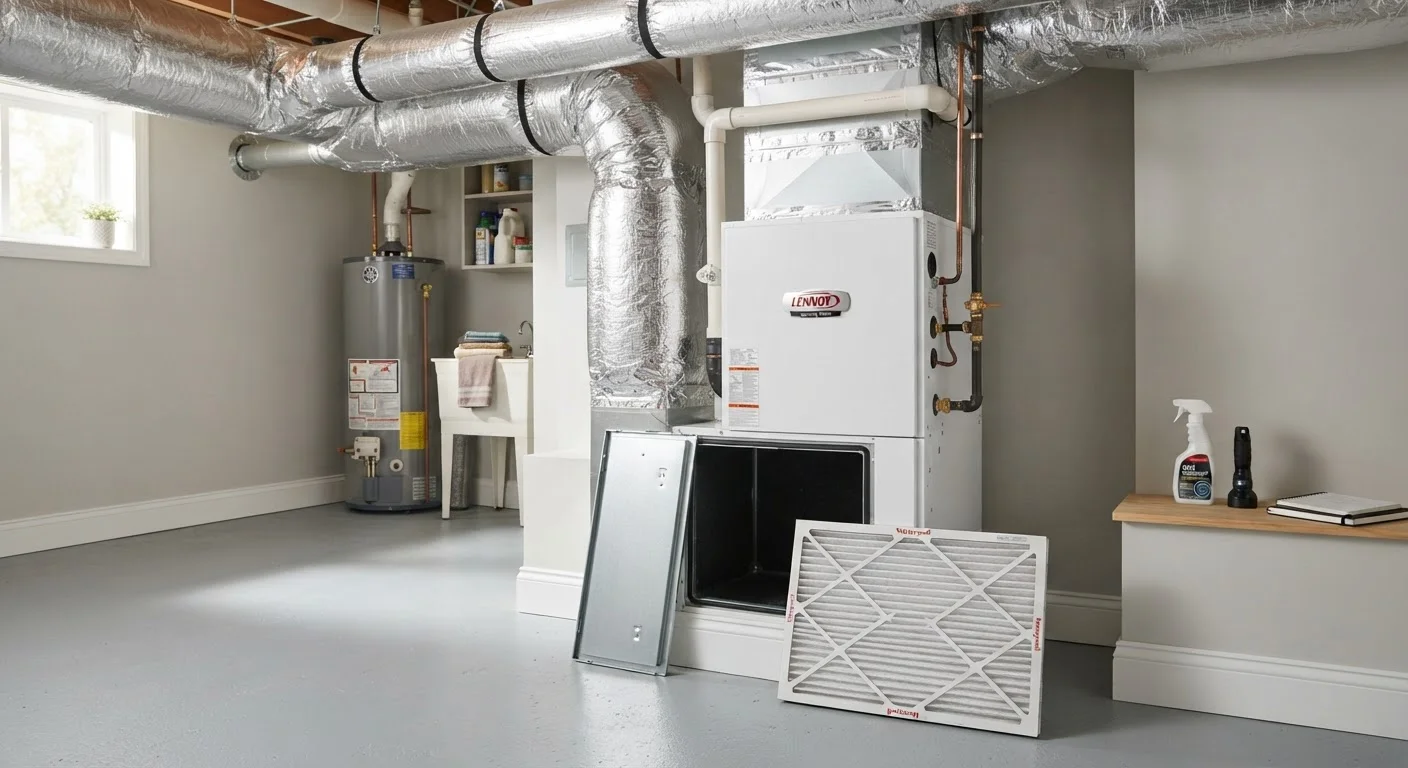
The air filter is the most owner-accessible part of any HVAC system and the single highest-impact maintenance item. It traps airborne particles - dust, pollen, pet dander, mold spores - before they coat the blower, coils, and ductwork. A clogged filter restricts airflow, which forces the blower motor to work harder and can cause the evaporator coil to freeze.
Filter Types and MERV Ratings
MERV (Minimum Efficiency Reporting Value) measures how well a filter captures particles. Standard fiberglass filters carry ratings of MERV 1-4 and offer minimal filtration. Pleated filters in the MERV 8-13 range are the practical choice for most homes - they balance particle capture with airflow. Higher ratings exist but may restrict airflow in systems not designed for them.
Replacement Schedule
- 1-inch filters: Every 1-3 months
- 4- to 5-inch media filters: Every 6-12 months
- Homes with pets or allergy sufferers: Check monthly, replace more often
Pull the filter out and hold it up to a light source. If you cannot see light through it, it is overdue for replacement. Always match the replacement filter size exactly to the slot dimensions stamped on the filter frame.
Set a Filter Reminder Right Now
The easiest way to stay on schedule is to set a recurring calendar reminder on your phone the moment you install a new filter. Write the installation date on the filter frame with a marker so you have a quick visual reference. Buying a small stock of the correct filter size means you can swap immediately rather than delaying because you need to make a store run.
Evaporator and Condenser Coils
Your HVAC system has two coil sets working together to move heat. The evaporator coil sits inside the air handler, absorbing heat from indoor air as refrigerant flows through it. The condenser coil sits in the outdoor unit, releasing that heat outside. Both become less effective as they accumulate grime.
Evaporator Coil
Because air passes directly over the evaporator coil, any particles that slip past the filter end up coating its fins. A dirty evaporator coil insulates itself from the airstream, reducing cooling capacity and potentially causing the coil to freeze - a sign that requires prompt attention. This coil is typically difficult to access and is best inspected and cleaned during a professional annual tune-up.
Condenser Coil
The outdoor condenser unit is exposed to grass clippings, cottonwood seeds, leaves, and dirt. Homeowner-accessible maintenance includes:
- Turning off power to the unit at the disconnect box before working near it.
- Removing large debris by hand or with a soft brush.
- Rinsing the fins gently from the inside out with a garden hose on low pressure - never a pressure washer, which bends the delicate aluminum fins.
- Keeping at least two feet of clear space around the unit so airflow is not restricted.
Bent fins reduce airflow efficiency. A tool called a fin comb can straighten them, but this task is often left to a technician during a scheduled service visit.
Vents, Registers, and Ductwork
Supply registers push conditioned air into rooms; return registers draw room air back to the air handler. Both collect dust and, if obstructed, disrupt the pressure balance your system relies on to distribute air evenly.
Register Care
- Vacuum register grilles monthly when you vacuum floors - use the brush attachment to pull dust from the louvers.
- Keep registers open in all rooms. Closing multiple registers does not save energy; it raises static pressure and can stress the blower and ductwork.
- Ensure furniture, rugs, and curtains are not blocking registers.
Ductwork
Duct leaks are common in older homes and can cause significant energy loss. Accessible duct joints in attics, basements, and crawl spaces can be sealed with mastic sealant or metal-backed tape (not standard cloth duct tape, which fails over time). Any significant duct work - re-routing, sealing inside walls, or replacing insulation - should be handled by a licensed professional.
If you notice persistent odors, visible mold at registers, or unexplained allergy symptoms that worsen indoors, consider having a professional assess your ductwork. For more on what inspectors examine during a routine check, see what a home maintenance inspection actually covers.
When to Call a Professional
DIY maintenance covers a meaningful share of HVAC upkeep, but several tasks require a licensed HVAC technician:
- Annual tune-up: A technician checks refrigerant charge, measures electrical draw, cleans the evaporator coil, lubricates moving parts, and tests safety controls - tasks that require specialized tools and certifications.
- Refrigerant handling: Adding or recovering refrigerant is regulated and must be performed by a certified technician.
- Electrical and gas components: Inspecting heat exchangers, ignitors, and electrical connections involves hazards that DIY work should not approach.
- Persistent performance issues: If your system short-cycles, produces unusual noises, or fails to maintain temperature after you have addressed filters and vents, a professional diagnosis is the next step.
Scheduling a professional tune-up once per year - in spring before the cooling season or in fall before heating season - is a reliable practice for most households. This fits naturally into the broader upkeep routines covered in annual home maintenance tasks that protect your investment. For a complete picture of all your home's systems, home maintenance from the ground up offers a thorough system-by-system overview.