

Key Takeaways
- Gutters collect roof runoff and downspouts redirect it safely away from the foundation.
- A clogged or sagging gutter can cause water to overflow directly against the home's structure.
- Foundation damage, basement moisture, and siding rot are common consequences of drainage failure.
- Gutters should be cleaned at least twice a year - typically in spring and late fall.
- Downspout extensions should discharge water at least 4-6 feet from the foundation.
- Small maintenance steps performed routinely can prevent costly structural repairs.
Gutter and Downspout System
A gutter and downspout system is a network of channels and pipes attached to your roofline that collects rainwater running off the roof and directs it safely away from your home's foundation. Gutters run horizontally along the eaves, while downspouts carry the collected water vertically down to ground level and discharge it several feet away from the structure. When the system works correctly, it prevents water from pooling against the foundation, soaking into siding, or eroding the soil around the home.
Most residential systems use 5-inch K-style gutters paired with 2×3-inch or 3×4-inch rectangular downspouts; downspout extensions or splash blocks at the outlet point are critical for achieving adequate discharge distance from the foundation.
How the Drainage System Actually Works
Every time it rains, your roof sheds a significant volume of water. A 1,500-square-foot roof can shed over 900 gallons during a single inch of rainfall. Without gutters, that water falls freely off the eaves, splashing against the foundation and saturating the soil immediately around the house.
Gutters interrupt that process. Mounted along the lower edge of the roof, they collect runoff and channel it toward downspouts - the vertical pipes that carry water to the ground. At ground level, a downspout extension or splash block redirects the flow away from the structure.
The system only works when all three elements function together: gutters must be clear and properly sloped, downspouts must be unobstructed, and discharge points must aim water well away from the foundation. A failure at any one point compromises the whole chain.
For a broader look at how drainage fits alongside other home systems, see our comprehensive home maintenance guide.
What Goes Wrong - and Why It Matters
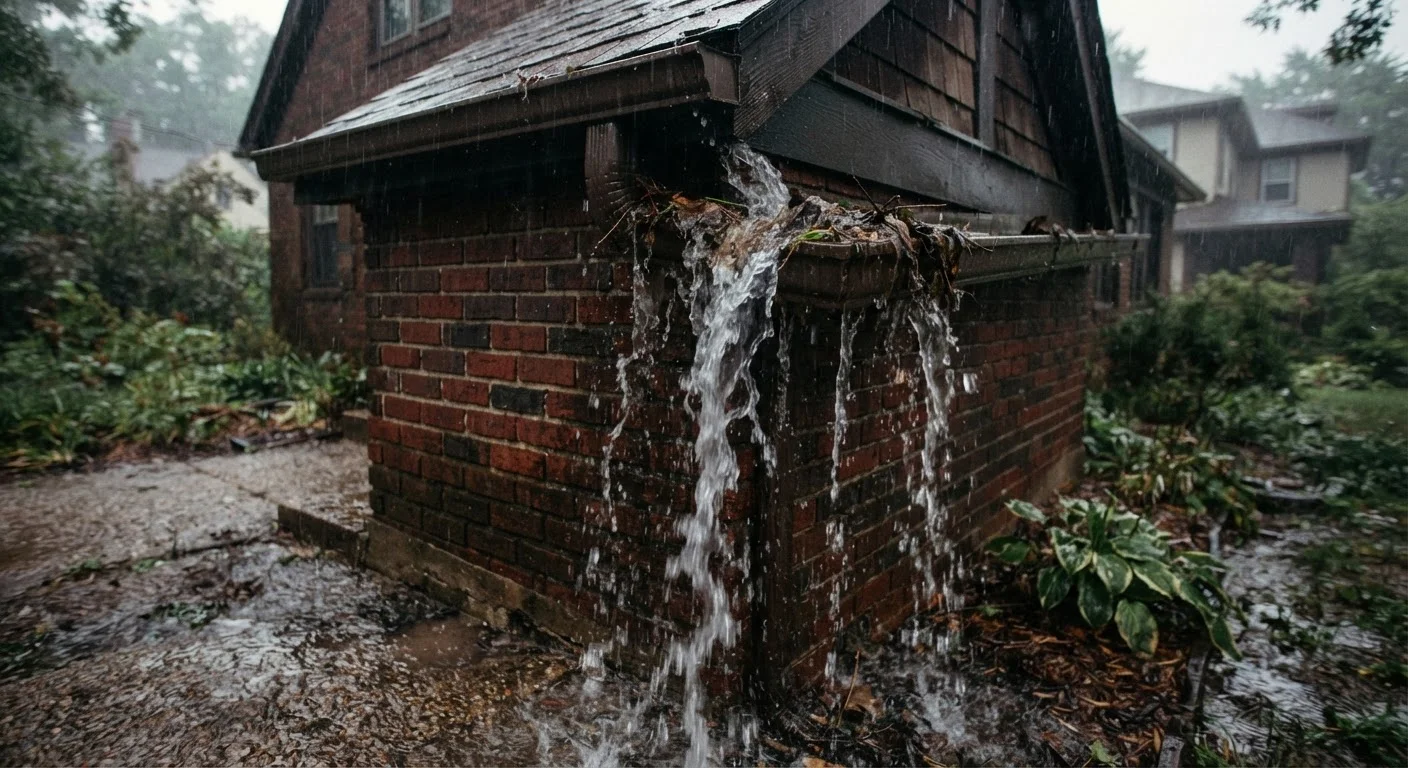
The most common failure mode is a clog. Leaves, twigs, seed pods, and shingle granules accumulate in gutters over time. A blocked gutter fills with standing water, which then overflows the front edge - exactly where you don't want it - directly against siding and foundation.
900+
Gallons shed per inch of rain on a 1,500 sq ft roof
Calculated using standard runoff formulas; actual volume varies with roof pitch and material absorption.
4-6 ft
Minimum downspout discharge distance from foundation
Recommended by most building and waterproofing professionals to prevent soil saturation near the structure.
2×/year
Minimum gutter cleaning frequency for most homes
Homes near heavy tree coverage may require three to four cleanings annually.
Sagging is another frequent issue. Gutters are designed with a slight slope toward the downspout, typically about a quarter-inch of drop for every 10 feet of run. When hangers loosen or the gutter fills with debris and pulls away from the fascia, the slope reverses and water pools inside the trough rather than draining.
Downspout problems are easy to overlook. A disconnected elbow, a clogged outlet, or a missing extension can deposit water only 6 inches from the foundation rather than the recommended minimum of 4 to 6 feet.
The downstream consequences are serious. Repeated moisture against a foundation can cause soil expansion and contraction that leads to cracking or settlement. Water that infiltrates below grade contributes directly to basement dampness and potential mold growth - a topic covered in depth in our article on basement moisture control.
Routine Maintenance That Prevents Damage
Consistent, straightforward maintenance keeps the system performing as designed. Here's what to prioritize:
- Clean gutters at least twice a year. Schedule cleanings in late fall, after leaves have finished dropping, and in early spring to clear winter debris. Homes near trees may need additional attention mid-season.
- Flush the system after clearing debris. Use a garden hose to run water from the end of each gutter section toward the downspout. This confirms slope is correct and reveals any hidden blockages.
- Inspect and resecure hangers. Gutters should sit tight against the fascia with no visible gaps or sag. Replace any hanger that has pulled loose from the wood.
- Check downspout outlets. Confirm each downspout is connected fully and that extensions or splash blocks direct water at least 4 to 6 feet from the foundation.
- Examine sealants at joints and corners. Caulked seams inside the gutter can dry out and crack, creating leak points that drip water onto siding or the fascia board below.
Inspect Gutters From the Ground First
Before climbing a ladder, walk the perimeter of your home during or just after a rainstorm. You can often spot overflow points, separated joints, and sagging sections without leaving the ground. This quick visual check helps you prioritize exactly where hands-on work is needed, saving time and reducing unnecessary ladder climbs.
Because gutter condition is closely tied to overall roof health, also keep an eye on the roofline itself. Our article on early warning signs of roof problems explains what to look for before water gets inside the structure.
When to Call a Professional
Many gutter maintenance tasks - cleaning, reseating hangers, reattaching downspout elbows - are within reach of a homeowner comfortable on a ladder. But some situations call for a qualified contractor.
If the fascia board behind the gutter is soft or discolored, it has likely been absorbing moisture for some time and may need replacement before new gutters can be properly secured. Fascia repair typically requires a carpenter or general contractor.
Significant slope corrections across a long gutter run, full gutter replacement, or any work on a steeply pitched roof also warrants professional involvement from a safety standpoint. Working at height carries real risk, and no maintenance task is worth an injury.
Similarly, if you notice persistent basement moisture that correlates with rain events, the drainage system may be only part of the problem. Grading issues, foundation cracks, or interior waterproofing gaps can all play a role and may require professional assessment. Attic conditions can also signal related issues - poor ventilation, for instance, contributes to ice dam formation in winter, which overloads gutters in a different way. See our piece on attic ventilation and roof longevity for context.