

Key Takeaways
- Basement moisture almost always has an identifiable source - addressing that source is more effective than symptom management.
- Exterior grading and gutter drainage are the first line of defense against water intrusion near the foundation.
- Interior waterproofing products like sealers work best as supplements, not substitutes, for proper drainage control.
- A dehumidifier can reduce ambient humidity but will not stop water actively entering through walls or floors.
- Persistent moisture or visible mold warrants a professional assessment before attempting repairs.
Why Basements Stay Damp
Basements sit below grade, surrounded by soil that holds water. When rain soaks into the ground near the foundation, hydrostatic pressure - the force of water-saturated soil pressing against a wall or slab - pushes moisture inward through any available gap. Concrete is porous by nature, and block-wall foundations are even more so.
There are two distinct types of basement moisture problems, and confusing them leads homeowners to waste money on the wrong fix. Seepage means water is physically entering through cracks, gaps, or the concrete itself. Condensation means humid air inside the basement is hitting cool wall and floor surfaces and releasing moisture as liquid. Both can look identical as damp spots or dripping walls, but they require entirely different responses.
A simple test: tape a piece of plastic sheeting flat against a damp wall, seal all four edges with tape, and leave it for 24 hours. If moisture collects on the room side of the plastic, you have a condensation problem. If moisture collects on the wall side, water is migrating through the structure.
Controlling the Source Outside
The most durable moisture solutions start outside the house. Water management at and around the foundation determines how much pressure ever builds up against basement walls.
Regrade soil so the ground slopes away from the foundation for at least the first six feet.
Soil that pitches toward the house directs rainfall straight to the foundation wall, dramatically increasing hydrostatic pressure. Even a modest slope of one inch per foot away from the structure significantly reduces water accumulation at the base of the wall.
Extend downspout discharge at least four to six feet from the foundation.
Short or buried downspouts that terminate near the house deposit concentrated roof runoff exactly where it does the most damage. Extending the discharge point keeps that volume of water well away from the foundation.
Inspect and clear window well drains seasonally.
Below-grade window wells collect leaves and debris that block their drainage gravel or perforated pipe. When they overflow, water presses directly against the basement wall at window openings, which are common entry points.
Seal pipe penetrations and visible cracks with hydraulic cement or polyurethane caulk rated for below-grade use.
Gaps where plumbing, electrical conduit, or utility lines pass through the foundation wall are direct pathways for water entry. Sealing them properly closes these channels before pressure has a chance to exploit them.
Because gutters and downspouts play such a critical role, it is worth understanding the full drainage system. Our guide to gutters and water damage explains how a misaligned or clogged system sends hundreds of gallons toward the foundation during a single rainstorm.
Interior Strategies That Actually Help
Once exterior drainage is optimized, interior measures serve as a meaningful second layer - not a first line of defense.
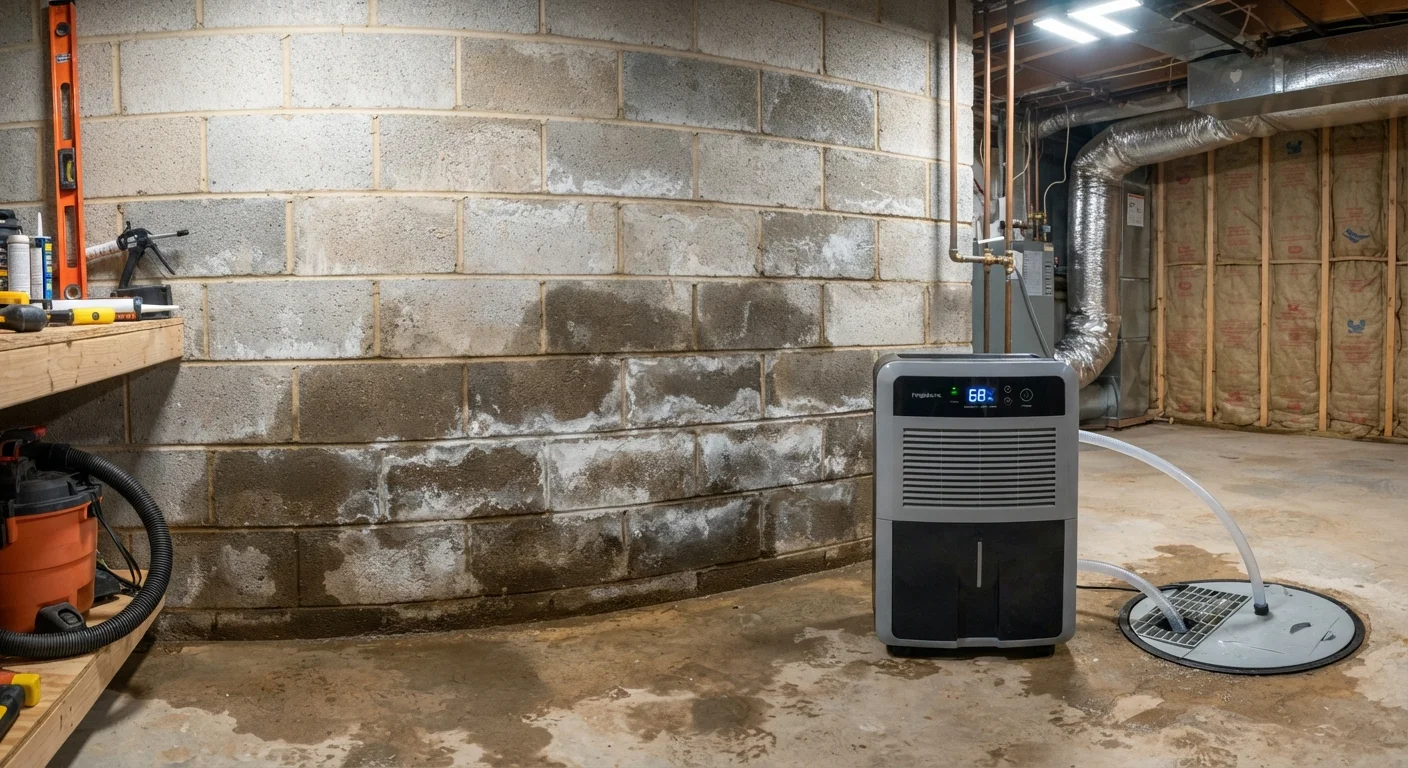
Dehumidification is the most consistently useful interior tool for condensation-related dampness. A properly sized dehumidifier that cycles automatically and drains continuously can keep relative humidity below 50%, which discourages mold and dust mites. Size the unit to your basement's square footage and confirm that it is rated to work at lower temperatures if you keep the space unheated in winter.
Masonry sealers and waterproofing paints can reduce moisture vapor transmission through concrete, but they will not withstand active hydrostatic pressure. If water is physically pushing through the wall, a painted-on sealer will eventually bubble and peel. These products are appropriate after the exterior drainage situation is corrected, not instead of correcting it.
Interior French drains and sump systems represent the most involved interior solution, typically installed by a contractor who channels water that does enter the basement to a collection pit and pump it away. This is appropriate when exterior excavation is not practical. Note that this approach manages water after it enters - it does not prevent entry - so it is paired with ongoing maintenance of the pump and check valve.
Improving overall home envelope performance, including weatherproofing steps before winter, can also reduce the volume of water the foundation system must manage season to season.
When to Call a Professional
Not every moisture situation is a DIY project. Cracks wider than a hairline in poured concrete or block walls, significant efflorescence (the white mineral deposits left by evaporating water), or visible mold growth covering more than a small patch all warrant a licensed contractor or certified waterproofing specialist before you invest in materials or interior systems.
Structural wall cracks in particular can signal issues beyond moisture - they may indicate settlement or lateral soil pressure that requires an engineer's review. Attempting to seal or paint over these without understanding the underlying cause can mask a worsening condition.
If mold is present, remediation protocols typically call for professional assessment, especially if the affected area exceeds what general guidelines describe as a manageable DIY scope. Improper disturbance of mold can spread spores through HVAC systems and affect living space air quality.
The information in this article is intended for general educational purposes and does not substitute for a professional inspection or engineering assessment of your specific home.