

Key Takeaways
- Drafts are just one of several signs that windows may need replacing - condensation between panes and visible frame damage are equally telling.
- Frame material affects durability, maintenance needs, and energy performance more than most homeowners realize.
- Most window replacements require a permit; check local building codes before scheduling installation.
- Insert replacement and full-frame replacement are two distinct approaches with different scopes and costs.
- Proper installation matters as much as the window itself - gaps in flashing or caulk can undo energy savings.
Why Windows Deserve More Attention Than They Usually Get
Windows are one of the most overlooked components of a home's thermal envelope - the barrier that separates conditioned indoor air from the outside. When they fail gradually, homeowners often adapt without realizing it: turning up the heat, closing blinds, or simply tolerating rooms that feel drafty in winter and stuffy in summer. By the time replacement feels urgent, the windows may have been underperforming for years.
Knowing what to look for - and understanding what window replacement actually involves - puts you in a better position to make a timely, well-informed decision. The warning signs below cover both obvious and easy-to-miss indicators, followed by what the replacement process typically looks like from start to finish. For a broader view of sealing your home against seasonal energy loss, see our guide to weatherproofing before winter.
Condensation forming between glass panes
In double- or triple-pane windows, the insulating gas (typically argon or air) is sealed between layers of glass. When that seal fails, moisture infiltrates the gap and produces foggy or streaky condensation that cannot be wiped away from either side. This is a clear sign that the insulating unit has lost effectiveness and should be replaced.
A failed seal does not always mean the entire window frame needs to go - in some cases, the glass unit (the IGU) can be replaced independently if the frame is structurally sound. A window contractor can assess which approach makes sense.
Fog between panes that won't wipe away signals a failed seal - not a dirty window.
Visible frame damage, rot, or warping
Wood frames are particularly vulnerable to moisture damage over time. Soft spots, peeling paint, discoloration, or a spongy texture when pressed are signs of rot that compromises both structural integrity and weather resistance. Vinyl and aluminum frames can also warp or crack, especially after years of temperature cycling.
Minor surface issues can sometimes be repaired with wood epoxy or weather sealant, but widespread rot or warping typically indicates that the frame has deteriorated beyond cost-effective repair. Damaged frames also allow air and water infiltration around the window - not just through the glass.
Soft or spongy wood frame material usually means rot has spread beyond surface-level repair.
Windows that are difficult to open, close, or lock
A window that sticks, won't latch securely, or requires significant force to operate has likely shifted out of square due to settling, moisture swelling, or hardware wear. Beyond the inconvenience, a window that does not lock properly is a security concern, and one that won't fully close creates a direct path for outdoor air.
Hardware can sometimes be replaced independently, but if the sash or frame itself has warped, hardware fixes are usually temporary. Proper operation is also a safety consideration - windows in bedrooms and upper floors often serve as emergency egress routes, and building codes specify minimum opening dimensions for that reason.
A window that won't latch is both an energy problem and a security vulnerability.
Noticeable drafts near the frame or sash
Hold your hand near the window edge on a cold or windy day. Perceptible air movement suggests gaps in weatherstripping, a compromised frame seal, or glass that has shifted in the sash. Not all drafts require full replacement - worn weatherstripping is a straightforward repair.
However, if drafts persist after weatherstripping and caulk have been refreshed, or if the frame itself has gaps that cannot be sealed effectively, replacement becomes the more durable solution. Our caulk vs. weatherstripping guide can help you rule out simpler fixes first.
Refresh weatherstripping and caulk before assuming a draft requires full window replacement.
Understanding frame material trade-offs
Choosing a replacement window involves more than selecting a glass package. Frame material significantly affects maintenance requirements, durability, and thermal performance:
- Vinyl: Low maintenance, good thermal performance, resistant to moisture - a common choice for most climates.
- Wood: Excellent insulating properties and classic appearance, but requires regular painting or staining to prevent moisture damage.
- Fiberglass: Dimensionally stable across temperature extremes, strong, and paintable - generally at a higher price point than vinyl.
- Aluminum: Durable and slim-profiled, but conducts heat and cold more readily, which can reduce energy efficiency without a thermal break.
No single material is universally best - the right choice depends on your climate, maintenance preferences, and the architectural style of the home.
Frame material shapes long-term maintenance demands and thermal performance as much as glass type does.
Insert replacement vs. full-frame replacement
Two approaches to window replacement serve different situations. Understanding the difference helps set realistic expectations for scope, disruption, and cost.
Insert (pocket) replacement involves removing the existing sash and glass while leaving the original frame and exterior trim in place. This is faster and less disruptive, and it works well when the existing frame is structurally sound and square. The trade-off is a slightly smaller glass area, since the new window fits inside the existing frame opening.
Full-frame replacement removes everything - sash, frame, exterior casing, and sometimes interior trim - down to the rough opening. This is the right approach when frames are rotted, the opening needs resizing, or flashing needs to be inspected and replaced. It involves more labor and patching but offers a clean start with new flashing and insulation around the entire opening.
Full-frame replacement is more invasive but essential when frame damage or moisture intrusion is present.
What to Expect During Installation
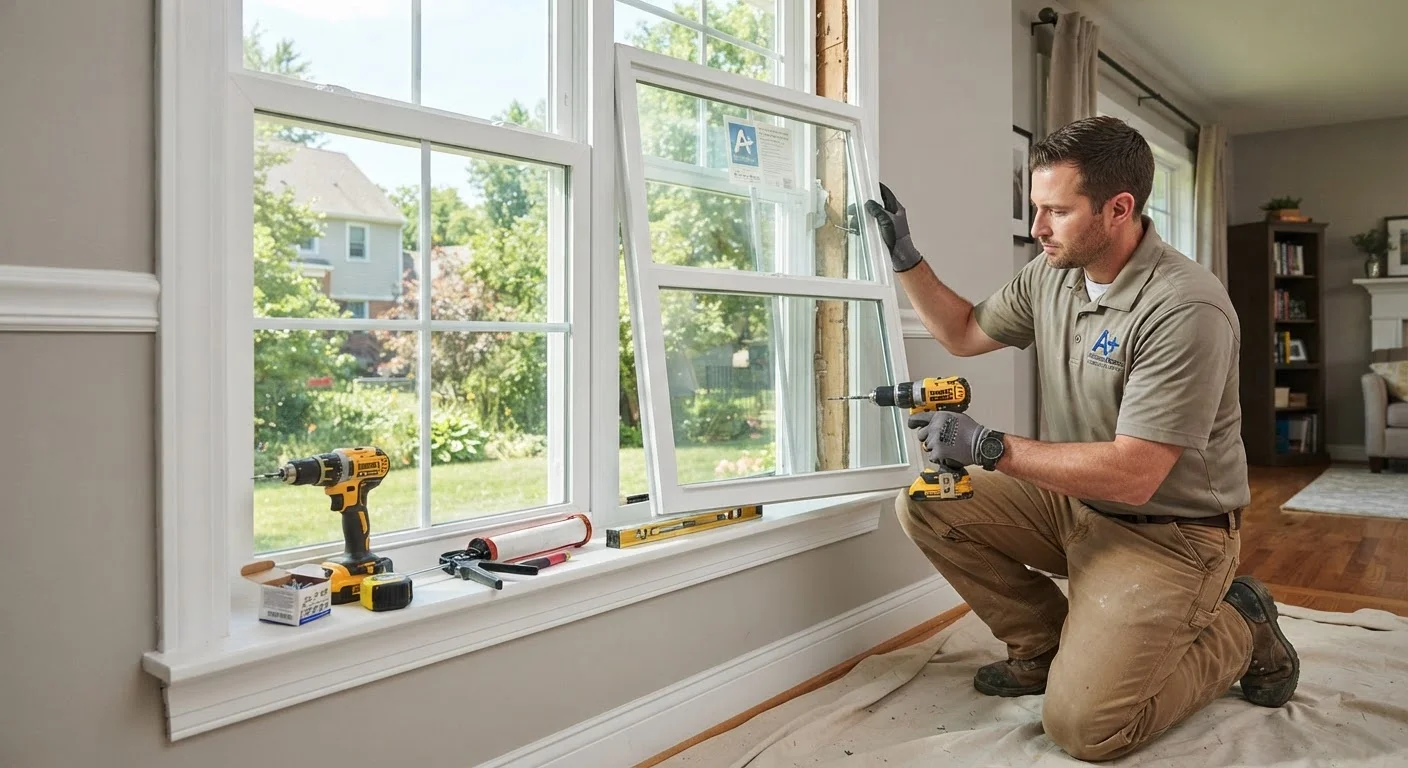
Window replacement is not a single-afternoon project for most homes. A professional crew can typically complete one to three windows per day depending on access, frame condition, and the type of replacement chosen. Homeowners should plan for some disruption, including furniture moved away from work areas and temporary gaps in insulation during removal.
Before scheduling any work, verify whether your municipality requires a permit for window replacement - many do, particularly for full-frame replacements that alter the rough opening. A licensed contractor should be familiar with local code requirements and pull permits on your behalf. Unpermitted work can create complications during future home sales or insurance claims.
Ask About Energy Ratings Before You Commit
Look for windows with a low U-factor (measuring heat loss) and an appropriate Solar Heat Gain Coefficient (SHGC) for your climate - lower SHGC values suit warm, sunny regions, while higher values can help passive solar heating in cold climates. The ENERGY STAR program provides regional performance thresholds that can serve as a useful baseline when comparing options.
After installation, inspect the interior and exterior caulk lines and flashing carefully before the crew leaves. Even small gaps can allow moisture intrusion over time, similar to how poor attic sealing affects roof longevity and energy performance. If you are addressing gaps around existing windows rather than replacing them, our article on caulk vs. weatherstripping can help you choose the right sealing approach.