

| Fiberglass batt R-value | R-3 to R-4 per inch (U.S. Department of Energy) |
| Closed-cell spray foam R-value | R-6 to R-7 per inch (U.S. Department of Energy) |
| Recommended attic R-value (cold climates) | R-49 to R-60 (DOE Climate Zone Map) |
| Cellulose composition | ~80% recycled paper fiber (Cellulose Insulation Manufacturers Association) |
| Most common DIY-friendly type | Fiberglass batt and roll |
| Best air-sealing insulation | Closed-cell spray polyurethane foam |
What Is R-Value and Why Does It Matter?
Every insulation type is rated by its R-value - a measure of thermal resistance, or how well the material slows heat transfer. The higher the R-value, the better the insulating performance. R-values are additive: layering two R-15 batts gives you R-30.
The U.S. Department of Energy divides the country into climate zones and recommends different R-values for each. Homes in cold northern states typically need attic insulation rated R-49 to R-60, while warmer southern climates may only require R-30 to R-38. Walls and floors have their own targets depending on your zone.
R-value alone doesn't tell the whole story. Air sealing, moisture control, and proper installation all affect real-world performance. Poorly installed insulation with a high R-value can still underperform a lower-rated material that's correctly fitted.
| Fiberglass batt R-value | R-3 to R-4 per inch (U.S. Department of Energy) |
| Closed-cell spray foam R-value | R-6 to R-7 per inch (U.S. Department of Energy) |
| Recommended attic R-value (cold climates) | R-49 to R-60 (DOE Climate Zone Map) |
| Cellulose composition | ~80% recycled paper fiber (Cellulose Insulation Manufacturers Association) |
| Most common DIY-friendly type | Fiberglass batt and roll |
| Best air-sealing insulation | Closed-cell spray polyurethane foam |
The Four Main Insulation Types Explained
Batt and Roll Insulation
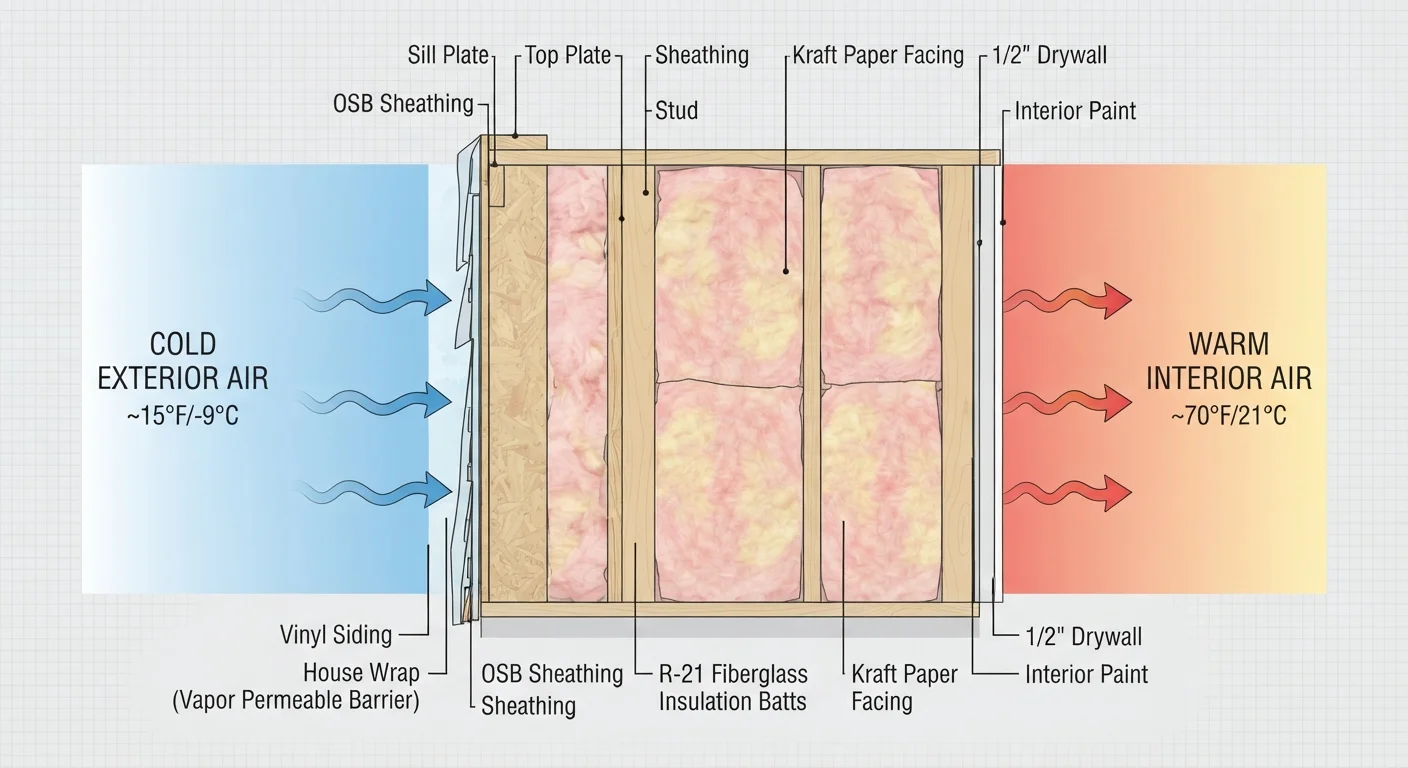
Batt insulation comes in pre-cut panels or long rolls, typically made from fiberglass or mineral wool (also called rock wool or slag wool). It's designed to fit between standard-spaced wall studs, floor joists, and attic rafters - usually 16 or 24 inches on center. This is the most common DIY-friendly option for unfinished walls and new construction.
R-value range: Approximately R-3 to R-4 per inch for fiberglass; mineral wool runs slightly higher at around R-3.7 to R-4.2 per inch.
Batts must be cut precisely around obstructions like wiring and pipes. Gaps, compression, or voids significantly reduce performance. Mineral wool batts offer better fire resistance and moisture tolerance than fiberglass.
Blown-In (Loose-Fill) Insulation
Loose-fill insulation - made from cellulose (recycled newspaper), fiberglass, or mineral wool - is blown into place using a machine. It's ideal for existing finished walls, irregularly shaped spaces, and attic floors where batts would be difficult to install without disruption.
R-value range: Roughly R-2.2 to R-3.8 per inch depending on material and density. Cellulose tends to settle over time, which can reduce effective R-value.
Professional installation is common for blown-in work, though homeowners can rent blowing machines for attic projects. See our guide to attic ventilation for context on how insulation and airflow work together in attic spaces.
Spray Foam Insulation
Spray polyurethane foam (SPF) comes in two forms: open-cell and closed-cell. Both expand on contact to fill gaps and create an air seal simultaneously - something batts cannot do on their own.
- Open-cell foam: Softer, lower density, R-value around R-3.5 per inch. Good for interior walls and soundproofing.
- Closed-cell foam: Denser, moisture-resistant, R-value around R-6 to R-7 per inch. Suitable for crawl spaces, rim joists, and exterior-facing applications.
Spray foam installation involves chemicals that require proper protective equipment and ventilation. This is generally not a beginner DIY task; licensed contractors typically handle it. Costs are higher than batts or blown-in, but the air-sealing benefit can meaningfully improve energy efficiency.
Rigid Foam Board Insulation
Rigid boards - made from expanded polystyrene (EPS), extruded polystyrene (XPS), or polyisocyanurate (polyiso) - are used where space is limited or continuous insulation is needed without framing gaps.
R-value range: R-3.8 to R-6.5 per inch, with polyiso performing highest. Rigid boards are common on basement walls, exterior sheathing under siding, and garage doors.
They must be covered with a fire-rated material (such as drywall) when used indoors. For more on how insulation interacts with your home's exterior shell, see our overview of exterior siding materials.
Choosing the Right Type for Each Location
Different parts of a home call for different insulation strategies. Here's a quick location-based reference:
| Location | Recommended Type(s) | Notes |
|---|---|---|
| Attic floor | Blown-in, batts | Blown-in fills irregular spaces easily |
| Exterior walls (new) | Batts, spray foam | Batts between studs; foam for air sealing |
| Existing closed walls | Blown-in (dense-pack) | Injected through small holes, then patched |
| Basement walls | Rigid foam, spray foam | Moisture resistance is critical |
| Crawl space | Closed-cell spray foam, rigid board | Vapor control is essential |
| Rim joists | Closed-cell spray foam | Cuts air infiltration at foundation edge |
For a broader look at managing heat loss throughout your home, our winterproofing checklist covers complementary steps like draft sealing and pipe protection. Insulation is also one component of a larger system - see the complete home maintenance guide for context on how it fits with HVAC, roofing, and other systems.
Permits and Professional Work
Some insulation projects - particularly spray foam application, dense-pack injection into existing walls, or work near electrical panels - may require permits or licensed contractors depending on your local building code. Always check with your local building department before starting. This is especially important in older homes where insulation work may uncover asbestos or knob-and-tube wiring.
This article provides general educational information about insulation materials. Local building codes, climate zones, and permit requirements vary. Consult a licensed contractor or building professional before undertaking any insulation project involving electrical, gas, or structural components.