

Key Takeaways
- Vinyl siding offers the lowest upfront cost and minimal maintenance but can crack in extreme cold.
- Fiber cement is highly durable, fire-resistant, and handles most climates well, though it costs more to install.
- Wood siding delivers natural beauty but demands consistent painting, sealing, and moisture management.
- Engineered wood and metal siding fill important niches for cost-conscious and high-durability applications.
- Climate, budget, and long-term maintenance capacity should drive your siding decision more than aesthetics alone.
Our Verdict
No single siding material wins across every category. Fiber cement stands out for balanced durability and low long-term maintenance in most climates, while vinyl suits budget-focused projects in moderate regions. Wood remains the choice for homeowners who prioritize authentic character and are prepared for ongoing upkeep. Evaluate your climate, realistic maintenance habits, and total cost of ownership - not just the installation quote.
| Best for | Recommended |
|---|---|
| Budget-conscious homeowners in moderate climates | Vinyl siding |
| Homeowners wanting durability with minimal long-term maintenance | Fiber cement siding |
| Those prioritizing natural aesthetics and willing to maintain their siding | Wood siding |
| Coastal, high-wind, or fire-prone climates requiring maximum resilience | Metal siding |
Why Your Siding Choice Matters More Than You Think
Exterior siding is more than a cosmetic layer - it shields your home's framing and insulation from wind, rain, UV exposure, insects, and temperature swings. A poor choice can mean elevated energy bills, accelerated rot, or costly repairs within a decade. A well-matched material, on the other hand, can last 30 to 50 years with appropriate care.
This comparison focuses on the four materials most commonly installed on American homes: vinyl, fiber cement, wood, and engineered wood, with a note on metal siding for specific situations. Because siding also affects how well your thermal envelope performs, it works hand-in-hand with what's behind the wall - see our plain-language guide to home insulation types for how to think about those layers together.
| Vinyl | Fiber Cement | Wood | Engineered Wood | Metal | |
|---|---|---|---|---|---|
| Typical lifespan | 20-40 years | 30-50 years | 20-40 years | 25-30 years | 40-50+ years |
| Relative material cost | Low | Moderate-High | Moderate-High | Moderate | Moderate-High |
| Installation complexity | Low | High (heavy) | Moderate | Moderate | Moderate-High |
| Maintenance level | Very Low | Low-Moderate | High | Low-Moderate | Moderate |
| Fire resistance | Low | High (Class A) | Low | Moderate | Very High |
| Moisture resistance | High | High | Low-Moderate | Moderate-High | High |
| Cold-climate performance | Moderate (can crack) | Very Good | Good with upkeep | Good | Very Good |
| Can be repainted | No | Yes | Yes | Yes | Yes |
Vinyl Siding: Affordable and Low-Maintenance
Vinyl is the most widely installed siding in the United States. It's made from PVC (polyvinyl chloride) and comes in a wide range of colors and profiles that mimic wood lap siding or shakes. Its appeal is straightforward: low material cost, no painting required, and easy cleaning with a garden hose.
Where it works well: Temperate and warm climates with moderate humidity. Vinyl holds color well under UV exposure and doesn't rot or attract insects.
Limitations: Standard vinyl can become brittle and crack in sustained subzero temperatures. It also dents more easily than harder materials, and if damaged, matching an older color profile for repairs can be difficult. Vinyl cannot be painted effectively, so faded sections typically require panel replacement rather than a coat of paint.
Fiber Cement: The Durable Middle Ground
Fiber cement siding is made from a mix of cement, sand, and cellulose fiber. It was popularized as an alternative to wood that could realistically mimic wood grain while resisting the problems wood faces - rot, insects, and fire. It carries a Class 1 (Class A) fire rating and holds up well in high-humidity environments.
Where it works well: Most U.S. climates, including humid Southeast regions, rainy Pacific Northwest areas, and coastal locations where salt air would corrode metal alternatives. Fiber cement can also be painted any color and repainted over time, extending its lifespan with proper maintenance.
Limitations: Fiber cement is significantly heavier than vinyl, which raises installation labor costs. It also requires painting every 10-15 years and is more brittle than engineered wood, making it prone to cracking if struck hard. Improper installation - particularly poor sealing at joints and trim - is one of the most common causes of moisture problems with fiber cement.
Wood Siding: Character That Comes With Responsibility
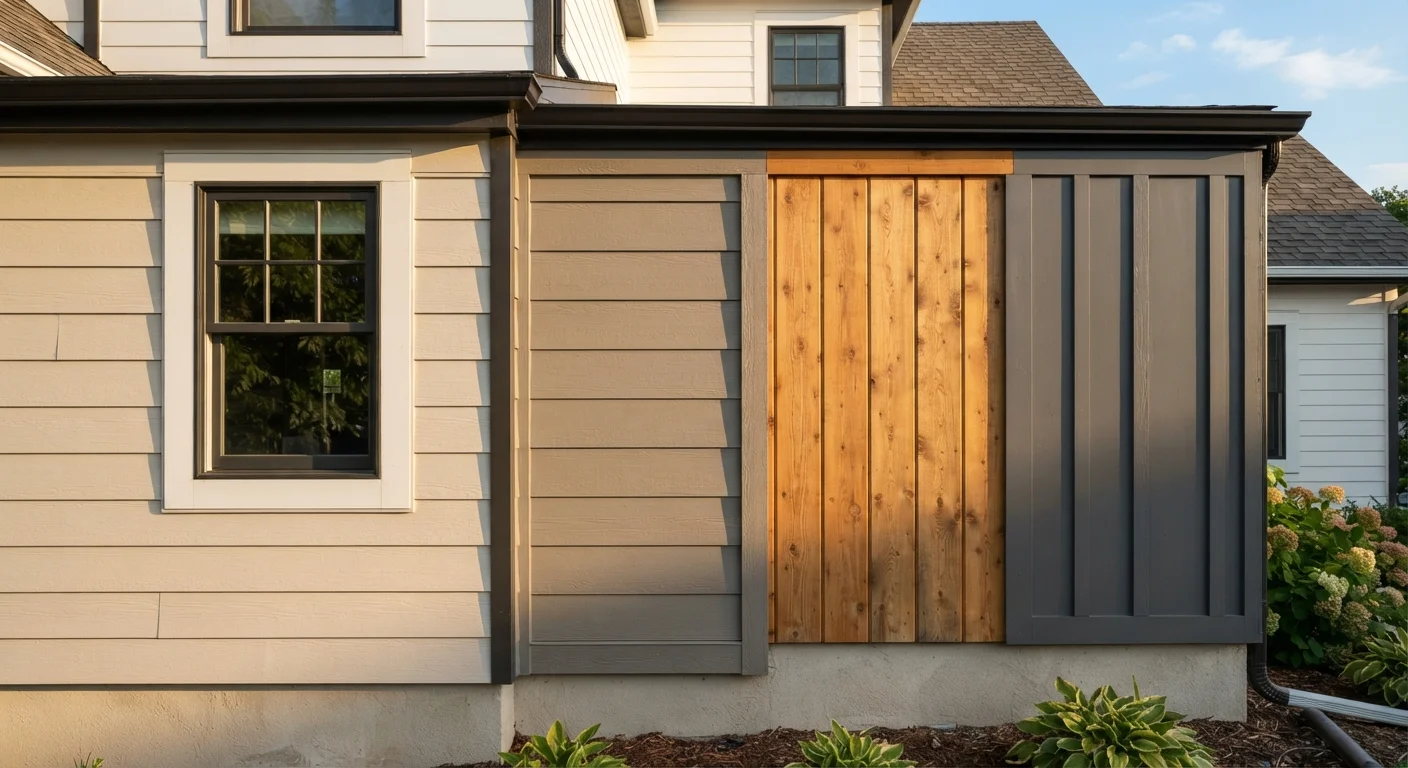
Wood siding - whether cedar, redwood, pine, or spruce - is the historic standard for American homes and remains prized for its natural grain, texture, and paintability. It comes in formats including horizontal lap boards, shingles, shakes, and board-and-batten vertical planks.
Where it works well: Dry climates where moisture management is easier, and on historically sensitive homes where authentic materials are required or preferred. Cedar and redwood have natural oils that improve rot resistance compared to softer species.
Limitations: Wood requires the most maintenance of any siding material - typically repainting or re-staining every 5 to 7 years and prompt attention to any cracks, gaps, or bare spots. Neglected wood siding is highly vulnerable to moisture infiltration, rot, and wood-boring insects. Total cost of ownership over 30 years often rivals or exceeds fiber cement once labor-intensive maintenance cycles are factored in.
Engineered Wood and Metal: Two Specialized Options
Engineered wood siding is composed of wood strands or fibers bonded with resins under pressure, then coated with a factory-applied primer. It's lighter and less expensive than fiber cement while offering better rot resistance than solid wood. Many engineered wood products carry lengthy manufacturer warranties. It's a practical choice for homeowners who want wood aesthetics without the full maintenance burden of natural lumber.
Metal siding - most commonly steel or aluminum - is the go-to for extreme durability, particularly in fire-prone areas, high-wind coastal zones, or industrial-adjacent settings. Steel siding is impact-resistant and non-combustible. Aluminum is lighter and naturally corrosion-resistant but can dent easily. Both require repainting over time as surface coatings age, and metal can show oil-canning (slight surface waviness) if not installed carefully.
For homeowners also weighing how exterior wall assemblies affect energy performance, our guide to insulation types and R-values explains how different backing insulation strategies pair with these materials.
Matching Material to Climate and Lifestyle
No material performs equally in all conditions. Use these broad guidelines when narrowing your decision:
- Cold climates: Favor fiber cement or engineered wood over vinyl, which can crack under prolonged freezing temperatures.
- Hot and humid climates: Fiber cement and vinyl outperform wood in moisture-laden air; wood requires exceptional detailing and maintenance discipline.
- Coastal environments: Fiber cement handles salt air well; avoid untreated steel, which can rust, and be cautious with aluminum, which can pit.
- Fire-prone regions: Metal and fiber cement both carry fire-resistant ratings; wood and standard vinyl do not.
- Maintenance-averse homeowners: Vinyl requires the least active upkeep; avoid natural wood unless you commit to the maintenance schedule.
Always verify local building codes before finalizing a material choice. Some jurisdictions in fire-hazard zones restrict combustible cladding, and certain historic districts specify approved materials. Permits are typically required for full siding replacement projects, and a licensed contractor can help you understand what inspections apply in your area.