

Key Takeaways
- Animal proteins are 'complete,' containing all nine essential amino acids in a single source.
- Most plant proteins are 'incomplete' but strategic food combining across the day fills amino acid gaps.
- Digestibility scores generally favor animal proteins, though whole plant foods offer meaningful fiber and phytonutrients.
- Diverse diets incorporating both protein origins tend to be associated with favorable health outcomes in research.
- Special populations - including older adults and athletes - may benefit from personalized protein guidance from a professional.
Option A
Animal Protein
The complete, highly bioavailable protein source.
Best for: Individuals seeking straightforward access to all essential amino acids with high digestibility in a single food source.
Option B
Plant Protein
The fiber-rich, nutrient-diverse protein alternative.
Best for: Those prioritizing dietary variety, environmental considerations, or following vegetarian and vegan eating patterns.
If you want the most straightforward route to complete protein in fewer foods
Animal Protein
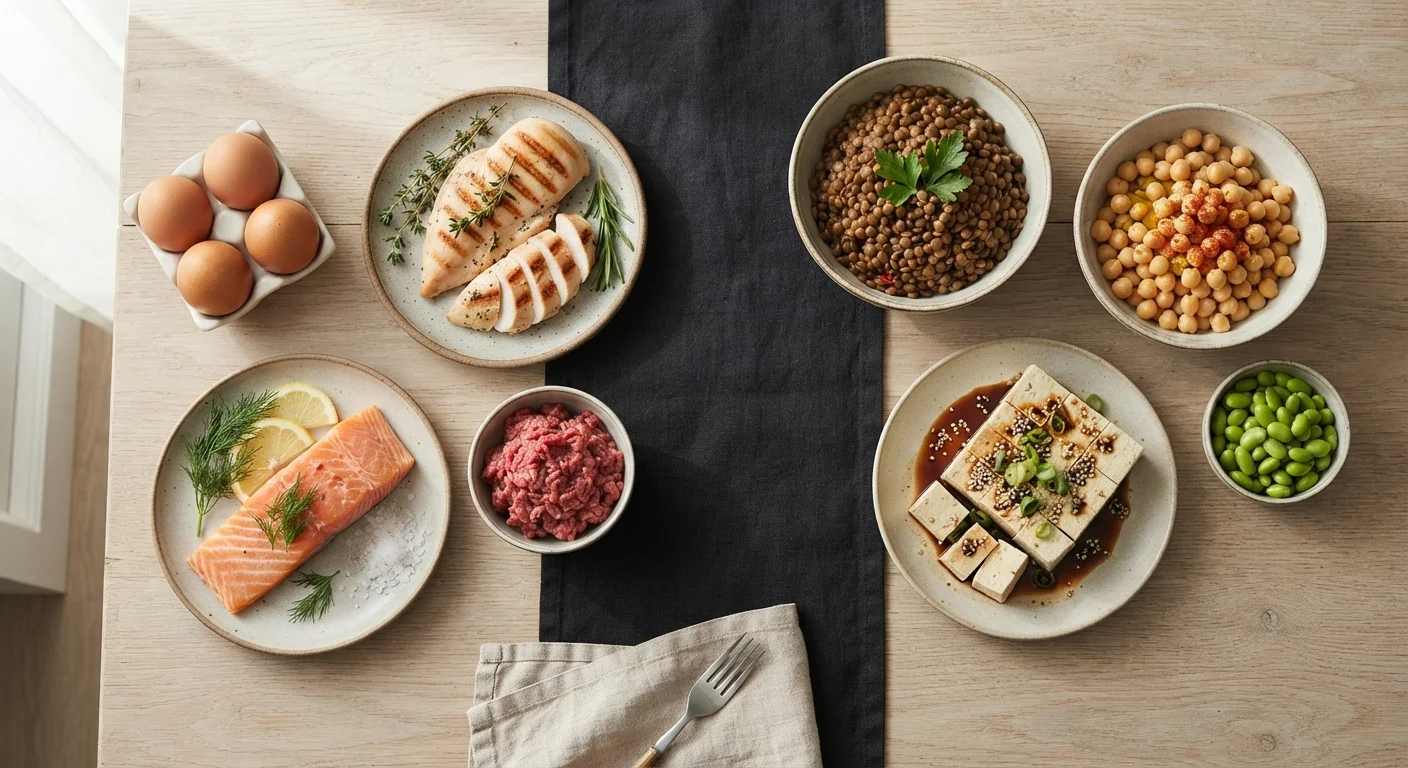
Animal sources like eggs, poultry, fish, and dairy contain all essential amino acids and are highly digestible, requiring less dietary planning to meet protein needs.
If you follow a vegetarian or vegan diet
Plant Protein
Legumes, soy, quinoa, and nuts can collectively meet protein needs while delivering fiber and diverse micronutrients; thoughtful variety across the day covers amino acid requirements.
If cardiovascular health is a primary concern
Plant Protein
Research, including findings from the Harvard T.H. Chan School of Public Health, associates higher plant protein intake with lower cardiovascular risk factors compared to some animal sources.
If you want maximum dietary flexibility without eliminating food groups
Animal Protein
Including moderate amounts of lean animal protein alongside plant foods offers simplicity of meeting nutrient targets while enjoying the health-associated benefits of plant foods.
If you are focused on gut health and metabolic diversity
Plant Protein
Plant protein sources such as legumes and whole grains deliver prebiotic fiber that supports gut microbiome health, a benefit animal proteins do not provide.
What Makes a Protein 'Complete' or 'Incomplete'?
Proteins are built from amino acids - twenty in total, nine of which are classified as essential because the body cannot synthesize them and must obtain them from food. A protein source is called complete when it contains all nine essential amino acids in amounts sufficient to support the body's needs.
Animal proteins - including meat, poultry, fish, eggs, and dairy - are universally complete. Plant proteins are more varied: soybeans and quinoa are notable exceptions that qualify as complete on their own, while most other plant sources, such as lentils, rice, and nuts, are low in one or more essential amino acids. This does not mean plant eaters are doomed to deficiency. Consuming a variety of plant foods across the day - beans with grains, for example - provides a complementary amino acid profile. Nutritionists no longer require these combinations happen within a single meal; the overall daily pattern matters more, according to guidance from the Academy of Nutrition and Dietetics.
For readers exploring plant-forward eating, see our practical starting point for plant-based diets for more on building nutritionally sound meals.
Digestibility: How Much Protein Does Your Body Actually Use?
Eating protein and absorbing it are two different things. Digestibility refers to how efficiently the body breaks down and utilizes the amino acids in a given food. The most current measure used by nutrition scientists is the DIAAS, which replaced the older PDCAAS method. Animal proteins - particularly eggs, dairy, and meat - score highly on DIAAS, meaning the body absorbs a large proportion of their amino acids.
Many plant proteins score lower because of antinutrients - naturally occurring compounds like phytates and tannins found in legumes and whole grains that can partially inhibit protein absorption. Cooking, soaking, sprouting, and fermentation significantly reduce these compounds and improve digestibility. Processed plant protein isolates (such as soy protein isolate) score comparably to animal proteins on DIAAS, though they lose some of the fiber and micronutrient benefits of whole food sources.
| Criterion | Animal Protein | Plant Protein |
|---|---|---|
| Amino acid completeness | Complete (all 9 essential amino acids) | Often incomplete; soy and quinoa are exceptions |
| Digestibility (DIAAS) | Generally high | Variable; lower in whole forms, higher in isolates |
| Dietary fiber | None | Significant (especially legumes and whole grains) |
| Vitamin B12 | Naturally present | Absent; requires supplementation or fortified foods |
| Saturated fat | Variable; higher in red/processed meats | Generally low (except coconut products) |
| Iron type | Heme iron (highly bioavailable) | Non-heme iron (lower bioavailability) |
| Environmental footprint | Generally higher greenhouse gas emissions | Generally lower greenhouse gas emissions |
Understanding these trade-offs matters for meal planning. For a broader look at how food processing affects nutritional quality, our article on whole foods vs. processed foods provides useful context.
Nutrients That Come Along for the Ride
Protein rarely travels alone - what else a food delivers matters as much as its amino acid profile.
Animal proteins are often accompanied by nutrients that are difficult to obtain from plants: vitamin B12 (found almost exclusively in animal foods), heme iron (more bioavailable than non-heme iron from plants), zinc, and long-chain omega-3 fatty acids (EPA and DHA) from fatty fish. However, some animal sources - particularly processed and red meats - also carry saturated fat and sodium in amounts that dietary guidelines suggest moderating.
Plant protein sources bring their own nutritional strengths: dietary fiber, phytonutrients, antioxidants, and generally lower saturated fat content. Legumes, for instance, are among the most fiber-dense foods available. These components are associated with gut health, blood sugar regulation, and reduced inflammation in population-level research, though individual responses vary.
Neither origin is nutritionally superior across every dimension - the accompanying nutrient package depends on the specific food and how it is prepared. Our guide to building a balanced plate outlines how evidence-based dietary frameworks account for both protein origins.
~0.8g/kg
Minimum daily protein for average adults
The U.S. Recommended Dietary Allowance (RDA) for protein is approximately 0.8 grams per kilogram of body weight for sedentary adults, though needs vary by age and activity level.
1.0-1.2g/kg
Suggested intake for adults over 65
Research published in journals including the American Journal of Clinical Nutrition suggests older adults benefit from higher protein intakes to maintain muscle mass and function.
~25%
Of U.S. adults meeting protein variety goals
The U.S. Dietary Guidelines Advisory Committee has noted that most Americans under-consume plant-based protein sources such as legumes, nuts, and seeds relative to recommendations.
Practical Guidance: Making Both Work in a Real Diet
For most adults, the most evidence-supported approach is not an either/or choice but a considered balance. Major dietary frameworks - including the U.S. Dietary Guidelines for Americans - encourage a variety of protein sources, emphasizing seafood, legumes, nuts, and seeds alongside lean animal proteins.
Key practical considerations include:
- Older adults generally need more protein per kilogram of body weight to preserve muscle mass; this population may benefit from higher-quality, easily digestible sources. Consulting a registered dietitian is worthwhile for personalized guidance.
- Athletes and active individuals should focus on total daily protein intake distributed across meals rather than the source alone, though source affects how quickly amino acids become available post-exercise.
- Vegetarians and vegans should monitor vitamin B12, iron, zinc, iodine, and omega-3 intake specifically, as these nutrients require deliberate attention when animal foods are excluded.
If you are weighing broader dietary patterns, our comparison of popular diet approaches examines the evidence behind several widely followed frameworks.
This article is for general informational and educational purposes only and does not constitute medical or nutritional advice. Please consult a qualified healthcare professional or registered dietitian before making significant changes to your diet, particularly if you have a chronic health condition, are pregnant, or are managing specific nutritional needs.