

Key Takeaways
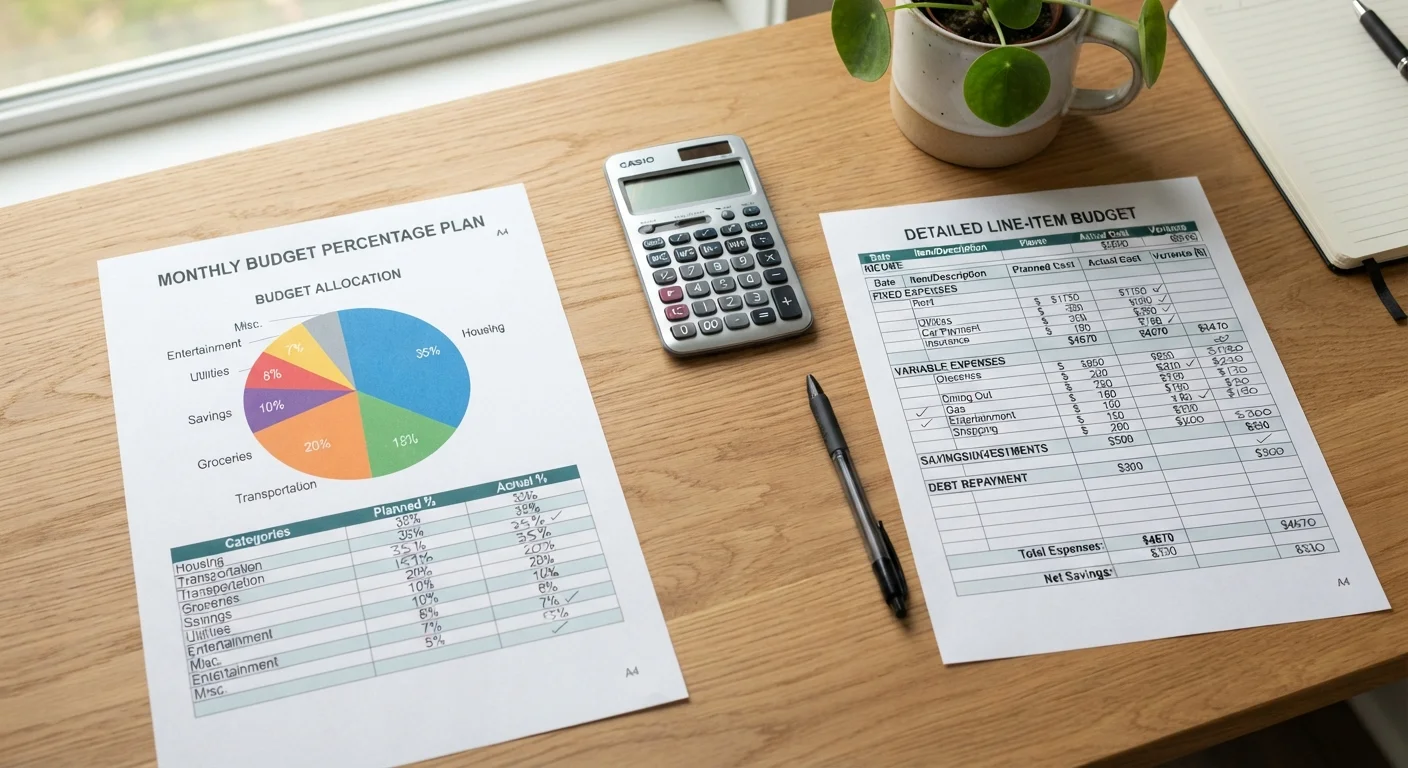
- 50/30/20 divides after-tax income into needs (50%), wants (30%), and savings or debt repayment (20%).
- Zero-based budgeting assigns every dollar a specific job until income minus expenses equals zero.
- 50/30/20 requires less time to maintain; zero-based budgeting demands more detailed tracking.
- Zero-based budgeting tends to be more effective for people actively paying down debt.
- Neither method works if income is unpredictable without a modified approach to both frameworks.
- The best budget is one you will actually maintain consistently over time.
Option A
50/30/20 Budgeting
The straightforward, percentage-driven approach.
Best for: People who want a simple structure without tracking every dollar spent.
Option B
Zero-Based Budgeting
The detailed, intentional allocation method.
Best for: People who want complete control over every dollar of their income each month.
If you are new to budgeting and want a low-friction starting point
50/30/20 Budgeting
The percentage framework requires minimal setup and gives you clear guardrails without demanding line-by-line tracking from day one.
If you are carrying high-interest debt and need to accelerate repayment
Zero-Based Budgeting
Assigning every dollar a purpose forces you to consciously direct extra income toward debt rather than letting it disappear into discretionary spending.
If your income varies month to month
Zero-Based Budgeting
Rebuilding your budget from zero each month naturally accommodates income changes, letting you reprioritize spending based on what you actually earned.
If you have a stable income and already meet your savings goals
50/30/20 Budgeting
When fundamentals are in order, the simplicity of percentage-based categories reduces budget fatigue and keeps you consistent long-term.
If you want to understand exactly where every dollar goes
Zero-Based Budgeting
The method requires you to categorize and justify each expense upfront, leaving no room for money to go unaccounted for.
How Each Framework Actually Works
The 50/30/20 rule is a percentage-based system originally popularized by consumer bankruptcy expert Elizabeth Warren. It divides your monthly after-tax income into three broad buckets: 50% for needs (rent, utilities, groceries, minimum debt payments), 30% for wants (dining out, subscriptions, entertainment), and 20% for savings and additional debt repayment. The appeal is its low setup cost - once you know your take-home pay, the math takes minutes.
Zero-based budgeting works differently. You start with your total monthly income and assign every single dollar to a specific category - housing, food, transportation, savings, debt, and so on - until your income minus your assigned expenses equals zero. The goal isn't to spend everything; it's to give every dollar an intentional destination. This approach is sometimes called giving every dollar a job.
For a broader view of how these and other methods stack up, see budgeting methods compared. If you have never built a budget before, Your First Budget in Seven Steps is a practical place to start.
| Criterion | 50/30/20 Budgeting | Zero-Based Budgeting |
|---|---|---|
| Setup time | Minutes per month | Several hours per month |
| Category structure | 3 broad buckets | Detailed line items |
| Tracking intensity | Low - periodic check-ins | High - ongoing tracking required |
| Best income type | Stable, predictable income | Any income, especially variable |
| Debt payoff focus | Moderate - fixed 20% allocation | Strong - dollars directed intentionally |
| Flexibility | High within categories | Low - every dollar pre-assigned |
| Learning curve | Very low | Moderate to high |
Trade-Offs: Simplicity vs. Precision
The core tension between these two frameworks is time and detail. The 50/30/20 method is forgiving by design - categories are broad enough that moderate overspending in one area does not necessarily derail the plan. That flexibility is a feature for busy people or those who find granular tracking unsustainable. However, it can also mask problem spending. If your "needs" genuinely consume 60% or more of your income - a common reality in high cost-of-living cities - the framework breaks down without clear guidance on how to adjust.
Zero-based budgeting surfaces those problems immediately. Because you must account for every dollar before the month begins, you cannot ignore the fact that your fixed expenses exceed a comfortable threshold. This level of visibility is especially valuable when you are trying to break the paycheck-to-paycheck cycle or eliminate debt strategically. The trade-off is time: building a fresh zero-based budget each month takes focused effort, and small tracking errors can make the process feel discouraging early on.
78%
Americans living paycheck to paycheck
A 2023 LendingClub report found approximately 78% of Americans reported living paycheck to paycheck at some point during the prior year.
1 in 3
Adults with no formal monthly budget
According to Gallup polling data, roughly one in three U.S. adults reports having no detailed household budget.
20%
Recommended savings allocation under 50/30/20
The 50/30/20 guideline earmarks 20% of after-tax income for savings and debt repayment beyond minimum payments.
For a direct comparison with another popular percentage-based approach, see Zero-Based Budgeting vs. Percentage-Based Budgeting. And if you are considering using an app to manage either framework, a balanced look at budgeting apps can help you evaluate your options.
What If Your Income Is Irregular?
Both frameworks assume a predictable monthly income, which does not reflect everyone's reality. Freelancers, gig workers, and commission-based earners may need to adapt either method. A common workaround is to budget based on your lowest expected monthly income and treat any surplus as additional savings or debt repayment. Zero-based budgeting tends to accommodate this adjustment more naturally since you are already rebuilding the budget from scratch each month.
Choosing the Right Method for Your Situation
No budgeting framework works universally - the right one depends on your income stability, financial goals, and how much time you are genuinely willing to invest each month. If your income is steady, your essential expenses fall comfortably below half your take-home, and you already save consistently, the 50/30/20 framework offers enough structure without becoming a burden. Explore additional strategies at the Budgeting Basics hub to complement whichever method you choose.
If you are actively managing debt, rebuilding after a financial setback, or simply unsure where your money goes each month, zero-based budgeting provides the visibility and intentionality to change those patterns. It requires more discipline upfront but tends to yield faster results for people who stick with it. Some people also find it useful to start with 50/30/20 to build the habit, then graduate to zero-based once they are comfortable looking at their finances in detail. Understanding your credit profile can also inform how you prioritize debt repayment - see the Credit and Banking hub for context.
This article is for general informational and educational purposes only. It does not constitute personalized financial advice. Consult a qualified financial professional for guidance specific to your circumstances.