

Key Takeaways
- Each budgeting method works differently - the best one is the one you'll actually stick with.
- Envelope budgeting uses physical or digital cash limits per category to prevent overspending.
- Zero-based budgeting assigns every dollar a job, leaving no income unaccounted for each month.
- The 50/30/20 rule splits income into needs, wants, and savings using broad percentage targets.
- Pay-yourself-first prioritizes savings automatically before discretionary spending begins.
- Variable income, spending habits, and financial goals all affect which method fits best.
Our Verdict
No single budgeting method is universally superior - each reflects a different philosophy about control, flexibility, and discipline. Zero-based budgeting offers the most granular oversight, while the 50/30/20 rule provides the lowest barrier to entry. Envelope budgeting suits tactile spenders, and pay-yourself-first works well for those whose primary goal is building savings automatically.
| Best for | Recommended |
|---|---|
| Those who overspend in specific categories | Envelope Budgeting |
| People who want total control over every dollar | Zero-Based Budgeting |
| Beginners looking for a simple starting framework | 50/30/20 Rule |
| Those focused on automating savings first | Pay-Yourself-First |
Why Budgeting Method Matters
Most Americans know they should budget, but far fewer follow one consistently. A key reason: they chose a method that didn't match their lifestyle, then quit when it felt like too much work. Picking a framework that fits how you actually think about money - not just how you wish you did - makes all the difference.
The four methods compared here cover a wide spectrum of structure and flexibility. Understanding what each one requires day-to-day helps you choose realistically rather than aspirationally. For a broader look at managing savings alongside spending, see the Saving & Debt hub for practical strategies.
The Four Methods at a Glance
Before diving into each approach, here's how they stack up across the criteria that matter most to everyday budgeters.
| Envelope | Zero-Based | 50/30/20 | Pay-Yourself-First | |
|---|---|---|---|---|
| Setup effort | Moderate | High | Low | Very low |
| Ongoing time commitment | Daily check-ins | Weekly reviews | Monthly glance | Minimal after setup |
| Level of spending control | High - per category | Very high - every dollar | Moderate - broad buckets | Low - flexible after savings |
| Works with irregular income | Challenging | Works well | Works with adjustments | Works well |
| Best financial goal | Stop overspending | Debt paydown | Building basic habits | Growing savings |
| Beginner-friendly | Yes | No | Yes | Yes |
| Technology required | Optional | Helpful | None needed | Automation recommended |
Envelope Budgeting: Tactile and Firm
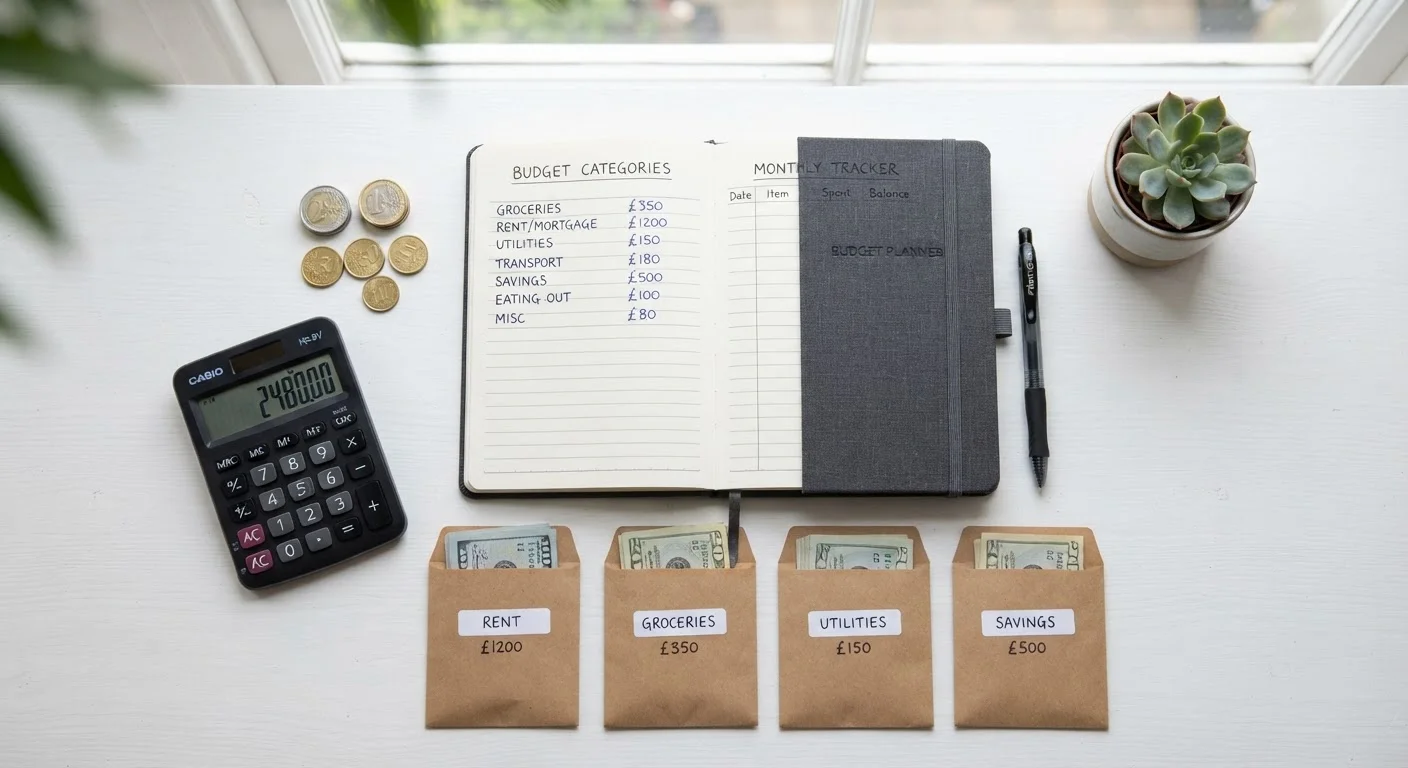
The envelope method divides your take-home pay into physical (or virtual) envelopes - one per spending category. When the envelope is empty, spending in that category stops for the month. Groceries, dining out, gas, and entertainment each get a fixed cash allocation upfront.
This method works because it creates an immediate, visceral sense of limits. Many people who struggle to feel the impact of digital spending find that handling physical cash changes their behavior. Modern apps can replicate the envelope logic digitally for those who rarely carry cash - see how the envelope method translates to modern finances.
Best for: Impulse spenders, people new to budgeting, or anyone who benefits from hard limits per category.
Watch out for: Irregular expenses (car repairs, medical bills) that don't fit neatly into monthly envelopes, and the friction of managing multiple categories in cash.
Zero-Based Budgeting: Every Dollar Has a Job
Zero-based budgeting (ZBB) means your income minus your planned expenses equals zero at the start of each month - not because you spend everything, but because every dollar is assigned a purpose, including savings and debt payments. You rebuild the budget from scratch each month rather than copying last month's plan.
This level of detail gives you near-complete visibility into your finances, which is especially valuable when trying to eliminate debt or identify wasteful spending. The trade-off is time: ZBB typically takes 30-60 minutes a month to set up properly, plus regular check-ins. For a direct comparison of this approach against percentage-based thinking, see zero-based vs. percentage-based budgeting explained.
Best for: Detail-oriented planners, those in debt paydown mode, or anyone whose spending varies significantly month to month.
Watch out for: Setup fatigue - if rebuilding a budget monthly feels burdensome, adherence tends to drop quickly.
The 50/30/20 Rule: Simplicity First
The 50/30/20 rule suggests directing 50% of after-tax income toward needs (housing, utilities, groceries), 30% toward wants (dining out, subscriptions, hobbies), and 20% toward savings and debt repayment. It's a guideline, not a rigid prescription - the ratios can be adjusted based on income and goals.
Its appeal is low friction. There are no categories to track obsessively, just three broad buckets. That simplicity makes it an accessible entry point for people who have never budgeted before. Explore the 50/30/20 framework in depth, including when adjusting the ratios makes sense.
Best for: Budgeting beginners, those with stable incomes, or anyone who finds granular tracking unsustainable.
Watch out for: High-cost-of-living areas where 50% barely covers housing alone, making the standard split unrealistic.
Pay-Yourself-First: Savings on Autopilot
Pay-yourself-first (PYF) flips the typical sequence: instead of saving whatever is left after spending, you move a set amount to savings - or toward debt - immediately when income arrives, then live on the rest. Automating this transfer is central to the method's effectiveness.
PYF doesn't prescribe how to divide the remaining funds. You might combine it with the 50/30/20 rule for spending, or simply spend freely within whatever remains. The method is particularly well-suited to building an emergency fund or retirement contributions - learn what an emergency fund requires and where to keep it.
Best for: People whose main goal is accumulating savings, those who trust themselves to spend reasonably once savings are secured.
Watch out for: If day-to-day spending isn't tracked at all, it's possible to overdraw after the savings transfer - some oversight is still needed.
This article provides general financial education and is not personalized financial advice. Consider consulting a licensed financial professional for guidance tailored to your individual circumstances.