

Key Takeaways
- Envelope budgeting divides income into fixed spending categories before the month begins.
- The core rule - stop spending when a category runs out - prevents category-level overspending.
- Digital versions replicate the system using apps or separate bank accounts instead of cash.
- The method works best for variable expenses like groceries, dining, and entertainment.
- Consistency and honest category labeling matter more than which format you use.
Envelope Budgeting
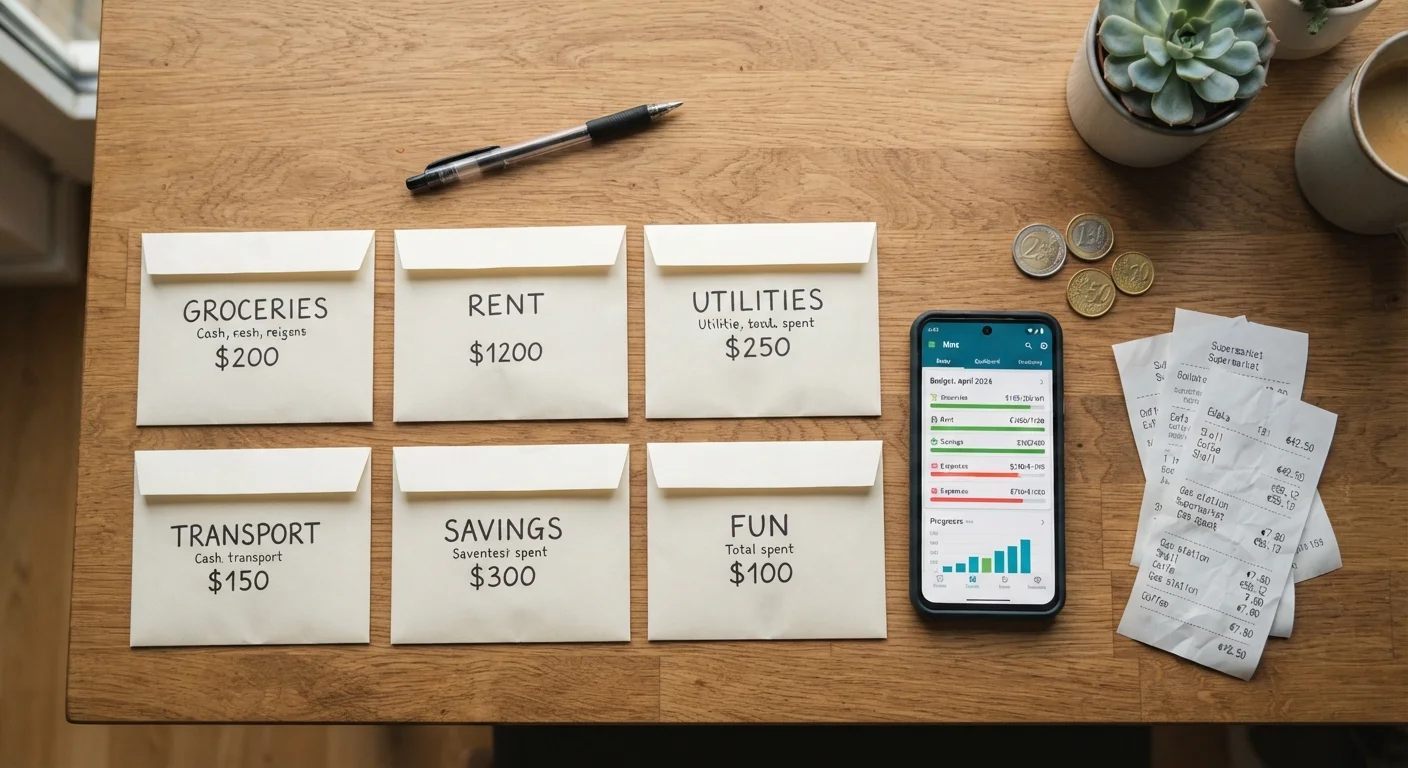
Envelope budgeting is a spending system where you divide your monthly income into separate categories - such as groceries, rent, and entertainment - and assign a fixed amount of money to each one. Traditionally, this meant placing physical cash into labeled envelopes. When an envelope is empty, spending in that category stops for the month. The method makes overspending immediately visible and forces deliberate choices about where money goes.
In behavioral economics, envelope budgeting leverages "mental accounting" - the tendency for people to treat money differently depending on its designated purpose, which can strengthen spending discipline compared to a single pooled account.
How the Original System Works
The envelope method was designed around a simple physical constraint: when the cash in an envelope is gone, you cannot spend any more in that category. At the start of each month, you calculate your take-home pay, list your spending categories, and allocate a specific dollar amount to each labeled envelope. Grocery money goes in one; gas money in another; dining out in a third.
This up-front allocation is what separates envelope budgeting from simply hoping you don't overspend. The decision about how much to spend on dining, for instance, gets made once - at the beginning of the month, with a clear view of the total available - rather than repeatedly at the restaurant checkout. That shift from reactive to proactive spending is the system's core strength.
Fixed expenses like rent, insurance, and loan payments typically sit outside the envelope structure because they don't vary. The method focuses its discipline where spending decisions actually happen day to day.
Translating Envelopes to a Digital World
Most Americans now spend primarily through cards and apps, which makes carrying cash envelopes impractical. The good news is that the logic transfers cleanly. Several approaches let you maintain the category-by-category guardrails without physical currency.
- Budgeting apps with virtual envelopes: Some apps are built specifically around the envelope model, letting you assign income to spending categories and track each purchase against its limit in real time.
- Separate bank sub-accounts: Some banks allow multiple savings or checking sub-accounts that you can label and fund independently - effectively digital envelopes that hold real balances.
- Spreadsheet tracking: A simple spreadsheet can replicate envelope logic by recording each purchase against a category budget and showing the running balance remaining.
For a balanced look at the advantages and limitations of digital tools, see our guide to budgeting apps. No digital tool eliminates the need for honest category definitions and regular check-ins - those habits remain the human part of any system.
Start With Just Three or Four Categories
Beginners often try to track too many envelopes at once, which creates friction and raises the chance of abandoning the system. Pick the two to four spending categories where you most frequently overspend and start there. Add more categories once the habit feels natural.
Where Envelope Budgeting Fits Among Other Methods
Envelope budgeting is one of several structured approaches to managing money. It is particularly effective for people who struggle with variable spending categories but find broad percentage rules too loose to change behavior. If you want to see how it compares with other frameworks, this side-by-side comparison of four budgeting methods lays out what each requires and who each suits best.
Envelope budgeting and zero-based budgeting overlap in philosophy - both insist that every dollar has a job. The main difference is scope: zero-based budgeting accounts for every dollar of income, including savings and debt payments, while envelope budgeting is primarily a spending-control tool. You can read more about that distinction in our article on zero-based versus percentage-based budgeting.
Whichever method you use, the habits that sustain it over time matter as much as the system itself. Long-term budgeting habits like monthly reviews and honest category audits determine whether any framework sticks.
This article is for general informational and educational purposes only and does not constitute personalized financial advice. Consider consulting a qualified financial professional for guidance specific to your situation.