

Key Takeaways
- Comparing actual spending to your plan each month reveals patterns you can't see day-to-day.
- Separating fixed from variable expenses helps you identify exactly where overspending occurs.
- A short monthly review prevents small financial slips from compounding into larger problems.
- Resetting your budget at month-end-rather than mid-month-creates cleaner, more useful data.
- Irregular expenses like annual fees or car maintenance should be planned for in advance.
Summary
22 items · 30-60 minutes
Why a Monthly Review Changes Everything
Creating a budget is only half the work. The other half is checking in regularly to see whether reality matched your plan - and adjusting when it didn't. A monthly review does exactly that. It turns your budget from a static document into a living tool that improves over time.
If you're new to budgeting entirely, our step-by-step first budget guide is a good place to start before working through this checklist. If you're already tracking spending and want to understand the mechanics behind fixed versus variable categories, see our explainer on fixed vs. variable expenses.
This checklist is designed to take 30-60 minutes at the end of each month. Work through it in order - each phase builds on the last.
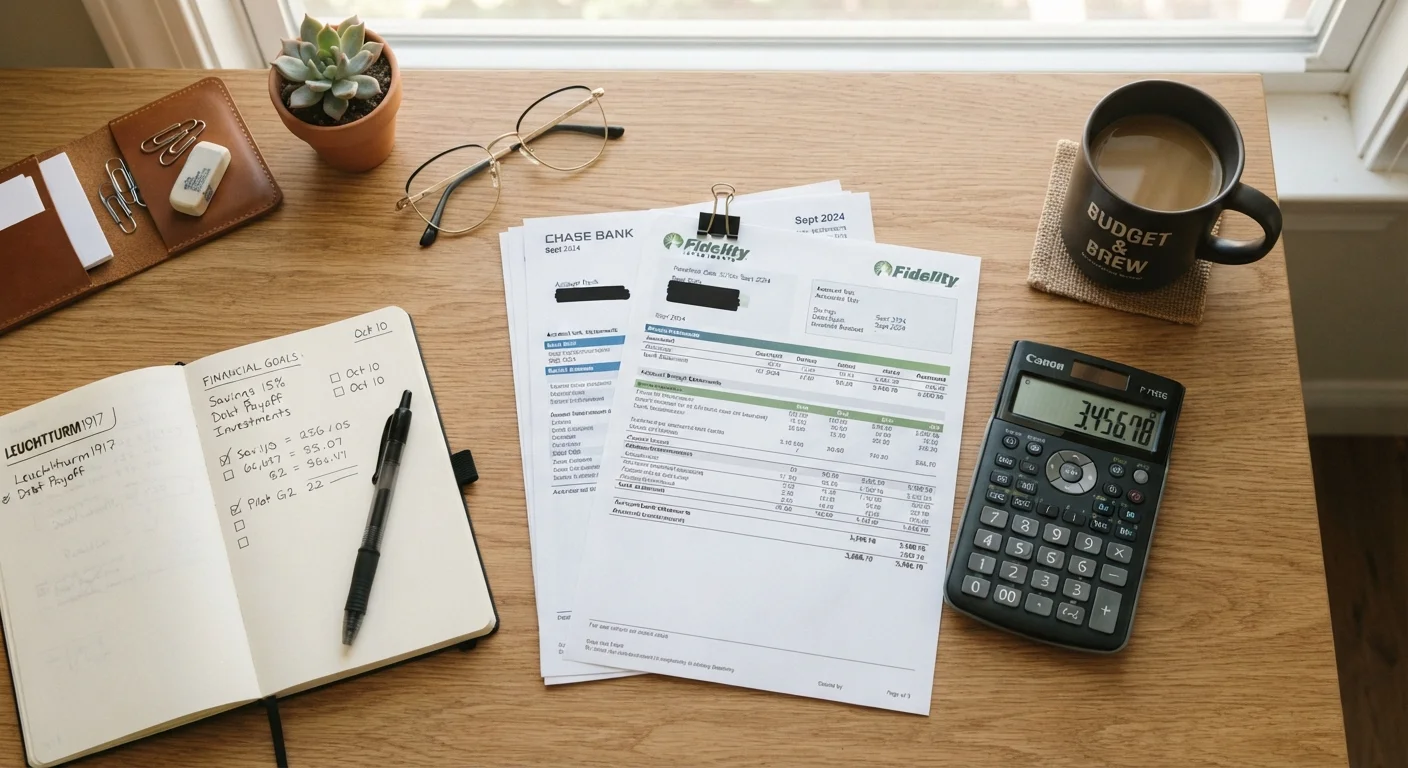
Bank and credit card statements
Provide the actual transaction data you need to compare against your budget plan.
Your existing budget (spreadsheet, notebook, or app)
Shows your planned figures so you can calculate over- or under-spending in each category.
Calculator
Speeds up variance calculations when working with paper statements or a simple spreadsheet.
Budgeting app (e.g., a general-purpose finance tracker)
Can auto-import transactions and categorize spending, reducing manual data entry during the review.
How to Use This Checklist
Block out time at or near the last day of each month. Gather your bank statements, credit card statements, and your written or digital budget. If you use a budgeting app, now is the time to reconcile it against your actual account activity - apps don't always capture everything accurately. Our article on budgeting apps: what they do well and where they fall short explains what to watch for.
Work through each group below. Mark each item complete as you go. Don't skip the forward-planning section - it's what turns a review into a reset.
Actual Account Data Beats Memory Every Time
Never rely on your recollection of what you spent - pull real statements. Research consistently shows people underestimate their spending, particularly in discretionary categories like dining and entertainment. Even a single missed transaction can distort your picture of the month. This review is only as useful as the data going into it.
When you're done, store your notes somewhere accessible. Month-over-month comparisons become genuinely useful after two or three cycles, so keeping a simple running record pays off.
Gather Your Records
Compare Spending to Plan
Review Savings and Debt Progress
Catch What Slipped Through
Reset for Next Month
After the Review: Building the Habit
A single review is useful. A consistent monthly habit is transformative. Once you've run through this checklist a few times, you'll notice patterns - a category that always runs over, a recurring subscription you forgot about, or a month that's structurally more expensive than others.
Use those patterns to refine your budget forward. If dining out regularly exceeds your plan, you have two options: adjust the budget to reflect reality, or make a deliberate choice to rein it in. Either is valid - but only a regular review surfaces the choice clearly.
For practical approaches to building savings and managing debt, those goals belong in your budget as line items, not afterthoughts. And if you find that tracking throughout the month is where things break down - not the review itself - our guide on tracking your spending without losing your mind offers low-effort methods that work for real life.
Ultimately, the habits you build around your budget matter more than any single month's numbers. See habits that make a budget work over the long term for what consistency actually looks like in practice.
This article is for general informational and educational purposes only and does not constitute personalized financial advice. For guidance specific to your situation, consider consulting a qualified financial professional.