

Key Takeaways
- You don't need a sophisticated app to track spending - a notebook or simple spreadsheet works well.
- Categorizing purchases into a handful of groups makes patterns easier to spot.
- Reviewing your spending weekly, not just monthly, catches problems before they compound.
- Consistency matters more than perfection - missing one entry won't derail your system.
- Tracking spending is the foundation for any realistic budget or savings goal.
What you will need
Why Tracking Spending Matters Before Anything Else
Most people have a rough sense of where their money goes - groceries, rent, the occasional dinner out. But rough senses rarely match reality. Studies in behavioral economics consistently show that people underestimate discretionary spending, sometimes by a wide margin. You can't fix a leak you haven't found.
Tracking your spending is the single most grounding financial habit you can build. It converts vague anxiety about money into concrete, actionable information. Once you know where your dollars actually land each month, you're in a position to make deliberate choices - whether that means cutting back in one area, redirecting money toward savings, or simply feeling more confident about what you have.
If you haven't yet set up a formal spending plan, building your first budget is a natural next step once you have a few weeks of tracking data behind you. But tracking itself costs nothing and can begin today.
What you will need
Choosing a Method That Fits Your Life
There is no single right way to track spending. The best system is the one you'll actually use. Consider these options:
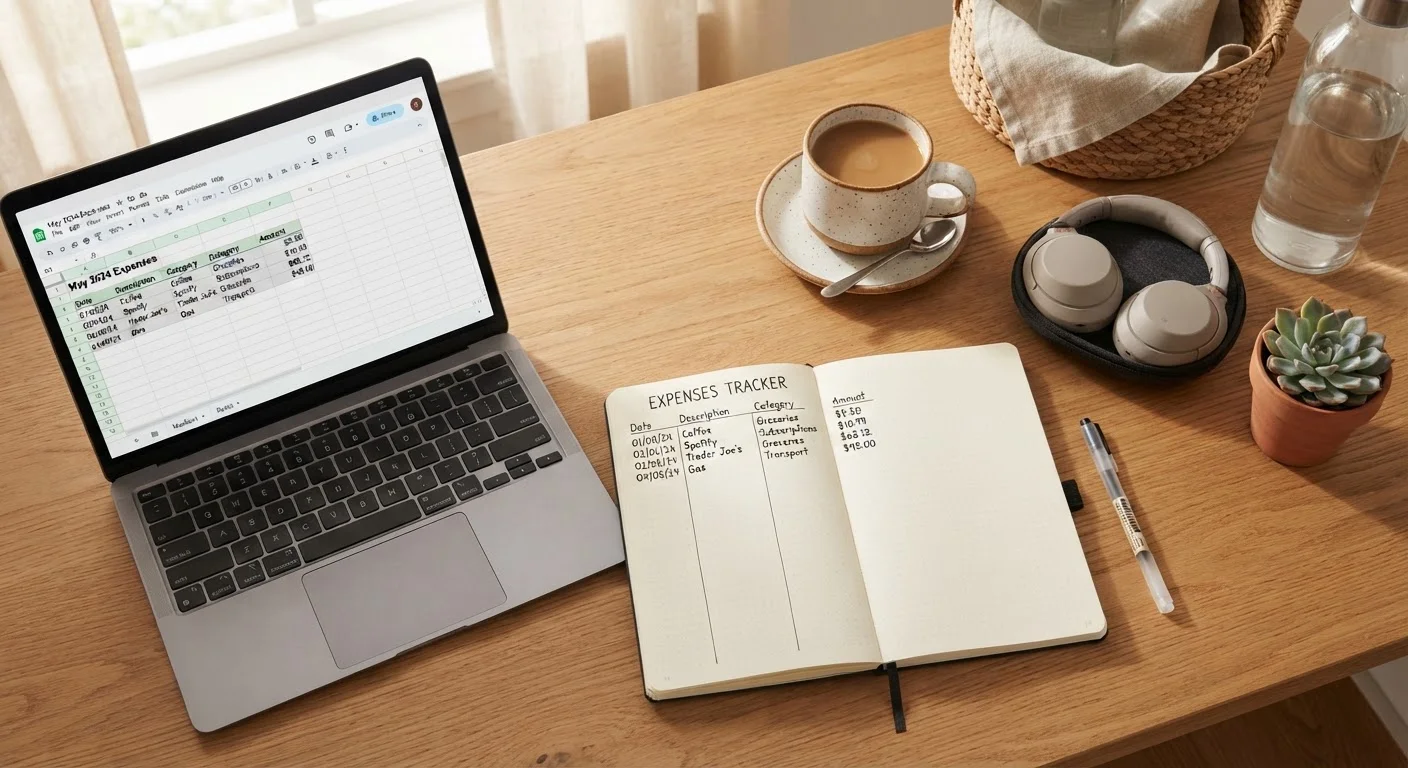
- Pen and paper: A small notebook or a printed template works for people who find writing more memorable than typing. Log each purchase the same day you make it.
- Spreadsheet: A basic table with columns for date, description, category, and amount gives you flexibility without requiring any subscription. Most people already have access to spreadsheet software.
- Banking statements: Your bank or credit union likely provides monthly statements that list every transaction. Downloading these as a PDF or CSV file gives you a ready-made record - though you'll still need to categorize and review them yourself.
- Budgeting apps: Digital tools can automate transaction imports and category sorting, which saves time. They come with trade-offs worth understanding, though. For a balanced view, see our honest look at budgeting apps before committing to one.
If you're unsure where to start, pick the simplest option that feels sustainable. You can always upgrade later.
Notebook or printed log sheet
Records daily purchases by hand, helping some people stay more mindful of what they spend.
Spreadsheet application
Organizes transactions into categories and allows simple calculations like monthly totals.
Bank or credit union statements
Provides a complete transaction history that can be reviewed and categorized without logging each purchase manually.
Calculator
Helps total spending by category when working with paper logs or printed statements.
How to Track Your Spending Step by Step
Follow these steps to set up a working system from scratch. Aim for consistency over completeness - a record that's 90% accurate is far more useful than one you abandon after two weeks.
Define your spending categories
Before you log a single purchase, decide on five to eight broad categories that reflect how you actually spend - for example: Housing, Transportation, Groceries, Dining Out, Utilities, Health, Personal Care, and Entertainment. Fewer categories are easier to maintain than many narrow ones.
Capture every transaction
Record each purchase as it happens or at the end of each day. Include the date, the amount, what it was for, and which category it belongs to. Cash purchases are easy to forget - keep a note in your phone or a receipt in your pocket until you can log them.
Tally your spending weekly
At the end of each week, add up what you spent in each category. This mid-month check lets you catch overspending early - before the end of the month, when it's too late to adjust. Note any categories where you're running ahead of expectations.
Review the full month and look for patterns
At month's end, total each category and compare the figures. Ask yourself: Which categories surprised me? Were there recurring charges I'd forgotten about? Did any single category consistently run over what I expected? Patterns across two or three months are more meaningful than any single month's data.
Adjust your categories or approach as needed
After your first month, you'll likely find that some categories need to be split (Dining Out vs. Coffee Shops, for example) or merged because they were too narrow to be useful. Refine your system based on what you learned. A tracking method that fits your actual life is far more valuable than one that fits a textbook.
Once you've completed a full month, pair your findings with a structured end-of-month review. The monthly budget review checklist walks you through comparing actual spending against your plan and resetting for the month ahead.
Building the Habit Over Time
Tracking spending becomes easier once it's routine - but forming that routine takes deliberate effort in the first few weeks. A few principles help:
- Set a fixed time: Review and update your log at the same time each day or week. Even five minutes after dinner works.
- Don't skip categories: Small purchases - coffee, parking, impulse buys - are often where overspending hides. Record them.
- Forgive gaps: If you miss a few days, reconstruct what you can from receipts or bank records and move forward. Shame is not a useful financial tool.
- Connect tracking to a goal: Knowing why you're tracking - paying down a credit card, building an emergency fund, saving for a specific purchase - keeps motivation alive when it feels tedious.
For more on sustaining good financial habits month after month, see habits that make a budget work over the long term. You might also find it useful to pair spending tracking with the monthly banking routines that financial educators commonly recommend.
This article is for general informational and educational purposes only and does not constitute personalized financial advice. For guidance tailored to your situation, consider consulting a qualified financial professional.