

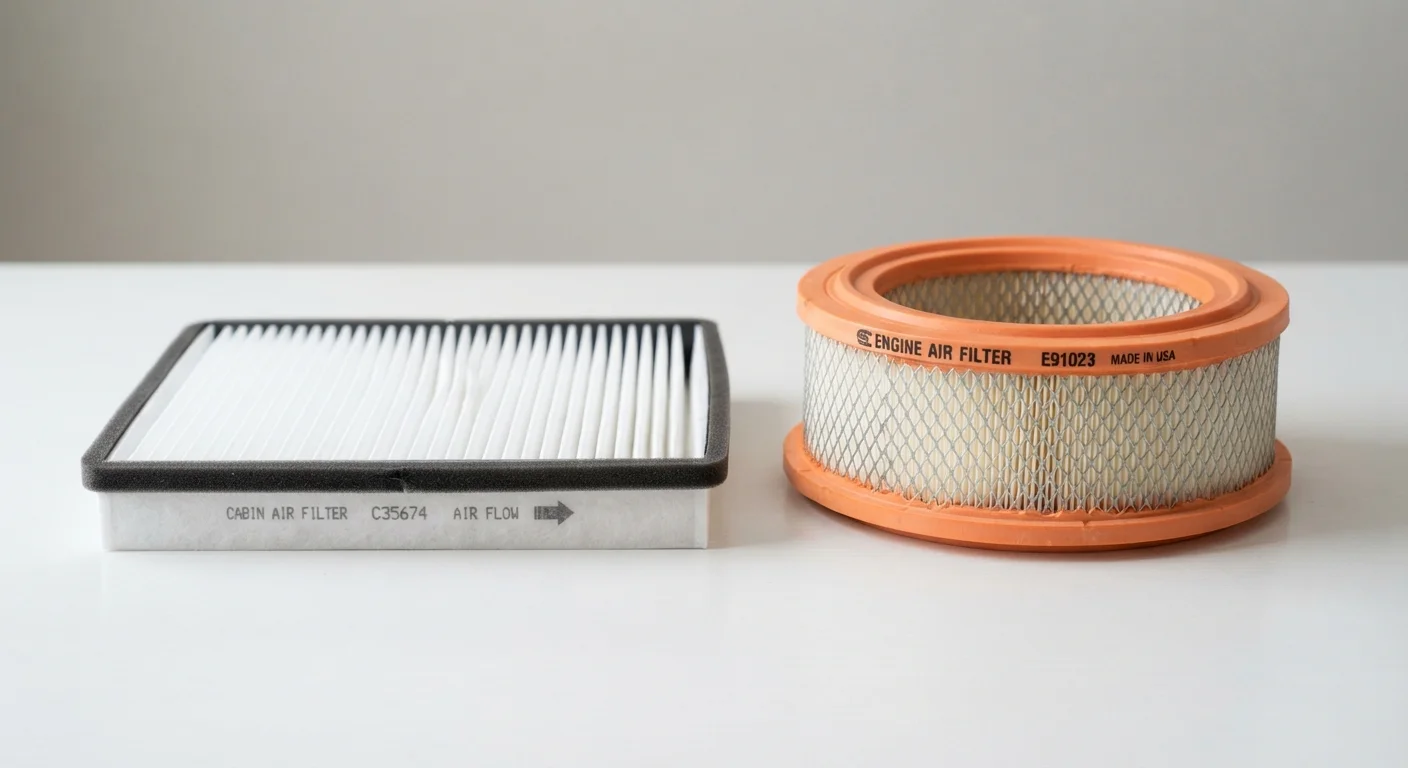
Key Takeaways
- Cabin air filters clean the air passengers breathe; engine air filters protect engine components from contaminants.
- Most cabin air filters should be replaced every 15,000-25,000 miles, though driving conditions vary this timeline.
- Engine air filters typically need replacement every 15,000-30,000 miles depending on the environment and vehicle.
- A clogged engine air filter can reduce fuel efficiency and accelerate engine wear over time.
- Both filters are among the more straightforward maintenance items a driver can address at home.
- Always consult your owner's manual for the manufacturer's recommended replacement intervals.
Option A
Cabin Air Filter
The air quality guardian for your passengers.
Best for: Drivers concerned about in-car air quality, allergens, dust, and odors entering through the HVAC system.
Option B
Engine Air Filter
The first line of defense for your engine's health.
Best for: Protecting engine components from dust, debris, and contaminants that can reduce performance and cause long-term damage.
If you frequently drive in dusty, rural, or high-pollution environments
Engine Air Filter (priority replacement)
Heavy particulate exposure clogs engine air filters faster, making more frequent checks essential to prevent performance loss and engine damage.
If you or your passengers suffer from allergies or respiratory sensitivities
Cabin Air Filter (priority replacement)
A fresh cabin air filter significantly reduces pollen, dust, and airborne particles inside the vehicle, improving the air quality everyone breathes.
If you want to protect long-term engine reliability and fuel economy
Engine Air Filter
Maintaining a clean engine air filter ensures proper air-fuel mixture and reduces the strain on engine components over time.
If you notice musty odors or weak airflow from your vents
Cabin Air Filter
Restricted or odor-laden airflow from your HVAC system is a strong indicator the cabin filter is overdue for replacement.
What Each Filter Actually Does
Your vehicle contains two entirely separate air filtration systems, each protecting something different. Understanding their distinct roles is the first step toward smarter maintenance decisions.
The cabin air filter sits within your vehicle's HVAC (heating, ventilation, and air conditioning) system, typically behind the glove box or under the dashboard. Its job is to clean the air that flows into the passenger compartment. It traps pollen, dust, mold spores, exhaust particles, and other airborne contaminants before they reach the people inside the car.
The engine air filter, located in the engine bay inside an airbox or housing, protects your engine's internal components. Before outside air enters the engine to support combustion, it passes through this filter, which blocks dirt, dust, insects, and debris. Without it, abrasive particles would accelerate wear on pistons, cylinders, and other precision components.
In short: the cabin filter protects people; the engine filter protects the engine. Both matter, and neglecting either carries real consequences. For a broader look at how these filters fit into your vehicle's overall upkeep, see our routine maintenance overview.
| Criterion | Cabin Air Filter | Engine Air Filter |
|---|---|---|
| Primary Purpose | Cleans air entering the passenger cabin | Cleans air entering the engine |
| Location | Behind glove box or under dashboard | Engine bay, inside airbox housing |
| Typical Replacement Interval | 15,000-25,000 miles | 15,000-30,000 miles |
| What It Protects | Passenger health and HVAC blower motor | Engine components and combustion efficiency |
| Key Warning Signs | Weak airflow, musty odors, excess dust | Reduced acceleration, worse fuel economy |
| DIY Accessibility | Generally straightforward | Generally straightforward |
| Impact of Neglect | Poor air quality, blower motor strain | Engine wear, fuel inefficiency, carbon buildup |
Replacement Intervals and Warning Signs
General industry guidance suggests replacing cabin air filters every 15,000 to 25,000 miles and engine air filters every 15,000 to 30,000 miles. However, these are starting points - your actual interval depends heavily on driving environment. Unpaved roads, heavy traffic, and high-pollen regions all shorten filter life considerably.
Signs your cabin air filter needs attention:
- Reduced airflow from the vents even at high fan settings
- Persistent musty or unpleasant odors when the HVAC runs
- Increased dust accumulation on the dashboard
- Allergy symptoms flaring up inside the vehicle
Signs your engine air filter is overdue:
- Noticeably reduced acceleration or throttle response
- A decline in fuel economy over time
- A visibly dirty or grey/black filter when inspected
- A check engine light in some modern vehicles with mass airflow sensors
Your owner's manual remains the most authoritative source for your specific vehicle. Our article on understanding your car's maintenance schedule explains how to read and apply those factory recommendations effectively.
What Happens When You Skip the Replacement
Skipping filter replacements is one of those deferred maintenance decisions that appears cost-neutral in the short term but compounds into larger problems over time.
A neglected cabin air filter won't damage your vehicle mechanically, but it will force your HVAC system's blower motor to work harder against increased resistance - potentially shortening its lifespan. More immediately, air quality inside the cabin degrades. Occupants, especially those with asthma or allergies, may notice the difference well before the filter reaches the end of its visible life.
A clogged engine air filter has more direct mechanical consequences. When the engine can't draw sufficient clean air, the air-fuel mixture becomes unbalanced. This can reduce fuel efficiency, decrease horsepower, and in severe cases, cause incomplete combustion that deposits carbon buildup on engine components. Over extended neglect, the fine particulates that bypass a saturated filter can accelerate wear on cylinder walls and piston rings.
Both filters are generally considered straightforward items to replace at home with basic tools. Our DIY vs. professional maintenance guide can help you assess your comfort level before you start.
Making Both Part of Your Regular Maintenance Routine
The most practical approach is to build filter checks into your existing maintenance schedule rather than treating them as isolated events. Many drivers tie cabin and engine air filter inspections to their oil change intervals - a visual check takes only a few minutes and can tell you whether replacement is needed now or can wait another cycle.
When inspecting either filter, hold it up to a light source. A filter that blocks most of the light or shows heavy discoloration is past its useful life. A filter that still allows light through with visible but moderate dust accumulation may have another interval left.
Driving Environment Affects Filter Life
Manufacturer-recommended intervals are based on typical driving conditions. If you regularly drive on unpaved roads, in heavy urban traffic, or through areas with elevated airborne particulates, both filters will accumulate contaminants faster. Visual inspection is always more reliable than mileage alone when your environment is demanding. When in doubt, consult a qualified mechanic for an assessment.
If you drive in conditions that challenge filters faster - construction zones, agricultural areas, wildfire smoke regions - consider shortening your inspection interval to every 10,000 miles. Environmental context matters as much as the odometer reading.
For a comprehensive view of everything that belongs on your maintenance calendar, our full car maintenance guide covers filters alongside all major service categories in one resource.