

| Uniform yellowing pattern | Likely nitrogen deficiency or iron chlorosis |
| Circular or ringed patches | Often a fungal disease such as dollar spot or brown patch |
| Turf lifts like a carpet | Strong indicator of grub (root-feeding larvae) damage |
| Small round spots with dark green rings | Classic sign of dog urine nitrogen burn |
| Yellow after mowing high spots | Likely scalping - mower set too low |
| Yellow blades with green veins | Iron chlorosis; confirm with a soil pH test |
Reading the Pattern Before You Diagnose
A yellow lawn is a symptom, not a single problem. Before reaching for fertilizer or a garden hose, take a few minutes to observe: Is the yellowing uniform across the whole lawn, or confined to patches? Are the patches circular, striped, or irregular? Did the color change after heavy rain, a dry spell, or a recent mowing? The answers narrow down the cause considerably.
This reference covers the most common reasons grass turns yellow, what each one looks like in practice, and the basic corrective steps for each. For a broader view of seasonal maintenance that prevents many of these problems, see the complete homeowner's lawn and garden guide.
Nitrogen deficiency
A shortage of nitrogen in the soil that limits the grass plant's ability to produce chlorophyll, resulting in pale or yellow blades. It is one of the most common causes of uniform lawn yellowing.
Iron chlorosis
A condition where grass cannot absorb enough iron - often due to high soil pH - causing yellow blades with distinctly green veins on younger growth.
Leaching
The process by which water moves nutrients, especially nitrogen, downward through the soil profile and out of the root zone, reducing their availability to plants.
Thatch
A layer of dead and living organic matter - stems, roots, and debris - that accumulates between grass blades and the soil surface. Excessive thatch blocks water, air, and nutrients.
Core aeration
A lawn maintenance technique that removes small plugs of soil to reduce compaction, improve drainage, and allow air, water, and nutrients to reach grass roots more effectively.
Chelated iron
A form of iron that is chemically bonded to organic molecules, making it more readily absorbed by plants even in alkaline soil conditions where standard iron is poorly available.
The Most Common Causes - and Their Telltale Signs
Each cause listed below produces a recognizably different pattern. Match what you see to the description that fits best.
Nitrogen Deficiency
What it looks like: Pale, uniform yellowing that starts with older, lower blades and moves upward. The entire lawn may look washed out rather than patchy. Growth slows noticeably.
Why it happens: Nitrogen is the primary nutrient driving leaf and blade growth. Sandy soils and areas with heavy rainfall lose nitrogen quickly through leaching. Over time, an unfertilized lawn simply runs low.
Basic fix: A balanced lawn fertilizer applied at the rate shown on the label during the appropriate growing season for your grass type will typically restore color within two to three weeks.
Overwatering or Waterlogged Soil
What it looks like: Yellow or pale green patches in low-lying areas or spots where water pools. Soil feels consistently soggy and may develop a sour or musty smell. Moss or algae may appear.
Why it happens: Roots need oxygen. Saturated soil displaces air, effectively suffocating the root zone. Shallow, frequent watering compounds the problem by keeping surface soil perpetually wet. Watering deeply and less frequently builds deeper, more resilient roots and avoids this pattern.
Basic fix: Allow soil to dry between watering cycles. Aerate compacted areas to improve drainage.
Iron Chlorosis
What it looks like: Bright yellow blades with noticeably green veins - a striped appearance. Most visible on young, actively growing shoots. Often mistaken for nitrogen deficiency but is visually distinct on close inspection.
Why it happens: Grass can't absorb iron effectively in high-pH (alkaline) soil even when iron is present. Overwatered lawns and heavy clay soils are frequent culprits.
Basic fix: A soil test confirms pH. Sulfur-based amendments lower pH over time; chelated iron products can provide faster short-term greening.
Fungal Disease (Dollar Spot, Rust, or Brown Patch)
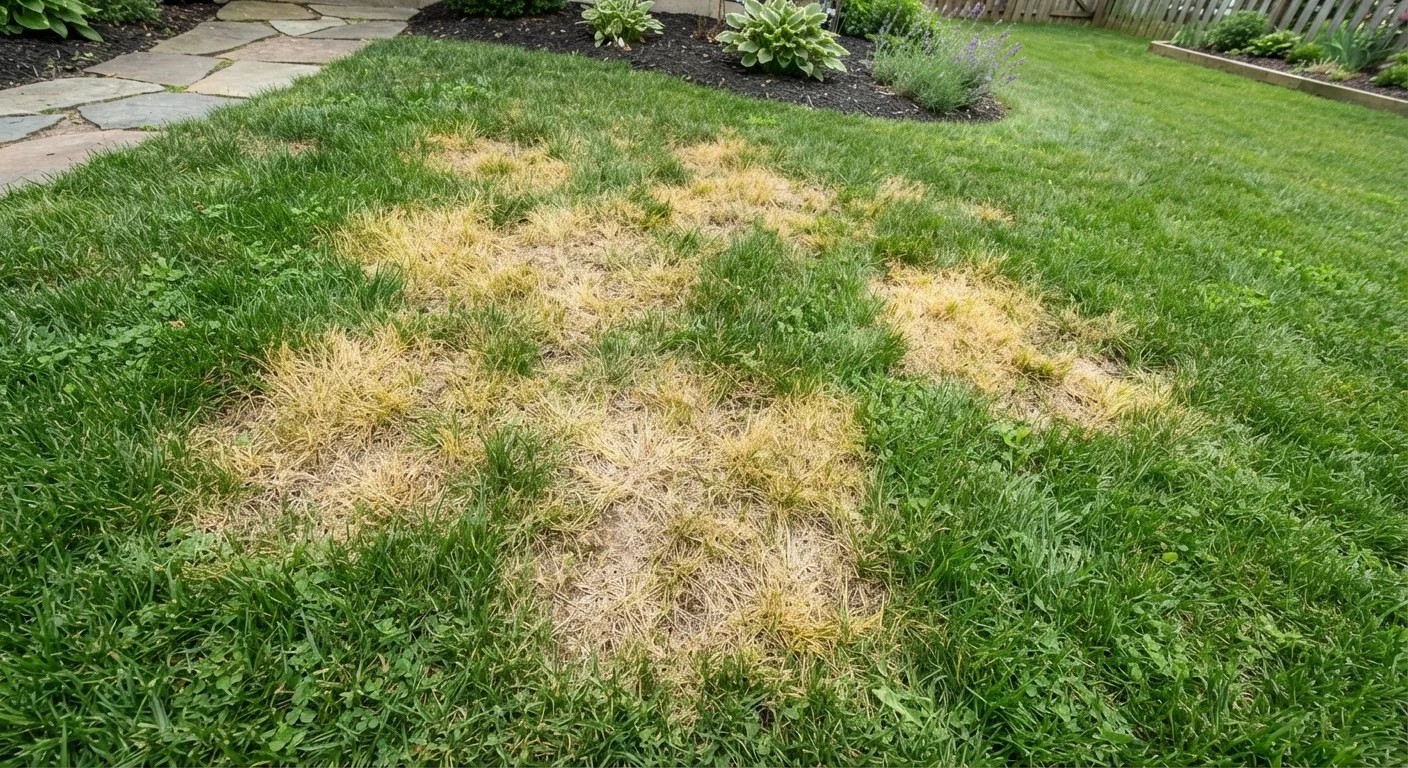
What it looks like: Circular or irregular patches, sometimes with a bleached center and darker ring (brown patch). Rust diseases produce an orange-yellow powder that rubs off on shoes. Dollar spot creates small, silver-dollar-sized dead spots.
Why it happens: Warm, humid conditions combined with poor air circulation and excess thatch create ideal environments for lawn fungi.
Basic fix: Improve airflow through dethatching and aeration. Avoid evening watering. Fungicides may be considered for severe cases - consult your local cooperative extension office for guidance appropriate to your region.
Grub or Pest Damage
What it looks like: Irregular yellow or brown patches where turf pulls away from the soil easily, like a loose carpet. Spongy texture underfoot. Birds or skunks may be digging in affected areas.
Why it happens: White grubs (larvae of beetles) feed on grass roots just beneath the surface, severing the connection between blade and soil.
Basic fix: Confirm grub presence by cutting back a small section of turf and counting larvae per square foot. Threshold levels vary by grass type and region - your local extension service can advise on treatment timing.
Less Common but Worth Knowing
| Uniform yellowing pattern | Likely nitrogen deficiency or iron chlorosis |
| Circular or ringed patches | Often a fungal disease such as dollar spot or brown patch |
| Turf lifts like a carpet | Strong indicator of grub (root-feeding larvae) damage |
| Small round spots with dark green rings | Classic sign of dog urine nitrogen burn |
| Yellow after mowing high spots | Likely scalping - mower set too low |
| Yellow blades with green veins | Iron chlorosis; confirm with a soil pH test |
Dog Urine Spots
What it looks like: Small, roughly circular yellow or brown patches, often with a ring of unusually dark green grass at the edges (from diluted nitrogen). Most common near outdoor pet areas.
Basic fix: Flush affected areas with water immediately after exposure. Reseeding or patching is often necessary for established damage.
Scalping from Mowing Too Low
What it looks like: Uniform yellowing immediately after mowing, particularly across ridges or high spots in the lawn. The cut surface looks white or straw-colored.
Basic fix: Never remove more than one-third of the blade length in a single mowing session. Adjust mower height to match your grass type's recommended range.
Compacted Soil
What it looks like: Slow, gradual yellowing in high-traffic areas such as pathways or play zones. Grass looks thin and struggles to recover after stress.
Basic fix: Core aeration, ideally done in the appropriate season for your grass type, breaks up compaction and restores root-zone health.