

Key Takeaways
- The avalanche method targets the highest-interest debt first, reducing total interest paid over time.
- The snowball method clears the smallest balance first, delivering quick wins that sustain motivation.
- Neither method is universally superior - your behavior and psychology matter as much as the math.
- Both approaches require paying minimums on all debts and directing extra funds to the priority account.
- Consistency, not perfection, is the most important factor in any debt payoff strategy.
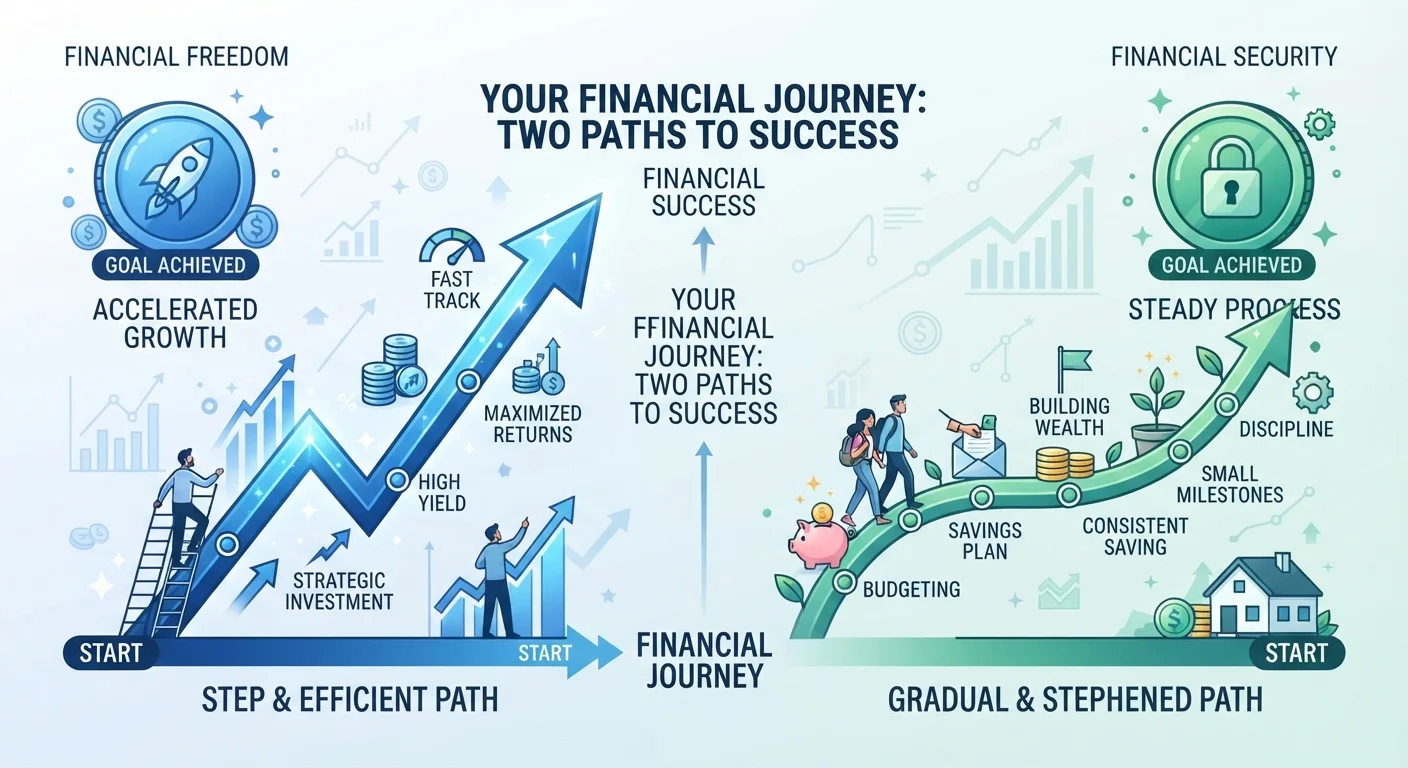
Option A
Debt Avalanche
The mathematically optimal, interest-saving approach.
Best for: People who stay motivated by long-term financial efficiency and want to minimize the total interest paid over time.
Option B
Debt Snowball
The momentum-driven, psychologically rewarding method.
Best for: People who need quick wins to stay on track and find motivation through visible, frequent progress.
If you want to pay as little interest as possible over time
Debt Avalanche
By attacking high-rate balances first, the avalanche method typically results in lower total interest paid - often by hundreds or thousands of dollars depending on balances.
If you've struggled to stick with a payoff plan in the past
Debt Snowball
Eliminating smaller debts quickly provides a sense of accomplishment that can keep you engaged and committed over the long haul.
If your debts have similar interest rates
Debt Snowball
When rates are close, the interest savings from the avalanche are minimal, so the psychological benefits of the snowball may outweigh any marginal cost difference.
If your highest-interest debt also carries the lowest balance
Debt Avalanche
In this scenario, you get the best of both worlds - fast payoff and maximum interest savings align naturally.
How Each Method Works
Both the avalanche and snowball methods share the same foundation: pay the minimum required on every debt each month, then direct any extra money toward one designated account. The difference lies entirely in which debt gets that extra payment.
With the debt avalanche, you rank your debts by interest rate - highest to lowest - and throw extra funds at the highest-rate balance first. Once that's gone, you move to the next highest rate, and so on. Because high-interest debt is the most expensive to carry, this sequence minimizes the total interest you pay. To understand just how costly high-rate balances can become, see how interest compounds on high-rate debt.
With the debt snowball, pioneered as a concept by personal finance educators, you rank debts by balance - smallest to largest - regardless of interest rate. Extra payments go to the smallest balance first. Once it's paid off, you roll that freed-up payment into the next smallest balance, creating a growing "snowball" of momentum.
| Criterion | Debt Avalanche | Debt Snowball |
|---|---|---|
| Payoff order | Highest interest rate first | Smallest balance first |
| Total interest paid | Lower (mathematically optimal) | Potentially higher |
| Speed of first payoff | Slower if high-rate debt is large | Faster - small balances close quickly |
| Psychological motivation | Driven by long-term savings goal | Driven by quick visible wins |
| Best scenario | High rate gap between debts | Similar rates across debts |
| Complexity | Requires comparing APRs | Straightforward balance ranking |
The Math vs. The Mind
Purely by the numbers, the avalanche wins. Paying off a 24% APR credit card before a 7% personal loan means less of your money evaporates into interest charges each month. Over the life of your repayment, this difference can be significant - though the exact amount depends on your balances, rates, and how much extra you can pay.
But personal finance is as much behavioral as it is mathematical. Research in consumer psychology consistently shows that people underestimate how much they need to feel progress to sustain effort. The snowball method exploits this: each account you close is a genuine milestone, and that sense of completion can reinforce the habit of making those extra payments month after month.
~33%
U.S. adults carrying credit card debt month-to-month
According to Federal Reserve survey data, roughly one in three American adults carries a revolving credit card balance, making structured payoff strategies broadly relevant.
20%+
Average credit card APR in recent years
The Federal Reserve tracks average credit card interest rates; rates above 20% APR make the order of debt payoff increasingly consequential to total cost.
2x
Likelihood of success with accountability structures
Behavioral finance research broadly finds that people are significantly more likely to follow through on financial goals when they have a clear, trackable system - which both methods provide.
If you've started payoff plans before only to abandon them, the snowball's psychological scaffolding may be worth the modest interest premium. Conversely, if you're highly goal-oriented and find spreadsheets motivating, the avalanche's clear efficiency may keep you engaged just as effectively.
It's also worth noting that if you're weighing whether to pay down debt at all versus directing extra cash elsewhere, that's a separate but related question - balancing debt payoff against saving involves its own set of trade-offs.
Choosing a Method and Making It Stick
Once you've chosen an approach, the mechanics are the same for both: list your debts, set up minimum autopayments on all of them, then direct every available extra dollar to your priority account. Even an additional $25 or $50 per month accelerates your timeline meaningfully.
A few practical considerations to keep in mind:
- Mixed-rate situations: If your highest-interest debt also has the largest balance, the avalanche may feel discouraging because it takes longer to eliminate that first account. Some people find it helpful to pay off one small balance first for a quick win, then switch to avalanche logic - a hybrid that sacrifices little in interest savings.
- Debt consolidation: Depending on your credit profile, consolidating multiple debts into a single lower-rate loan could change the calculus entirely. Debt consolidation has real trade-offs worth examining before committing.
- When plans stall: Most debt repayment plans hit friction at some point - an unexpected expense, a month with little extra income. Knowing in advance how to course-correct matters. Where repayment plans break down covers the most common pitfalls.
Whichever method you choose, the most important variable is consistency. A plan you follow imperfectly for three years beats a theoretically optimal plan you abandon in three months.
This article is for general informational and educational purposes only and does not constitute personalized financial or legal advice. Consult a qualified financial professional before making decisions about your specific debt situation.