

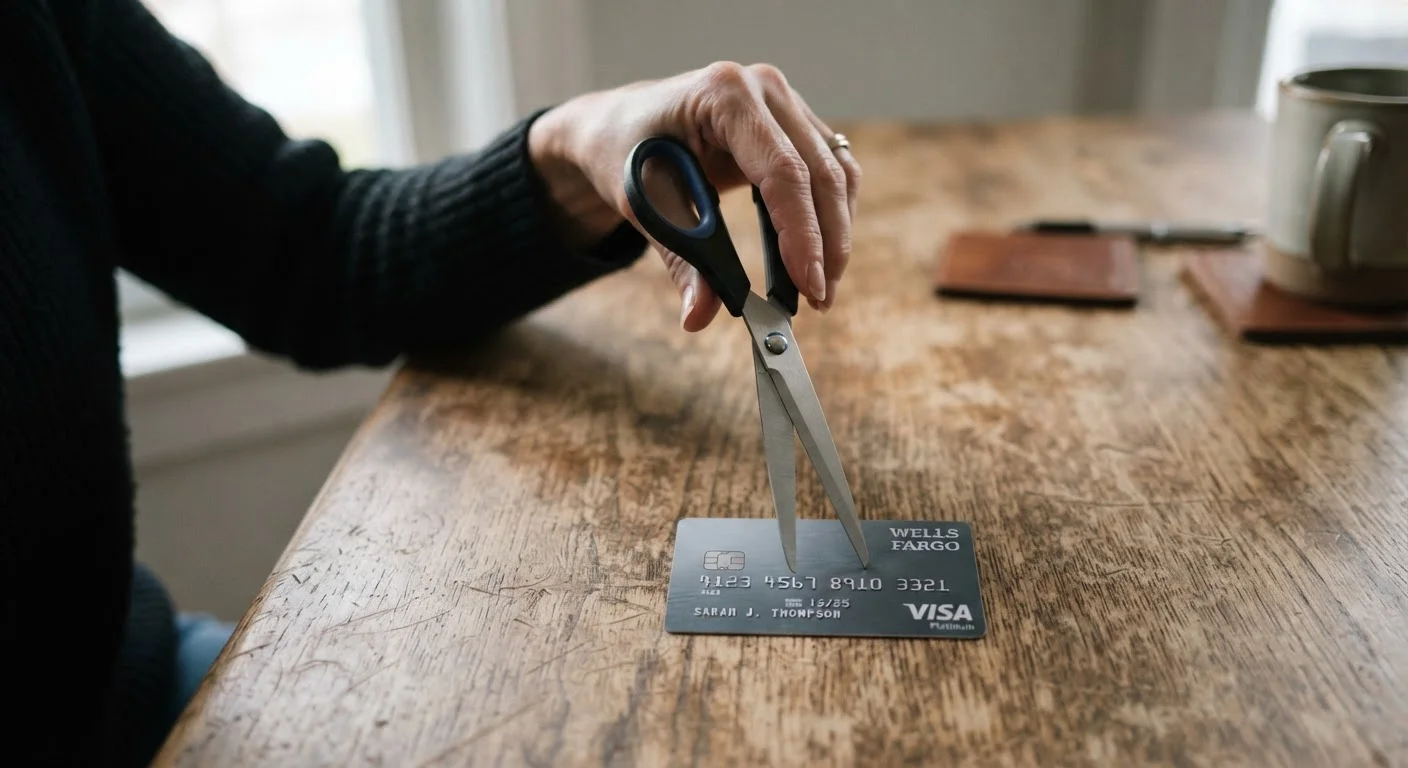
Key Takeaways
- Closing an old card reduces your total available credit, which can raise your utilization ratio and lower your score.
- Older accounts contribute to your credit history length - a key scoring factor that closing removes over time.
- A closed card with no balance eventually disappears from your report, taking its positive history with it.
- There are alternatives to closing a card outright that preserve your credit profile.
The Invisible Mechanics Behind That Simple Decision
Cancelling a credit card you haven't used in years feels responsible - even tidy. But the effects on your credit score are rarely intuitive. To understand why closing a card can hurt you, it helps to know what credit scores are actually measuring in the first place. As explained in our breakdown of what credit scores measure, two specific factors are directly affected when you close an account: your credit utilization ratio and your length of credit history. These two factors together account for a significant portion of most standard credit score models, which means a seemingly minor decision - closing one card - can produce a measurable drop.
This article walks through the most common mistakes people make when managing old credit cards, and what to consider before reaching for the scissors.
Common Mistakes When Closing a Credit Card
Closing a card without checking how it affects your credit utilization ratio.
Why it happens: Most people focus on whether they use a card, not on what closing it does to the math of their overall credit limits.
Cancelling your oldest credit card account.
Why it happens: Older cards often carry outdated designs, low limits, or no rewards, making them feel like dead weight worth discarding.
Assuming a closed account disappears immediately and cleans up your report.
Why it happens: People often want a fresh start, believing that removing an account - even a good one - tidies up their financial picture.
Closing multiple cards at once to simplify finances.
Why it happens: After a financial reset or lifestyle change, it can feel sensible to streamline. Closing several cards in a short window feels decisive.
Closing a card right before applying for a loan or mortgage.
Why it happens: People often do a financial clean-up before a major application, thinking fewer open accounts signals responsibility.
This article is for general informational purposes only and is not personalized financial advice. For guidance specific to your situation, consider consulting a licensed financial professional.
What You Can Do Instead
Before closing an old card, consider these alternatives that preserve your credit profile:
- Keep it open with minimal use. Put a small recurring charge on the card - a streaming subscription, for example - and set it to autopay. This keeps the account active without requiring attention.
- Ask about a product change. Some card issuers will let you switch to a no-annual-fee version of your card, eliminating the cost while keeping the account and its history intact.
- Request a credit limit increase on other cards. If your concern is managing spending temptation, you can address utilization by asking for a higher limit on a card you do use. Our guide on credit utilization explains how this can work in your favor.
30%
Credit utilization threshold to stay below
Credit scoring models generally view a utilization ratio above 30% as a risk signal, though lower is better according to consumer credit education resources.
~10 years
How long closed accounts stay on your report
Accounts closed in good standing typically remain visible on a credit report for up to ten years, per general guidance from major credit bureaus.
If closing the card is genuinely your best option - perhaps the annual fee is high and the card offers no value - then do it with a plan. Pay off any balance first, check how it will affect your utilization ratio, and accept a temporary dip in your score if it's worth the trade-off. A short-term drop is not a catastrophe, especially if you maintain on-time payments on other accounts.
For a broader look at credit misconceptions that may be quietly affecting your decisions, see our credit score myths you might still believe.