

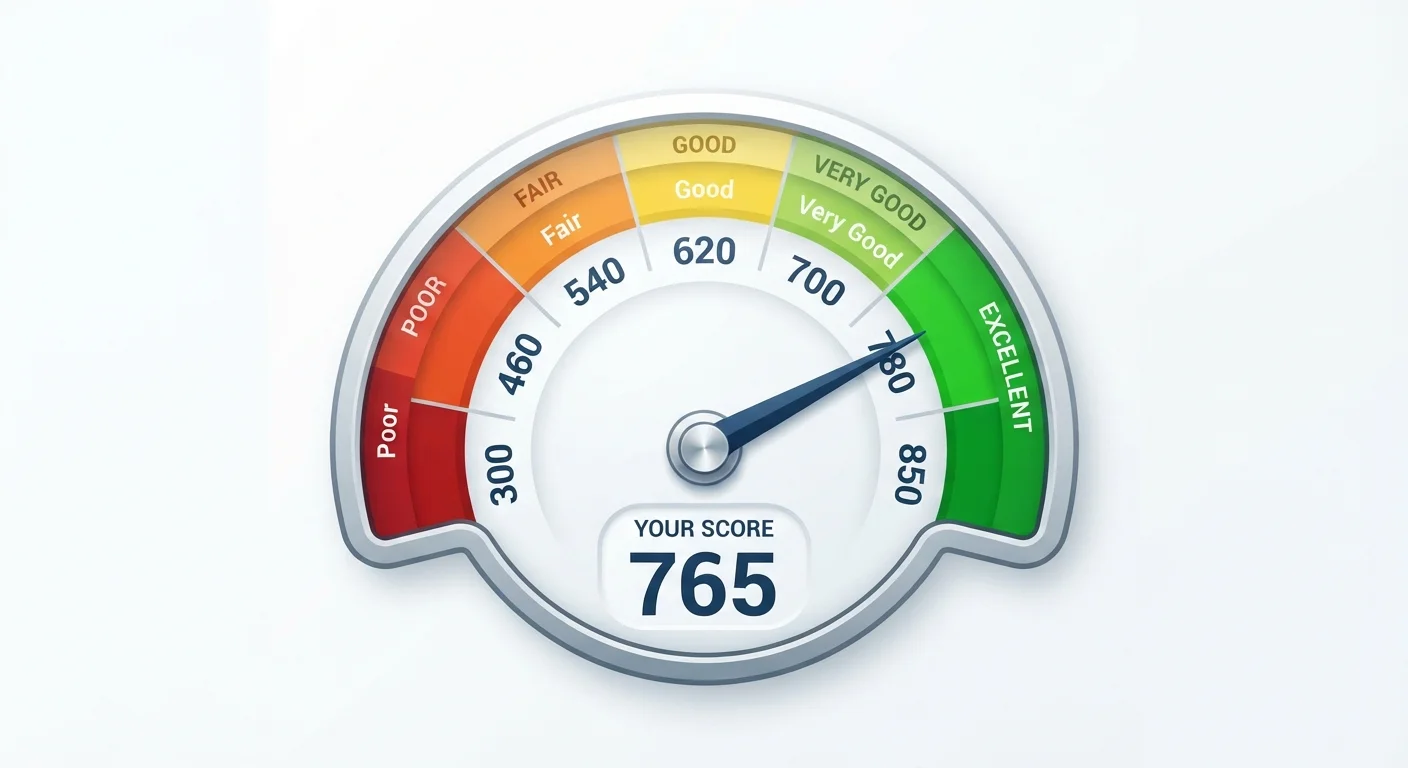
How the Credit Score Scale Is Structured
The most widely used credit scoring models - including FICO and VantageScore - operate on a scale from 300 to 850. That range isn't arbitrary. It's designed to predict the likelihood that a borrower will repay a debt on time, and lenders use it to make quick, consistent decisions about risk.
Your score is calculated from information in your credit report: payment history, amounts owed, length of credit history, new credit activity, and credit mix. Each factor is weighted differently, but no single misstep or achievement defines your score permanently.
It's also worth knowing that you don't have one score - you likely have several. Different bureaus (Equifax, Experian, and TransUnion) may hold slightly different data, and various scoring models weigh factors differently. Lenders choose which model to use, so the number they see may differ slightly from what you checked. Understanding that checking your own credit doesn't affect your score is one important piece of this picture.
What Each Score Tier Means in Practice
Lenders group scores into tiers that carry real consequences for approval odds, interest rates, and borrowing terms. Here's how those tiers generally break down:
Poor (300-579)
Scores in this range signal significant past credit difficulties - missed payments, collections, or high debt relative to available credit. Most traditional lenders will decline applications outright, and those that don't will typically charge very high interest rates. Secured credit cards or credit-builder loans may be available entry points. If you're starting fresh, see how to build credit from scratch.
Fair (580-669)
Borrowers in this range may qualify for some products but will generally face above-average interest rates. Approval is less certain, and terms may include lower credit limits or higher fees. This tier represents an opportunity: relatively modest improvements can move a score into more favorable territory.
Good (670-739)
This is near or at the U.S. median range for consumers. Lenders consider this a reliable tier - approvals are more common, and rates are meaningfully more competitive than fair-tier pricing. Most standard mortgage, auto loan, and credit card products are accessible here.
Very Good (740-799)
Borrowers in this range typically qualify for favorable rates and are approved more readily. Lenders view this group as low-risk, and the difference in lifetime interest costs compared to the fair tier can be substantial on larger loans like mortgages.
Exceptional (800-850)
Scores here represent the highest creditworthiness tier. Applicants typically receive the most competitive rates available and face few obstacles to approval. Reaching this tier generally requires years of on-time payments, low credit utilization, and a well-established credit history. One often-misunderstood factor is how credit utilization works - keeping balances low relative to limits has an outsized effect.
Common Misconceptions Worth Clearing Up
Credit scores attract a lot of misinformation, and acting on bad information can slow your progress. For example, many people believe carrying a small balance on a credit card each month helps their score - it doesn't. Paying your statement balance in full is generally the better practice. For a broader look at faulty assumptions, see common credit score myths debunked.
It's also important to understand that no score tier is permanent. Scores respond to behavior over time. Late payments hurt, but their impact diminishes as on-time payments accumulate. Paying down revolving debt can produce relatively quick improvements in some cases.
Finally, a score alone doesn't determine every lending decision. Lenders also consider income, employment, debt-to-income ratio, and other factors. A good score opens doors, but it's one part of a larger financial picture.
This article is for general informational purposes only and does not constitute financial or credit advice. For guidance specific to your situation, consult a qualified financial professional.