

Key Takeaways
- Every bank statement follows a predictable structure - once you know the sections, reading them becomes routine.
- The statement period, beginning balance, and ending balance are the three anchors that tie everything together.
- Unexplained fees, duplicate charges, and unfamiliar transactions are worth investigating immediately.
- Reconciling your statement monthly helps you catch errors before they compound.
- Your bank statement is a powerful input for budgeting and spotting spending patterns over time.
What you will need
What You'll Need Before You Start
Pull up your most recent bank statement - either a paper copy or a PDF downloaded from your bank's website. Having the previous month's statement handy is also useful for comparison. If you're unfamiliar with common banking terms like overdraft, ACH transfer, or available balance, bookmark our plain-English banking glossary to reference as you go.
What you will need
The Anatomy of a Bank Statement
Most bank statements - whether from a traditional bank or a credit union - share the same core sections. Here's what each one tells you.
Account Summary
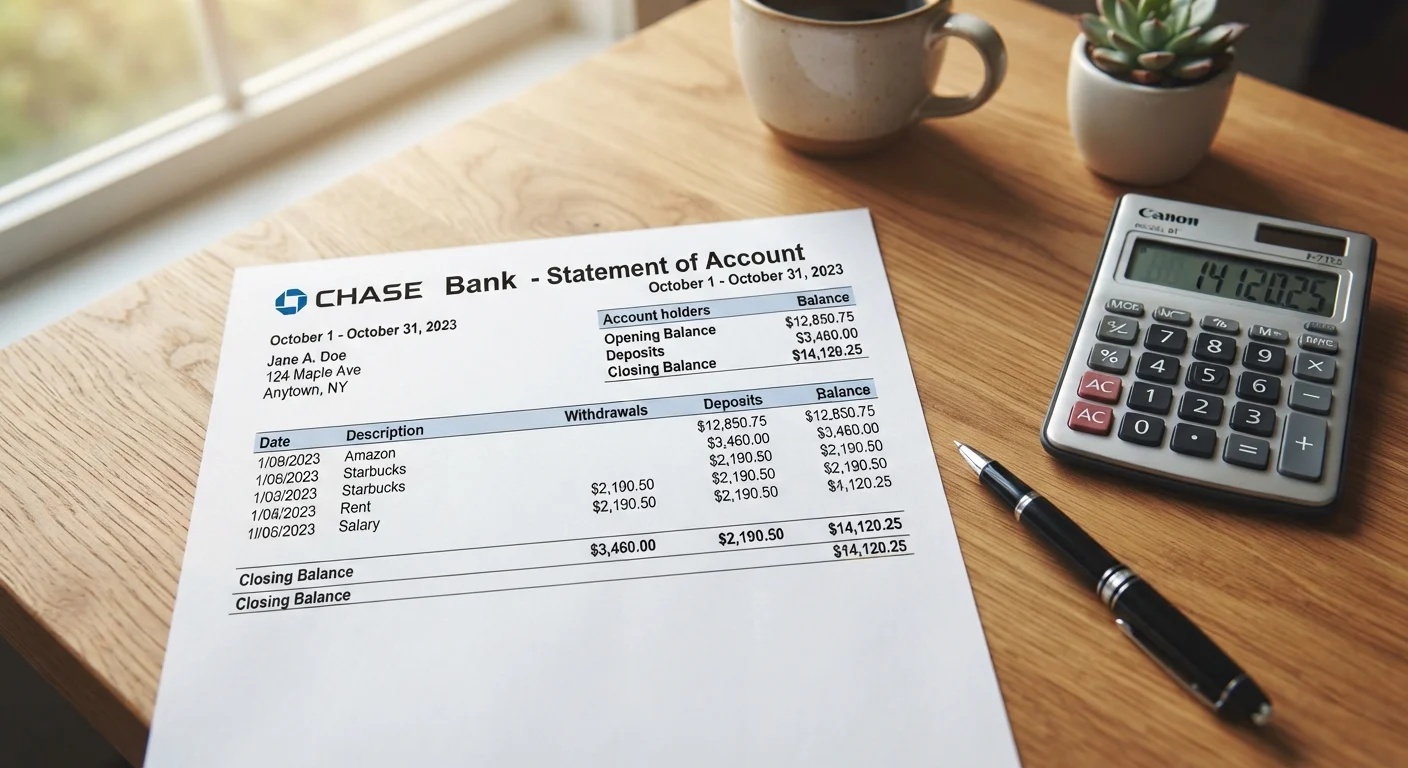
At the top, you'll find your account holder name, account number (usually partially masked for security), the statement period (e.g., June 1-June 30), your beginning balance, and your ending balance. These three data points - period, opening balance, closing balance - are your anchors. Every transaction in between should explain the difference between the two balance figures.
Transaction History
This is the longest section and the one most people skim. Each line typically shows a date, a description or merchant name, and a debit (money out) or credit (money in) amount. Some banks separate debits and credits into columns; others use positive and negative numbers in a single column. Read each description carefully - vague entries like POS PURCHASE or ACH DEBIT paired with an unfamiliar name deserve a second look.
Fees and Interest
Fees are often listed within the transaction history but may also appear in a dedicated summary box. Common line items include monthly maintenance fees, overdraft fees, out-of-network ATM fees, and wire transfer charges. If you're evaluating whether your current account is cost-effective, our new bank account checklist explains what fee structures to watch for.
Description Codes Aren't Always Obvious
Banks often display truncated or coded merchant names - for example, "SQ *COFFEE SHOP" indicates a Square payment terminal, while "ACH DEBIT PAYPAL" covers any PayPal transfer. If a description puzzles you, a quick web search of the exact text usually identifies the source. Building familiarity with these codes makes future reviews much faster.
Daily Balance Summary
Many statements include a table showing your account balance at the end of each day during the period. This is especially useful for spotting low-balance days that may have triggered overdraft fees - even if you didn't notice at the time.
Step-by-Step: How to Read and Reconcile Your Statement
Follow these steps each month to make sure your statement is accurate and useful. This process typically takes under 20 minutes once you've done it a few times.
Confirm the Statement Period and Account Details
Verify that the statement period matches the month you intend to review. Check that your name and the last four digits of your account number are correct. If you have multiple accounts, confirm you have the right statement before proceeding.
Check Your Beginning and Ending Balances
Your beginning balance should match the ending balance from last month's statement. If it doesn't, contact your bank - this gap can indicate a posting error or a delayed transaction that crossed statement periods.
Go Through Every Transaction Line by Line
Work from top to bottom through the transaction history. For each line, ask yourself: Do I recognize this merchant or payment? and Does the amount match what I expected? Mark any line you can't immediately explain.
Identify and Investigate Any Marked Items
For anything you marked in Step 3, search the merchant name online, check your email receipts, or review your purchase records. Most mystery charges resolve quickly. Those that don't should be reported to your bank within the dispute window - typically 60 days from the statement date, though this varies by institution.
Review All Fees Charged During the Period
Locate every fee line item and identify what triggered it. Monthly maintenance fees, ATM fees, overdraft fees, and returned payment fees should each have a clear cause. If a fee was charged in error - for example, a maintenance fee after you met the waiver requirement - call your bank and request a refund. Banks often reverse fees for customers who ask.
Verify Your Ending Balance Matches Your Own Records
Compare the statement's ending balance with the balance shown in your own register, spreadsheet, or budgeting app. Small discrepancies may be due to outstanding checks or pending transactions. Larger differences warrant a closer review of Steps 2-5.
What to Watch For - and What to Do
Even a well-maintained account can have errors or unexpected charges. Here are the most common issues and how to handle them.
Report Errors and Fraud Promptly
Federal Regulation E provides protections for unauthorized electronic transactions, but those protections depend on reporting within specific timeframes. Waiting too long - generally more than 60 days after the statement date - can reduce or eliminate your ability to recover lost funds. If you suspect fraud, contact your bank immediately and follow up in writing.
Unfamiliar Transactions
Don't assume an unfamiliar charge is fraud immediately - it may be a merchant operating under a parent company name. Search the description online first. If you still can't identify it, contact your bank's customer service to dispute the charge.
Duplicate Charges
Check for the same amount appearing twice from the same merchant on nearby dates. Duplicates happen more often than people realize, particularly with subscription billing.
Fee Creep
A fee that appeared once (like a paper statement fee or low-balance fee) and wasn't corrected can reappear monthly. Review the fees section every statement cycle, not just when your balance drops.
If you find an error on your statement that also affects your credit report, our guide on correcting credit report errors walks through the official dispute process.
Turning Statements Into a Budgeting Tool
Once your statement checks out, use it. Categorize your debits - groceries, utilities, subscriptions, dining - and total each category. Three months of statements will reveal spending patterns that a single glance at your balance never would. For a practical system to act on those patterns, see our guide on tracking your spending without losing your mind.
This article is for general informational and educational purposes only and does not constitute personalized financial advice. Consult a qualified financial professional for guidance specific to your situation.