

Key Takeaways
- Your premium can rise even if you've never filed a single claim.
- Factors like your credit score, ZIP code, and local weather patterns all affect your rate.
- Industry-wide losses from inflation and natural disasters are passed to all policyholders.
- Regularly reviewing your coverage and comparing options at renewal is sound practice.
- A lapsed policy can make future rate increases worse - don't skip payments to cut costs.
Insurance Premium Increase
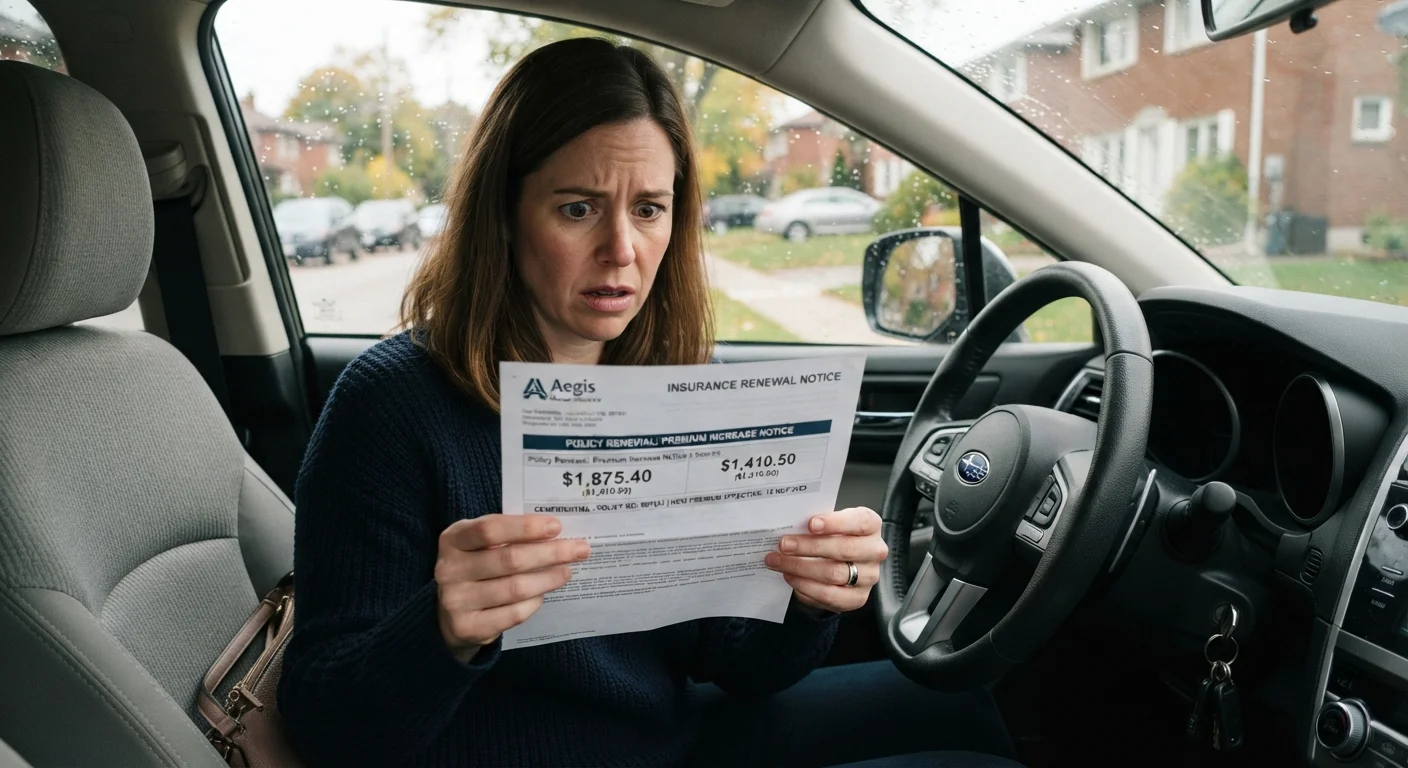
A car insurance premium increase is a rise in the amount you pay - monthly or annually - for your auto coverage. This can happen at renewal even if you haven't filed a claim, gotten a ticket, or changed your vehicle. Insurers use dozens of factors beyond your personal driving record to calculate your rate.
Insurers use actuarial models that weigh both individual risk factors and portfolio-wide loss data, meaning broad market trends can influence your rate independent of your personal claims history.
The Claim-Free Myth: Why a Clean Record Doesn't Lock In Your Rate
Many drivers assume that avoiding accidents and claims earns them a stable - or even declining - insurance bill. That assumption is understandable but wrong. Insurers price policies using a wide pool of variables, and your personal claims history is only one of them. When broader conditions shift, your premium can move even if your behavior hasn't.
Understanding why this happens starts with recognizing what insurers are actually selling: a promise to cover future, unknown losses. To price that promise, they look at everything they can measure - not just what you've done, but what people like you, in places like yours, tend to cost them.
For a broader foundation on what your policy actually covers, see our explainer on auto insurance coverage types.
The Factors That Drive Your Rate - Beyond Your Driving Record
Insurers in most states are permitted to consider a surprisingly broad set of factors when calculating your premium. Here are the most consequential ones:
- Credit-based insurance score: In most states, insurers can use a version of your credit score - not identical to your lending credit score, but derived from similar data - as a pricing factor. Research cited by the Federal Trade Commission found a statistical link between credit metrics and claim frequency. If your credit profile has weakened since your last renewal, your rate may reflect that. Our article on what your credit score is actually measuring explains what goes into that number.
- Garaging location (ZIP code): Where your car sleeps at night matters enormously. Insurers analyze local accident rates, vehicle theft statistics, and even the density of uninsured motorists in your area. A neighborhood with rising auto theft or a spike in intersection collisions will push premiums up for everyone in that ZIP code.
- Vehicle repair costs: Modern vehicles are more expensive to fix. Advanced driver-assistance systems, cameras embedded in bumpers, and specialized parts mean a minor fender-bender that once cost $800 to repair now routinely exceeds $3,000. These cost increases flow directly into rate calculations across all policyholders.
- Medical cost inflation: Liability and personal injury components of auto policies are sensitive to healthcare inflation. When hospital and rehabilitation costs rise, so does the cost of settling bodily injury claims - and ultimately your premium.
~$3,017
Average U.S. full-coverage annual auto premium
According to Bankrate's analysis of rate data, average full-coverage premiums rose sharply in recent years, driven by repair cost inflation and increased claim severity.
Up to 25%
Premium difference tied to credit score tier
Studies by the Consumer Federation of America have found that drivers with poor credit can pay substantially more than those with excellent credit for identical coverage.
40%+
Share of auto claims involving ADAS-equipped vehicles
As advanced driver-assistance systems become standard, replacement parts and calibration requirements have driven repair costs to new highs, per industry repair data.
Industry-Wide Losses: When Other Drivers' Claims Affect Your Bill
Insurers don't price each policyholder in isolation. They pool risk, which means that when claims across an entire state or region spike - due to a severe storm season, a surge in distracted driving accidents, or a rise in vehicle theft - all policyholders in that pool absorb some of the added cost at renewal.
When an insurer's loss ratio (the share of premiums paid out as claims) rises beyond a sustainable threshold, they typically file for a rate increase with state regulators. If approved, that increase applies broadly - including to drivers who never filed a claim themselves.
Natural catastrophes have become a particularly powerful driver of this effect. Hailstorms, flooding, and wildfires generate large volumes of comprehensive claims in a short window, prompting regional rate adjustments that can persist for several renewal cycles.
State Regulators Must Approve Rate Increases
Insurers cannot raise rates arbitrarily. In every U.S. state, rate changes must be filed with - and in most cases approved by - the state's department of insurance. Regulators review whether increases are actuarially justified. If you believe an increase is improper, your state's insurance department is the appropriate place to file a complaint or inquiry.
What You Can Realistically Do About It
You can't control inflation or your neighbors' driving habits, but you're not entirely without leverage. A few practical steps that can influence your rate over time:
- Monitor your credit profile. Since credit-based insurance scores matter in most states, addressing errors on your credit report and reducing high balances can gradually improve your insurance pricing. See our piece on common credit score myths for misconceptions that may be holding your score back.
- Review your coverage at each renewal. Life circumstances change. A vehicle that was worth insuring with full collision coverage three years ago may not justify the same premium today. Adjusting deductibles or coverage limits to match your current situation is worth considering - though dropping coverage entirely creates its own risks.
- Ask about available discounts. Many insurers offer discounts for completing a defensive driving course, bundling policies, maintaining a telematics-based safe driving record, or installing anti-theft devices. These aren't always advertised proactively.
- Don't let your policy lapse. Skipping payments to save money in the short term almost always backfires. A coverage gap signals higher risk to future insurers and can result in significantly higher rates - or difficulty obtaining coverage at all.
This article is for general informational purposes only and does not constitute insurance, financial, or legal advice. Coverage terms, state regulations, and pricing factors vary. Consult your insurer or a licensed insurance professional for guidance specific to your situation.