

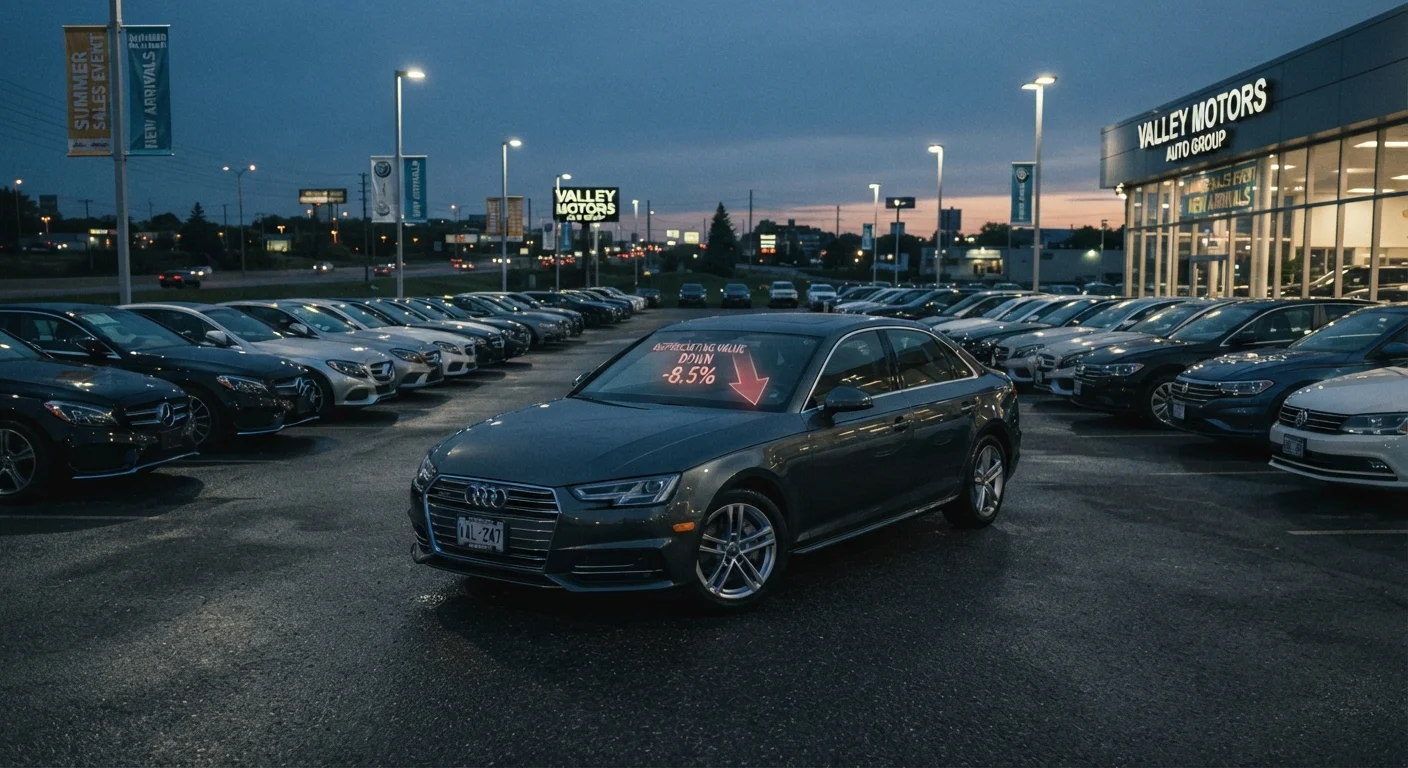
Key Takeaways
- New vehicles typically lose 15-25% of their value in the first year of ownership.
- Depreciation is often the single largest cost of owning a car, exceeding fuel or insurance.
- Mileage, condition, make, model, and market demand all influence how fast a vehicle depreciates.
- Buying a slightly used vehicle can let someone else absorb the steepest depreciation curve.
- Keeping a well-maintained vehicle long-term is one of the most effective ways to reduce per-mile ownership costs.
Vehicle Depreciation
Vehicle depreciation is the reduction in a car's market value over time. It's the difference between what you paid for the vehicle and what it's worth when you sell or trade it in. Depreciation is an unavoidable cost of car ownership, and it's often the largest single expense drivers overlook.
In accounting terms, depreciation is the systematic allocation of an asset's cost over its useful life. For personal vehicles, however, it's tracked through resale market value rather than a formal accounting schedule.
What Depreciation Actually Means for Car Owners
The moment a new car is driven off a dealership lot, its resale value drops - not because something broke, but because it is no longer new. This is vehicle depreciation in its most basic form: the ongoing loss of market value as a car ages, accumulates miles, and faces newer competition.
For most American drivers, depreciation deserves more attention than it gets. It rarely shows up on a monthly statement the way a loan payment or insurance premium does, but it is consistently cited among the largest components of total vehicle ownership cost. Understanding how it works - and what drives it - is a foundation for smarter decisions about buying, selling, and holding onto a car.
For a full picture of where depreciation fits among fuel, insurance, and maintenance costs, see our breakdown of true vehicle ownership costs.
~20%
Average new-car value lost in year one
Industry estimates consistently place first-year depreciation for new vehicles in the 15-25% range, with many models averaging around 20%.
40-60%
Value lost after five years of ownership
According to broadly cited automotive valuation data, the average vehicle retains roughly 40-60% of its original value after five years, depending on make and model.
$3,000+
Estimated annual depreciation cost per vehicle
The American Automobile Association (AAA) has estimated that depreciation accounts for thousands of dollars per year in total vehicle ownership cost for average new-car buyers.
The Depreciation Curve: Fastest Early, Slower Later
Depreciation does not happen at a flat, even rate. The decline is steepest in the earliest years of a vehicle's life. A new car may shed 15-25% of its value within the first 12 months. By the end of five years, many vehicles have lost between 40% and 60% of their original purchase price, depending on the make, model, and broader market dynamics.
After those initial years, the rate typically flattens. A 7-year-old car depreciates far less in dollar terms than a 1-year-old car - even if the percentage looks similar. This curve is why buying a vehicle that is two to four years old can offer significant value: you let the original owner absorb the sharpest drop while still getting a relatively modern, low-mileage vehicle.
That said, depreciation never fully stops. Even a well-maintained older vehicle continues to lose value, though long-term ownership often makes economic sense once the curve flattens and loan payments end.
What Drives Depreciation Faster - or Slower
Several factors shape how quickly any specific vehicle loses value:
- Mileage: Higher mileage signals more wear and reduces resale appeal. Annual mileage well above the national average of roughly 15,000 miles per year tends to accelerate value loss.
- Condition and maintenance history: A vehicle with documented service records and no accident history holds value better than one without. Ownership habits that neglect maintenance can quietly speed up depreciation.
- Make and model reputation: Vehicles known for reliability and strong resale demand - particularly trucks, some SUVs, and certain import brands - have historically depreciated more slowly than average.
- Market demand: Fuel prices, consumer trends, and economic conditions all influence what buyers are willing to pay. A spike in fuel costs, for example, can suppress demand for large trucks and shift it toward smaller vehicles.
- Color and trim: Neutral colors and popular trim levels generally have broader buyer appeal, which can modestly support resale value.
Protect Resale Value With Good Records
Keeping a logbook of oil changes, tire rotations, and any repairs is one of the simplest ways to protect resale value. Buyers and dealerships view documented maintenance history as a sign of lower risk - and are often willing to pay more for it. Routine car maintenance guidance can help you stay organized.
Depreciation, Loans, and the Risk of Being Underwater
One practical consequence of rapid early depreciation is the risk of becoming "underwater" or "upside down" on a car loan - meaning you owe more on the vehicle than it is currently worth. This can happen when a buyer makes a small down payment, finances over a long term, or rolls negative equity from a previous loan into a new one.
Being underwater limits options: it can make it harder to sell the car, trade it in, or manage an unexpected total-loss insurance settlement. Understanding depreciation is therefore directly relevant to how you structure a vehicle purchase from the start.
For a side-by-side look at how loan structure and lease agreements interact with depreciation, see our financing vs. leasing guide.
It's also worth noting how vehicles compare to other assets. Unlike a home, which may appreciate over time depending on market conditions, a car is a depreciating asset by nature. For perspective on how property ownership differs, see our piece on managing a home as a long-term asset.